

Why Sitting All Day Is Its Own Problem
Many Americans spend the majority of their waking hours seated - at a desk, in a car, or on a couch. While this may feel like rest, prolonged uninterrupted sitting is associated with a distinct set of health concerns separate from overall physical fitness. Research has found that even people who exercise regularly can experience adverse effects from long sedentary stretches.
The issue isn't just how little you move overall - it's how long you go without moving at all. During extended sitting, circulation slows, muscles disengage, and blood sugar regulation becomes less efficient. These effects can accumulate over a full workday in ways that a single morning workout may not fully counteract.
For a deeper look at what sedentary work does to the body over time, see our article on sedentary work and physical health.
6-8 hrs
Average daily sitting time for office workers
Multiple occupational health studies estimate desk-based workers sit for six to eight or more hours per workday, much of it in unbroken stretches.
~30%
Reduction in postmeal blood sugar spike
Some controlled trials have found that light-intensity activity breaks every 30 minutes can reduce postmeal glucose responses by roughly 30% compared to uninterrupted sitting.
3 min
Minimum break length showing measurable effects
Research published in peer-reviewed exercise science journals has observed meaningful circulatory and metabolic effects from activity breaks as short as three minutes.
What Movement Snacks Actually Look Like
A movement snack doesn't require a gym, workout clothes, or a scheduled class. The concept is deliberately low-barrier. Common examples include:
- Standing up and walking to a different room or floor for two to three minutes
- Doing 10 to 15 bodyweight squats beside your desk
- Performing calf raises while waiting for a document to print
- Taking a short walk outside between meetings
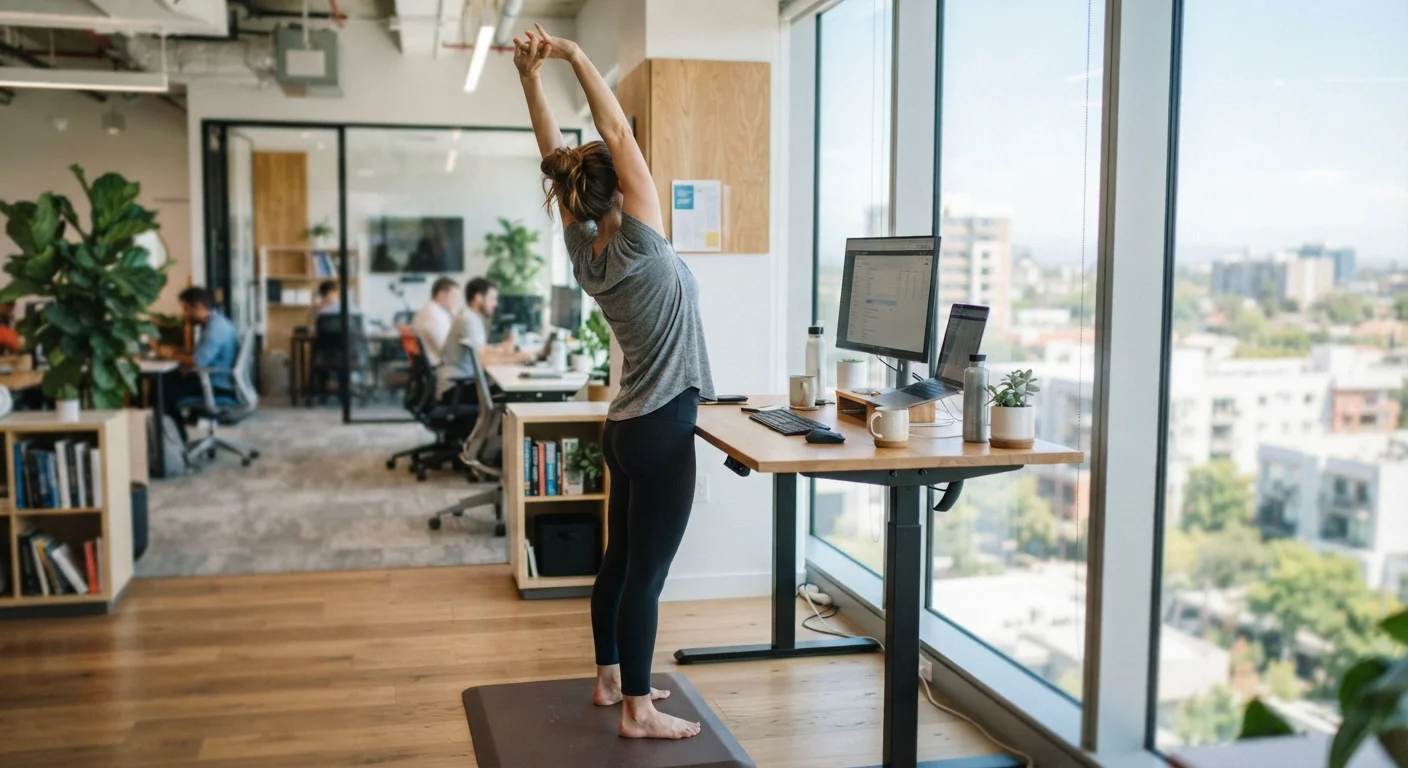
- Running through a brief stretching sequence targeting the hips, shoulders, and neck
The defining feature is intention - a movement snack is a deliberate pause in sedentary behavior, not just a coincidental trip to the coffee machine. Frequency matters more than effort; a gentle two-minute walk every hour is more useful for interrupting sedentary time than one intense burst followed by five more hours of sitting.
A software developer takes a two-minute walk to a colleague's desk instead of sending an instant message, repeating this three or four times across the workday.
A remote worker does 15 bodyweight squats every time they refill their water bottle, which happens roughly every 90 minutes.
An office manager uses the two minutes before each scheduled meeting to do a standing stretch sequence targeting the hip flexors, shoulders, and neck.
A call center employee sets a phone alarm for every 45 minutes and walks to the end of the hallway and back before returning to their station.
What the Research Suggests
Studies examining activity breaks show promising, if still developing, evidence. Several trials have found that interrupting sitting with short bouts of light-to-moderate activity - even as brief as three minutes every 30 minutes - can meaningfully reduce postmeal blood sugar spikes and improve measures of vascular function compared with uninterrupted sitting.
There is also emerging evidence linking regular activity breaks to modest improvements in attention, mood, and subjective energy levels during the workday. These effects are generally short-term and situational, and researchers note the field is still building a complete picture. The science is more established around blood sugar and circulation than around cognition.
“Reducing sedentary time and increasing physical activity at any intensity are both important for health - but they are not the same goal. Interrupting sitting has its own distinct value that accumulated exercise may not fully replace.”
— Dr. Neville Owen, Behavioural epidemiologist and leading researcher in sedentary behavior science
Importantly, movement snacks appear to offer benefits that are somewhat independent of total weekly exercise volume - meaning they address a specific risk (prolonged sedentary time) that accumulated gym hours may not fully offset. This is why public health researchers increasingly treat reducing uninterrupted sitting as its own goal, alongside - not instead of - structured activity guidelines.
Building the Habit Without Disrupting Your Day
The practical challenge isn't knowing what to do - it's remembering to do it. Sedentary streaks happen by default when work is demanding or focus is deep. A few strategies can help make movement snacks automatic:
- Use a timer or calendar reminder. Set a recurring alert every 45 to 60 minutes as a simple prompt to stand and move.
- Anchor breaks to existing routines. Before every meeting, after every coffee refill, or at the top of each hour creates predictable cues without requiring willpower.
- Keep the threshold low. Knowing you only need two minutes removes the friction that derails longer commitments. Start with one or two breaks per day and add more gradually.
- Make it visible. A sticky note, a resistance band on the desk, or a yoga mat visible in your workspace can serve as a physical reminder.
For broader strategies on fitting activity into a demanding schedule, our guide on fitting movement into a full schedule covers practical approaches that don't require restructuring your day.
How Movement Snacks Fit Into a Bigger Picture
Movement snacks work best when they're part of a layered approach to physical activity rather than a standalone solution. They're especially well-suited for desk workers who already have - or are building - a structured exercise routine but want to reduce the health burden of long sedentary stretches between sessions.
If you're thinking about how to structure regular movement across the week, our weekly movement plan guide can help you build a schedule around your actual life. And if you're curious about how even simple activity like walking contributes to health outcomes, the evidence is more robust than many people expect - see what the research actually says about walking as exercise.
Movement snacks don't demand much. They ask for a few minutes, a few times a day, and a bit of intention. Over months and years, that consistency can add up in ways that a once-weekly workout never quite reaches on its own.
This article is for general informational and educational purposes only and is not a substitute for professional medical advice. If you have a health condition or specific concerns about physical activity, please consult a qualified healthcare professional.
Frequently Asked Questions
Most research looks at activity breaks lasting two to five minutes, though even one minute of brisk movement can have measurable short-term effects. The goal is simply to interrupt extended sitting. Longer isn't necessarily better - frequency throughout the day is what matters most.
Not entirely. Movement snacks are best understood as a complement to - not a substitute for - structured exercise. Public health guidelines still recommend accumulating meaningful amounts of moderate-to-vigorous activity each week. However, movement snacks help reduce the specific risks associated with prolonged sitting, which a single gym session may not fully offset.
Simple options include walking to a distant restroom, doing a set of bodyweight squats beside your chair, marching in place, performing calf raises while standing, or doing a two-minute stretch sequence. None of these require equipment or a change of clothes.
Many researchers suggest aiming for an activity break roughly every 30 to 60 minutes of sitting. Setting a timer or using calendar reminders can help build this habit, especially early on when the routine isn't yet automatic.
Some research suggests that short activity breaks are associated with improved alertness and mood in the short term, though the evidence varies. Many people report feeling more focused and less fatigued after brief movement breaks, even if the mechanisms aren't fully established.
For most people, gentle movement breaks like walking or light stretching are low-risk. However, if you have a chronic condition, recent injury, or are new to physical activity, it's worth checking with a qualified healthcare professional before starting any new movement routine.
The content on this site is provided for informational purposes only and should not be considered a substitute for professional advice. While we strive to provide accurate and up-to-date information, we make no guarantees regarding its completeness or accuracy. Always consult a qualified professional for advice specific to your circumstances before making any decisions.