

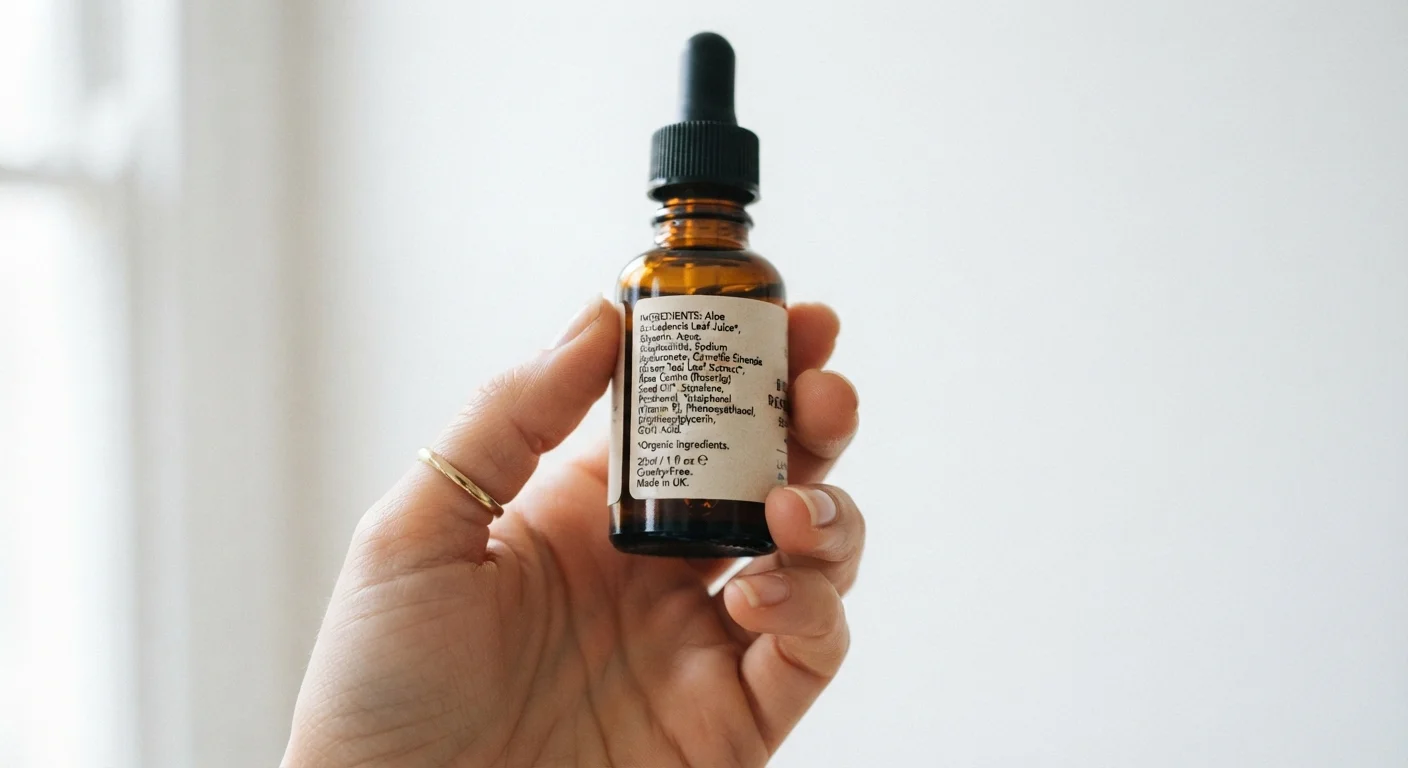
Why the Back of the Package Matters
Front-of-package claims - words like brightening, anti-aging, or deep hydration - are marketing language with no standardized legal definition in the U.S. The ingredient list on the back, however, is regulated. The U.S. Food and Drug Administration (FDA) requires cosmetic products sold domestically to display all ingredients in descending order of concentration using INCI names, giving consumers a consistent, comparable format across every brand and product type.
Reading that list with even a basic framework puts you in a far stronger position than relying on packaging claims alone. It helps you avoid ingredients you've reacted to previously, verify that a key active is meaningfully present, and understand what you're actually applying to your skin.
What you will need
How to Read a Skincare Ingredient List
The six steps below walk you through the process from finding the list to using it as a practical comparison tool. You don't need a chemistry background - just a willingness to look up unfamiliar terms as you go.
The product's packaging or insert
The full INCI ingredient list is printed here and is the primary source you'll be reading.
A free ingredient-lookup database (e.g., a cosmetic ingredient glossary)
Helps decode unfamiliar INCI names into plain-language descriptions of function.
Magnifying glass or smartphone camera zoom
Ingredient lists are often printed in very small type - helpful for reading fine print clearly.
Find the full ingredient list
Look for a section labeled Ingredients on the back or bottom of the product. U.S. regulations require all cosmetic products to display a complete ingredient list using standardized INCI names. If the list is on an attached insert rather than the bottle, keep that insert - it's the authoritative reference.
Understand the concentration order
Ingredients are required to be listed in descending order of concentration - meaning what's listed first makes up the largest share of the formula. Water (Aqua) appears first in most water-based products simply because it's the primary base, not because it's the most active ingredient. Pay close attention to what appears in the first five to seven entries: these are the formula's core components.
Decode INCI names
INCI names follow a standardized global system: plant-derived ingredients typically use Latin botanical names (e.g., Aloe Barbadensis Leaf Juice for aloe vera), while synthetic compounds use chemical nomenclature (e.g., Niacinamide for vitamin B3). Many names are more recognizable than they first appear. A free cosmetic ingredient glossary or database can help you translate unfamiliar terms quickly.
For a plain-English breakdown of the most widely used actives, see our ingredient glossary for retinol, AHAs, BHAs, and vitamin C.
Identify the active versus base ingredients
Skincare formulas generally contain two categories of ingredients: actives (the components intended to produce a specific skin benefit, such as exfoliation, hydration, or brightening) and base or functional ingredients (emulsifiers, humectants, thickeners, and preservatives that give the product its texture and stability). Both matter. A well-constructed base ensures actives penetrate and remain stable.
Spot ingredients worth watching for your skin type
Once you understand the structure of a list, start cross-referencing ingredients against your known sensitivities or skin goals. A few categories to pay attention to:
- Fragrance / Parfum: A single entry that can represent many undisclosed compounds - a common irritant for sensitive skin.
- Alcohol (denatured): Listed as Alcohol Denat. - can be drying at high concentrations, though it also aids absorption.
- Preservatives: Ingredients like phenoxyethanol or sodium benzoate are necessary for safety but can cause reactions in some individuals.
- Silicones: Ending in -cone or -siloxane - generally skin-safe and create a smooth finish, though they're sometimes avoided by personal preference.
Compare labels when evaluating similar products
With your reading skills in place, ingredient lists become a reliable comparison tool. When two products claim similar benefits, look at where the key actives appear in each list and what the base ingredients are. A serum advertising hyaluronic acid but listing it near the very end - after preservatives - contains far less of it than a serum where it appears in the top third. Concentration placement tells you far more than marketing language on the front of the package.
Fragrance Can Be a Hidden Irritant
The single term 'fragrance' or 'parfum' on a label can represent a blend of dozens of undisclosed compounds. For people with sensitive skin or known allergies, this lack of transparency can make it difficult to pinpoint irritation triggers. For a deeper look, see our article on fragrance in skincare.
Cross-Check Ingredients Before Layering
Once you know what's in each product, it's worth reviewing whether those ingredients interact well together. Our guide on skincare ingredients that don't play well together explains common combinations to use carefully.
Putting It All Together
Reading a skincare label is a skill that improves quickly with repetition. After reviewing a few dozen products, you'll recognize common base ingredients on sight and spot meaningful actives without needing to look them up. The goal isn't to memorize every compound - it's to shift from passive consumer to informed one.
Keep in mind that a longer ingredient list isn't a warning sign on its own. Complex formulas with many supporting ingredients can be well-designed and gentle. What matters is where the ingredients you care about appear in the list and whether any known irritants for your skin are present in significant positions.
This Is Not Medical Advice
This article provides general educational information about reading skincare labels. It is not a substitute for advice from a board-certified dermatologist. If you have a skin condition, known allergies, or are pregnant, consult a qualified healthcare professional before introducing new skincare products.
This article is for general informational and educational purposes only and does not constitute medical or dermatological advice. Consult a qualified healthcare professional for guidance specific to your skin health.
The content on this site is provided for informational purposes only and should not be considered a substitute for professional advice. While we strive to provide accurate and up-to-date information, we make no guarantees regarding its completeness or accuracy. Always consult a qualified professional for advice specific to your circumstances before making any decisions.