

Why the Confusion Exists
Ask most people what mobility and flexibility mean, and they'll use the terms interchangeably. This is understandable - both relate to how freely you can move. But in exercise science, they describe two meaningfully different physical qualities, and conflating them can lead to training gaps that quietly undermine your movement and raise your injury risk.
Understanding the distinction isn't just for athletes or physical therapists. It matters for anyone who wants to move comfortably through everyday life - getting up from the floor, reaching overhead, or sitting at a desk without tightening up. If you're interested in a broader foundation of fitness concepts, see our guide to key fitness concepts for more essential terms demystified.
Flexibility: The Passive Side of Range
Flexibility is a property of muscle and connective tissue - specifically, how much a muscle can lengthen when an external force is applied. When a physical therapist lifts your leg to measure hamstring length, they're measuring flexibility. You're not doing the work; gravity or their hands are.
Static stretching - holding a position for 20-60 seconds - is the most common tool for improving flexibility. It's useful, particularly for people whose muscles feel persistently tight. But flexibility alone doesn't tell you much about how well you can actually use your body. A person who can achieve a deep stretch while lying down may still struggle to perform the same movement under their own power.
~80%
Adults who experience low back pain
The American Chiropractic Association estimates roughly 80% of Americans will experience low back pain at some point, a condition often linked to poor hip and thoracic mobility.
31%
Reduction in fall risk with balance and mobility training
A review published in the British Journal of Sports Medicine found that exercise programs targeting balance and mobility reduced fall rates in older adults by approximately 31%.
Mobility: Active Control Through Range
Mobility is what happens when you bring strength and neuromuscular coordination into the picture. It's the ability to move a joint actively through its available range - not just reach the end position, but control the movement getting there and coming back.
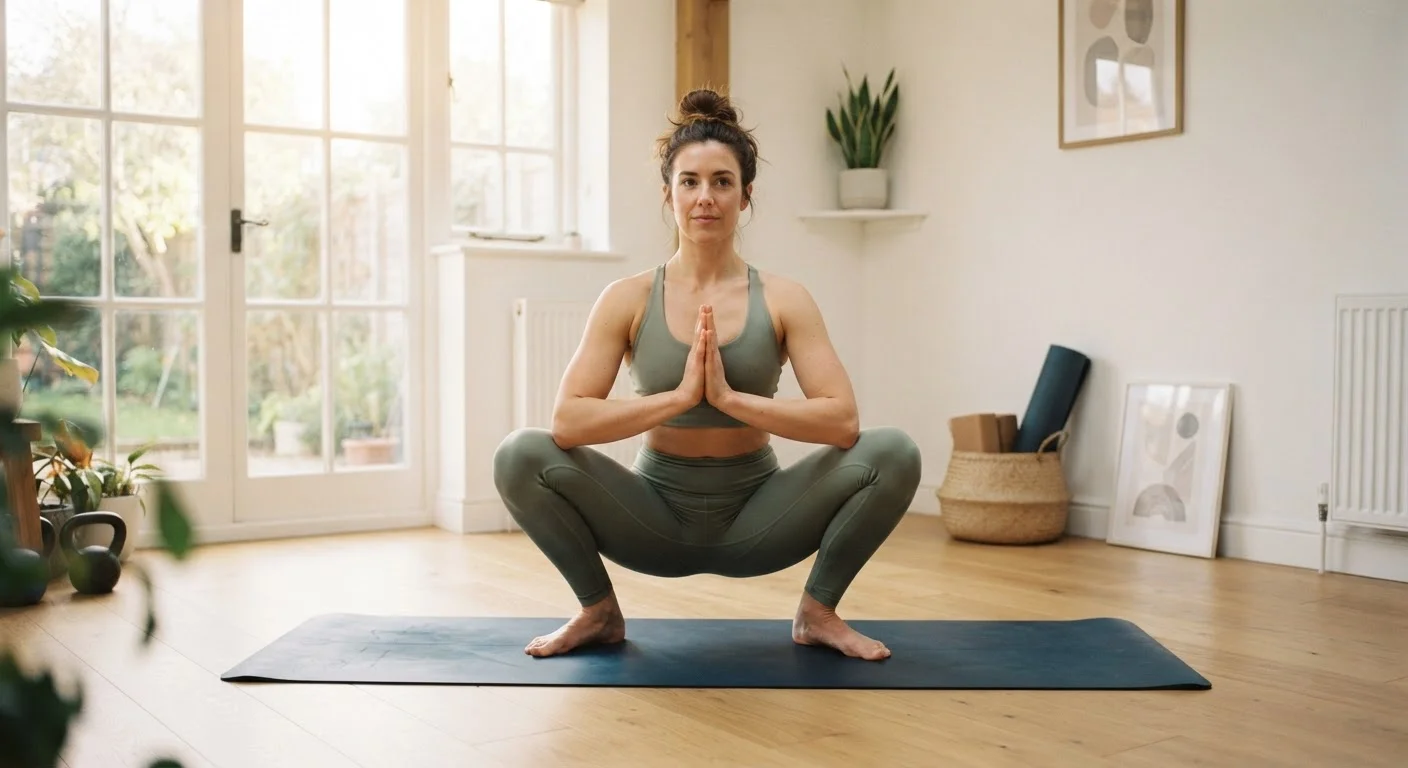
Think of a deep squat. A flexible person may be able to be pushed into that position. A mobile person can get there on their own, hold it with stability, and stand back up with control. Mobility requires that your muscles are strong enough to support the joint at every point in the movement arc - what exercise scientists call end-range strength.
This is why mobility work often looks more like controlled movement drills than stretching. Hip circles, thoracic rotations, and deep squat holds with active tension are all mobility exercises. They're training your nervous system and muscles, not just your tissue length.
A Simple Way to Test Your Own Mobility
Try sitting on the floor and standing back up without using your hands. This informal movement screen - known in research circles as the sitting-rising test - draws on hip, knee, and ankle mobility as well as balance and coordination. It's not a diagnostic tool, but consistent difficulty is a useful signal that mobility work may be worth prioritizing. Consult a healthcare professional if you experience pain during the test.
Why Both Matter - and How They Interact
Flexibility and mobility reinforce each other but don't substitute for each other. If your hip flexors are extremely tight, that tissue restriction will cap your available hip mobility regardless of how much strength you've built. Conversely, if you have good tissue length but no neuromuscular control, you're essentially a passive structure - unable to use that range safely under load.
The most durable, functional movement comes from training both. Stretching improves the ceiling; mobility work teaches you to actually reach it. For people with busy schedules, the good news is that even brief daily sessions add up. For practical strategies on fitting this into a real day, see how to weave movement into a packed schedule.
A desk worker can touch their toes when their friend pushes their back forward but can't reach past their knees when bending under their own effort.
A regular yogi can move fluidly into a pigeon pose but struggles with pain when loading their hip during a lunging exercise.
An older adult who walks daily has good cardiovascular fitness but finds it difficult to squat down to pick something off the floor.
Practical Takeaways for Everyday Movement
You don't need a dedicated training block to make progress. A few intentional minutes daily - morning hip mobility before work, a few shoulder circles between meetings, an evening stretch routine - can meaningfully improve both qualities over weeks and months. For long-term joint health, these habits compound in ways that matter. Our article on movement habits that support joint health over decades expands on evidence-informed practices worth building early.
Prioritize mobility work before your workouts (dynamic drills, controlled ranges) and save passive stretching for afterward, when tissues are warm and more receptive. And if you have a history of joint injuries, chronic pain, or significant range-of-motion limitations, consult a qualified physical therapist or healthcare provider before beginning a new movement program - they can identify where your specific gaps lie and guide you safely.
This article is for general informational purposes only and is not a substitute for professional medical or physical therapy advice. Always consult a qualified healthcare professional before starting any new exercise program, especially if you have existing injuries or health conditions.
Frequently Asked Questions
Flexibility describes how far a muscle can passively stretch, while mobility describes how well a joint can move actively through its range with control. A flexible person may still lack the strength and coordination to use that range functionally.
Yes. Mobility training targets joint control, neuromuscular coordination, and strength at the end ranges of motion. You can develop better functional movement patterns even if your passive flexibility remains limited, though gains in both together are most beneficial.
Dynamic mobility work - controlled movements that take joints through their range - is generally preferred before exercise. Static stretching, which targets flexibility, is better placed after a workout when muscles are warm.
Most movement experts suggest daily or near-daily practice, even in short sessions of 5-15 minutes, is more effective than infrequent longer sessions. Consistency matters more than duration.
Yoga can develop both qualities, but the degree depends on the style and how it's practiced. Styles that incorporate active holds and controlled transitions tend to build more mobility, while those focused on passive stretching target flexibility more directly.
Both tend to decline with age if not actively maintained, largely due to reduced physical activity and changes in connective tissue. Regular movement training can slow this decline significantly at any age.
The content on this site is provided for informational purposes only and should not be considered a substitute for professional advice. While we strive to provide accurate and up-to-date information, we make no guarantees regarding its completeness or accuracy. Always consult a qualified professional for advice specific to your circumstances before making any decisions.