

The Fiber Gap: A Widespread Nutrition Problem
Dietary fiber is one of the most consistently underconsumed nutrients in the American diet. Research drawing on national dietary surveys has repeatedly found that average fiber intake in the U.S. sits at roughly half the amount health authorities recommend - a shortfall so common it has been described as a genuine public health concern.
The reasons are not hard to find. Ultra-processed foods, which now account for a large share of calories in the typical American diet, are almost entirely devoid of fiber. When whole grains are milled into white flour, when legumes are replaced by packaged snacks, and when vegetables are an afterthought rather than a foundation, fiber disappears from the plate. The result is a population that consumes plenty of calories but misses out on one of food's most important structural components.
Understanding what fiber actually does - and where to find it - is a practical first step toward closing that gap. For a broader look at how unconscious food patterns shape intake, see common nutrition habits people develop without realizing it.
~7%
Adults meeting recommended fiber intake
Dietary surveys analyzed by nutrition researchers have estimated that fewer than 1 in 10 American adults consistently meet recommended daily fiber targets.
10-15g
Typical daily fiber intake in the U.S.
National nutrition data consistently shows average American fiber consumption falls significantly below the 25-38g general recommendations for adults.
~10%
Lower cardiovascular disease risk linked to higher fiber diets
Multiple large observational studies have associated diets higher in dietary fiber with meaningfully reduced risks of heart disease, though individual results vary.
What Fiber Does in the Body
Fiber's most recognized role is supporting digestive regularity - insoluble fiber adds bulk to stool and helps move waste through the intestines efficiently. But its benefits extend well beyond the gut.
Soluble fiber dissolves in water to form a viscous gel in the digestive tract. This gel slows the absorption of glucose, which helps moderate blood sugar spikes after meals. It also binds to bile acids, prompting the liver to draw on cholesterol to make more - a mechanism that contributes to lower LDL (low-density lipoprotein) cholesterol levels over time.
Perhaps most significantly for long-term health, fiber acts as a fuel source for beneficial gut bacteria. When microbes in the large intestine ferment fiber, they produce short-chain fatty acids - compounds that help maintain the gut lining, regulate immune responses, and may have effects on inflammation throughout the body. A well-nourished gut microbiome is an active area of research, with scientists exploring its connections to metabolic, immune, and even mental health.
“Dietary fiber is not a single nutrient but a family of compounds, each interacting with the gut in distinct ways. The consistent finding across decades of research is that populations eating more fiber from whole plant foods have better metabolic and cardiovascular outcomes.”
— Walter Willett, Professor of Epidemiology and Nutrition, Harvard T.H. Chan School of Public Health
To understand the difference between fiber types in more depth, the article on soluble vs. insoluble fiber explains how each type works and which foods deliver them.
Practical Ways to Increase Fiber Intake
Increasing dietary fiber does not require dramatic dietary overhauls. The most effective approach is gradual and built around foods people already eat or can easily incorporate.
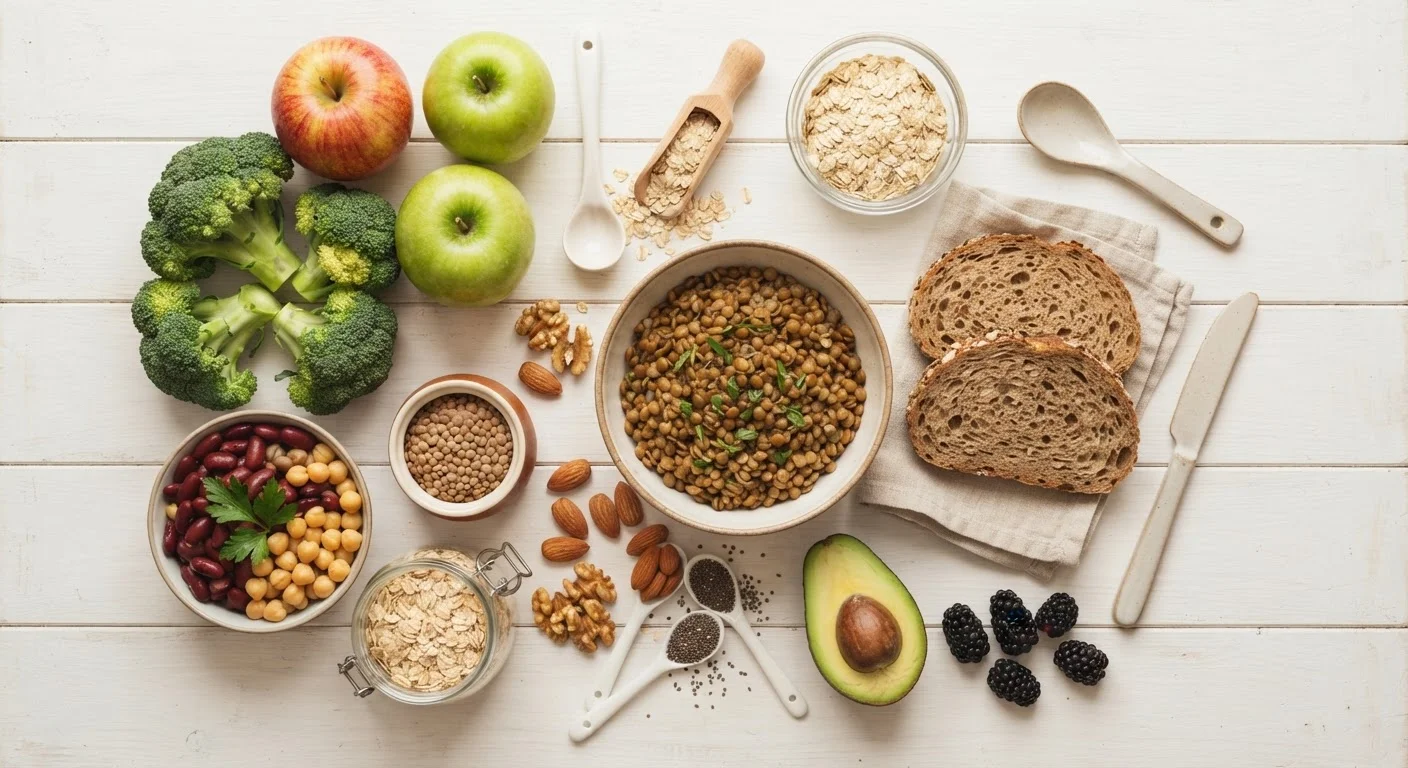
- Swap refined grains for whole grains. Choosing whole grain bread, brown rice, oats, or whole wheat pasta over refined versions meaningfully increases fiber at meals that are already part of most routines.
- Add legumes regularly. Lentils, black beans, chickpeas, and kidney beans are among the most fiber-dense foods available and work in soups, salads, grain bowls, and side dishes.
- Prioritize fruits and vegetables with skin. Much of the fiber in apples, pears, and potatoes sits in or just under the skin. Eating these whole rather than juiced or peeled preserves that fiber content.
- Snack on nuts and seeds. Almonds, chia seeds, and flaxseeds contribute both fiber and other valuable nutrients.
Build Fiber In Gradually
If your current diet is low in fiber, aim to add one fiber-rich food at a time over several weeks rather than overhauling your entire eating pattern at once. This approach gives your digestive system time to adapt and makes the change far more sustainable. Drinking enough water throughout the day is equally important, as fiber works most effectively when well hydrated.
One important practical note: increasing fiber intake too quickly can cause bloating, gas, or discomfort. Raising intake gradually - over several weeks - and drinking adequate water throughout the day helps the digestive system adjust. Those with existing digestive conditions should consult a healthcare provider before making significant changes.
Fiber is just one piece of a broader nutritional picture. For perspective on widespread diet misconceptions, separating persistent nutrition myths from the evidence is a useful companion read.
This article is for general informational and educational purposes only and does not constitute medical or dietary advice. Consult a qualified healthcare professional or registered dietitian for guidance specific to your health needs.
Frequently Asked Questions
General guidance from health authorities suggests around 25 grams per day for adult women and 38 grams per day for adult men, though these figures vary by age and individual health status. Most Americans fall well short of these targets. A qualified healthcare provider or registered dietitian can offer personalized recommendations.
Legumes (such as lentils, black beans, and chickpeas), whole grains (like oats and barley), vegetables (especially broccoli, Brussels sprouts, and artichokes), and fruits (including raspberries, pears, and apples) are among the richest sources. Eating a varied mix of plant foods across meals is the most practical way to increase intake.
Consuming very high amounts of fiber, especially when increasing intake rapidly, can cause digestive symptoms such as bloating, gas, and cramping. Increasing fiber gradually and drinking enough water generally helps manage these effects. Very high supplemental fiber intakes may interfere with absorption of certain nutrients; a healthcare provider can advise on appropriate levels.
No - while fiber is well-known for supporting regular bowel movements, research also links adequate fiber intake to reduced risk of cardiovascular disease, better blood sugar control, and healthier cholesterol levels. The gut microbiome, which fiber helps nourish, is increasingly recognized as important to broader health.
Cooking does soften plant cell walls and can reduce some fiber content, but most dietary fiber survives typical cooking methods. Both raw and cooked vegetables contribute meaningful amounts of fiber, so preparation method matters far less than simply eating enough plant foods consistently.
Fiber supplements can help fill gaps but generally do not replicate the full benefit of fiber-rich whole foods, which also provide vitamins, minerals, antioxidants, and a mix of fiber types. Supplements may be appropriate in certain circumstances; discuss their use with a healthcare professional before starting them regularly.
The content on this site is provided for informational purposes only and should not be considered a substitute for professional advice. While we strive to provide accurate and up-to-date information, we make no guarantees regarding its completeness or accuracy. Always consult a qualified professional for advice specific to your circumstances before making any decisions.