

Why the Nutrition Facts Label Exists - and What It Can Do for You
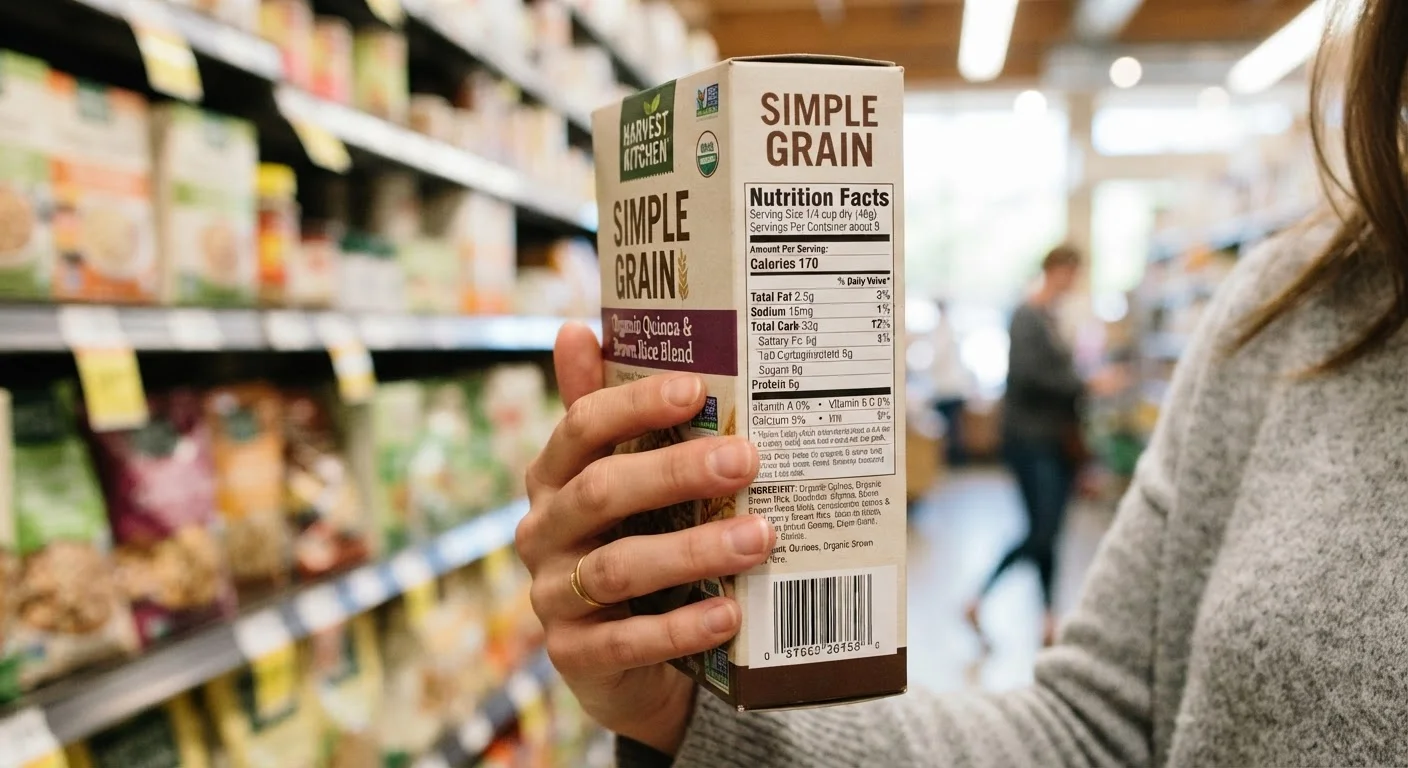
The Nutrition Facts label is a federally standardized panel required on nearly all packaged foods sold in the United States. The FDA oversees its format and content, and the current design - updated in 2020 - reflects decades of nutrition science and public health input. Its purpose is straightforward: give consumers reliable, comparable information about what they're eating.
Understanding the label doesn't require a nutrition degree. Once you know what each section means and where to look, you can use it as a consistent reference point in any grocery aisle. If you're newer to thinking about food and health broadly, the nutrition basics guide lays helpful groundwork before diving into label reading.
This Is General Education, Not Medical Advice
Nutrition Facts labels provide population-level reference values that may not match your individual health needs. If you have a medical condition, follow a therapeutic diet, or take medications that interact with specific nutrients, consult a registered dietitian or your healthcare provider before making significant dietary changes.
How to Read the Label, Step by Step
Work through the label from top to bottom. Each section builds on the one before it, and skipping the serving size - the very first line - is the single most common mistake that leads to misreading everything else on the panel.
What you will need
Nutrition Facts Label
The federally mandated panel on packaged foods containing all nutrient and serving information you need to evaluate.
Ingredient List
Located below or near the Nutrition Facts panel; shows every ingredient in descending order by weight.
Find the Serving Size and Servings Per Container
The very first section of any Nutrition Facts label lists the serving size and the number of servings in the entire package. Every number that follows - calories, fat, sodium, everything - refers to one serving, not the whole package.
This distinction matters more than most people realize. A bag of chips might list 140 calories per serving, but if the bag contains three servings and you eat the whole bag, you've consumed 420 calories. Check whether the serving size reflects how much you'd actually eat in one sitting.
Read the Calorie Count in Context
Calories measure the energy a food provides. The calorie count appears prominently below the serving size. While calorie needs vary considerably by age, sex, body size, and activity level, the FDA uses a general reference of 2,000 calories per day as a benchmark for calculating % Daily Values.
Calories alone don't tell the full story of a food's value. A candy bar and a handful of almonds might have similar calorie counts but deliver very different nutrients. For a broader perspective on this idea, see the guide on nutrient density.
Identify the Nutrients to Limit
The label lists three nutrients most Americans consume in excess: saturated fat, sodium, and added sugars. These are broken out explicitly because excess intake is associated - in the weight of available evidence - with increased risk of cardiovascular disease, hypertension, and other chronic conditions.
- Saturated fat appears under Total Fat. The Dietary Guidelines for Americans recommend limiting it.
- Sodium is listed in milligrams. Many packaged and restaurant foods are high in sodium, making it easy to exceed daily reference amounts without noticing.
- Added sugars (introduced in updated label rules) distinguishes sugars added during processing from those naturally present in fruit or dairy.
Look for Nutrients to Get Enough Of
Below the nutrients to limit, the label highlights nutrients that Americans commonly under-consume: dietary fiber, vitamin D, calcium, iron, and potassium. Choosing foods with higher % Daily Values for these nutrients supports overall dietary balance.
For a deeper look at what these vitamins and minerals do in the body, the micronutrient quick reference is a helpful companion resource.
Interpret the % Daily Value Column
The % Daily Value (%DV) column on the right side of the label tells you how much of the recommended daily intake one serving provides, based on a 2,000-calorie reference diet. It's a quick comparison tool - useful even if your actual calorie needs differ.
Use %DV to compare similar products side by side. A soup with 35% DV sodium per serving is meaningfully higher than one with 15% DV, regardless of how the milligram numbers look to the untrained eye.
Scan the Ingredient List
Ingredients are listed in descending order by weight, so what appears first is most abundant in the product. If added sugar - under any of its many names (corn syrup, dextrose, maltose, cane juice, etc.) - appears among the first three ingredients, the product is likely high in added sugar even if the front label doesn't highlight it.
Short ingredient lists aren't automatically better, and long ones aren't automatically worse, but the ingredient list gives you a clear look at what you're actually eating. This pairs well with understanding the whole foods vs. ultra-processed foods spectrum.
Use % Daily Value as a Quick Gauge
A general rule from the FDA: 5% DV or less is considered low for a nutrient, while 20% DV or more is considered high. You want nutrients like fiber and vitamin D to be high, and saturated fat, sodium, and added sugars to be low. This shortcut works even when you're shopping quickly.
Common Pitfalls and What to Watch For
Even informed shoppers encounter a few reliable traps when reading labels.
Front-of-Package Claims Can Mislead
Words like 'natural,' 'light,' 'multigrain,' or 'reduced fat' on the front of a package are marketing terms, not regulated health claims. Always flip to the Nutrition Facts panel and ingredient list to get the actual picture. A product marketed as 'light' may still be high in sodium or added sugars.
Another common confusion: total fat and saturated fat are not interchangeable. A food can be high in total fat but low in saturated fat (as with many nuts and fish), or relatively low in total fat but surprisingly high in added sugars (as with many low-fat flavored yogurts). Reading each line independently avoids this mix-up.
Finally, keep in mind that no single food makes or breaks a diet. The Nutrition Facts label is most useful as a comparison and awareness tool, not a pass/fail grader. For a realistic look at how everyday eating patterns form without much conscious thought, see the piece on nutrition habits most people pick up without realizing it.
This article is for general informational and educational purposes only and is not a substitute for professional medical or dietary advice. Consult a qualified healthcare provider or registered dietitian for guidance tailored to your individual health needs.
The content on this site is provided for informational purposes only and should not be considered a substitute for professional advice. While we strive to provide accurate and up-to-date information, we make no guarantees regarding its completeness or accuracy. Always consult a qualified professional for advice specific to your circumstances before making any decisions.