

Core vs. Non-Core: The Essential Distinction
Every dog's vaccination plan is built around two categories: core vaccines and non-core vaccines. Understanding the difference helps you follow your vet's recommendations with confidence.
Core vaccines are recommended for all dogs regardless of lifestyle, because the diseases they prevent are either highly contagious, severe, or transmissible to humans. The standard core vaccines include:
- Canine Distemper Virus (CDV) - a serious viral illness affecting the respiratory, gastrointestinal, and nervous systems
- Canine Parvovirus (CPV-2) - a potentially fatal gastrointestinal disease, especially dangerous in puppies
- Canine Adenovirus (CAV-2) - protects against infectious canine hepatitis
- Rabies - required by law across nearly all U.S. states due to its public health risk
These four are frequently delivered together as a combination injection, commonly called the DHPP or DA2PP shot.
Non-core vaccines are given selectively based on a dog's individual risk profile. Common examples include Bordetella bronchiseptica (the primary agent behind kennel cough), Lyme disease vaccine for dogs in tick-endemic regions, leptospirosis for dogs with outdoor or water exposure, and canine influenza. Your vet will ask about your dog's daily life - whether they frequent dog parks, boarding facilities, hiking trails, or rural areas - before recommending any of these.
Vaccine Guidelines Are Updated Periodically
The AAHA Canine Vaccination Guidelines are reviewed and revised as new research emerges. What was standard practice a decade ago may have been refined. Your veterinarian stays current with these updates, which is one reason an annual wellness visit matters even when no vaccines are due. See our annual vet visit prep guide for more on making the most of that appointment.
The Puppy Vaccine Series: Why Timing Matters
Puppies are born with some immune protection passed through their mother's milk, known as maternal derived antibodies (MDA). The problem is that MDA fades at different rates in different puppies, creating a window of vulnerability. The vaccine series is designed to close that window.
A typical puppy schedule looks like this:
| Age | Vaccines Typically Given |
|---|---|
| 6-8 weeks | DHPP (first dose) |
| 10-12 weeks | DHPP (second dose), Bordetella if needed |
| 14-16 weeks | DHPP (third dose), Rabies |
| 12-16 months | DHPP booster, Rabies booster |
The reason puppies receive multiple doses of the same vaccine isn't redundancy - it's because any single shot may be partially neutralized by remaining maternal antibodies. The series ensures that at least one dose reaches the puppy's own immune system at full strength.
Keep in mind that a puppy isn't considered fully protected until approximately two weeks after the final dose in the series. During this period, socialization is still important - but so is thoughtful risk management. See our guide to the puppy socialization window for how to balance exposure and safety.
Adult Dog Boosters and Long-Term Immunity
Once your dog completes the puppy series, the focus shifts to maintaining protection through periodic boosters. The interval depends on both the specific vaccine and your dog's health history.
Under current AAHA guidelines, the core DHPP combination vaccine is typically given one year after the puppy series is complete, and then every three years for most healthy adult dogs. Rabies follows a similar pattern - one booster at around one year, then either annually or every three years depending on the vaccine formulation used and state law.
Non-core vaccines like leptospirosis and Bordetella generally require annual boosters because immunity from those vaccines tends to be shorter-lived.
~3 years
Booster interval for core vaccines in healthy adult dogs
According to AAHA Canine Vaccination Guidelines, healthy adult dogs typically receive core vaccine boosters every three years after initial series completion.
6-8 weeks
Age at which puppy vaccination series begins
Most veterinary protocols recommend starting the puppy vaccine series at 6-8 weeks of age, continuing in 2-4 week intervals until around 16 weeks.
49 states
U.S. states with mandatory rabies vaccination laws
Rabies vaccination is legally required for dogs in virtually every U.S. state, reflecting its status as a public health priority.
As dogs move into their senior years, their immune response and overall health picture can shift, which may affect how their vet approaches vaccinations. Our article on health changes in dogs after age seven covers what to expect and discuss with your vet.
Keeping a clear record of your dog's vaccine history makes every vet visit more productive. Our annual vet visit prep guide walks through exactly what documentation to bring and what questions to raise.
What to Expect at a Vaccination Appointment
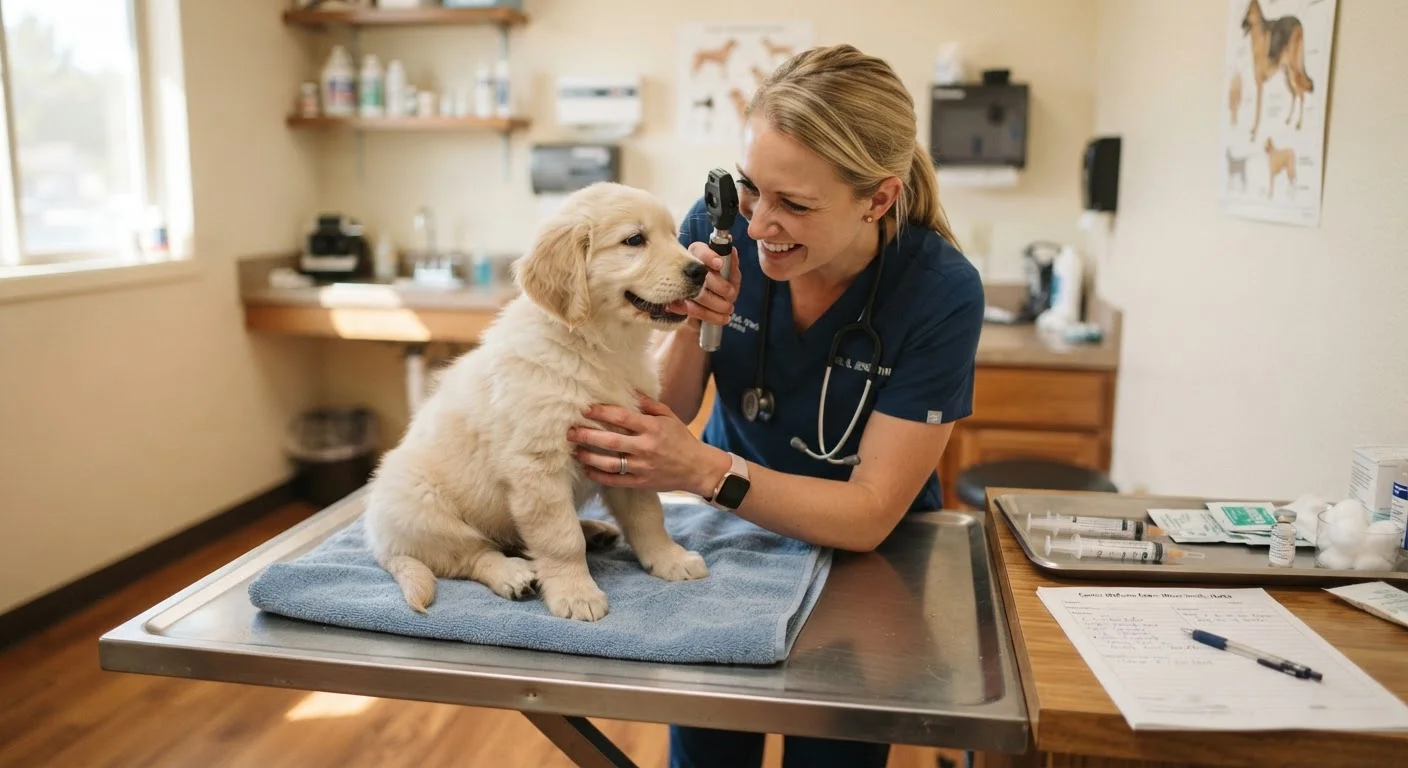
Vaccine appointments are usually quick, but there's more happening than just the injection. Your vet will typically perform a physical exam first to confirm your dog is healthy enough to be vaccinated. Administering a vaccine to a dog that is acutely ill can be counterproductive, as the immune system may not mount an adequate response.
After the shot, mild side effects are normal and expected. Most dogs experience brief soreness at the injection site or mild lethargy for 24-48 hours. Serious adverse reactions - such as hives, facial swelling, vomiting, or collapse - are uncommon but require immediate veterinary attention. If your dog has had a reaction to vaccines in the past, tell your vet before any new vaccinations.
Keep a Vaccination Record at Home
Ask your vet for a written or printed copy of your dog's vaccine history at every visit, and store it somewhere easy to find. You'll need it for boarding facilities, groomers, dog parks, and any emergency vet visits. A digital photo of the record stored in your phone is a practical backup.
If you have questions about other aspects of your dog's health care, our article on current research on spaying and neutering addresses another major preventive care decision that often comes up during early vet visits.
This article is for general informational purposes only and is not a substitute for professional veterinary advice. Always consult a licensed veterinarian regarding your dog's specific health needs and vaccination plan.
Frequently Asked Questions
Most puppies start their vaccine series around 6 to 8 weeks of age. The series continues with boosters every 2-4 weeks until around 16 weeks old. This staggered approach ensures coverage as maternal antibodies gradually decline.
Rabies vaccination is legally required in virtually every U.S. state. Requirements for frequency and the age at first administration vary by jurisdiction. Your local municipality or veterinarian can confirm what applies in your area.
It depends on the vaccine. Rabies and core combination vaccines are typically boosted one year after the puppy series, then every one to three years. Some non-core vaccines, like leptospirosis, are given annually.
Non-core vaccines protect against diseases that pose a risk only to certain dogs based on geography, lifestyle, or exposure. Examples include Bordetella (kennel cough), Lyme disease, and leptospirosis. Your vet will recommend these based on your dog's environment and habits.
Mild side effects - such as temporary soreness at the injection site, low-grade fatigue, or a slight fever - are relatively common and usually resolve within a day or two. Serious allergic reactions are rare but possible; contact your vet promptly if your dog shows facial swelling, vomiting, or difficulty breathing.
A lapsed booster doesn't always mean starting over, but it does require a conversation with your vet. Depending on how much time has passed and the specific vaccine, your vet may recommend an immediate booster or a new series. Don't delay - contact your veterinarian to get your dog back on track.
The content on this site is provided for informational purposes only and should not be considered a substitute for professional advice. While we strive to provide accurate and up-to-date information, we make no guarantees regarding its completeness or accuracy. Always consult a qualified professional for advice specific to your circumstances before making any decisions.