

What the Research Actually Tells Us
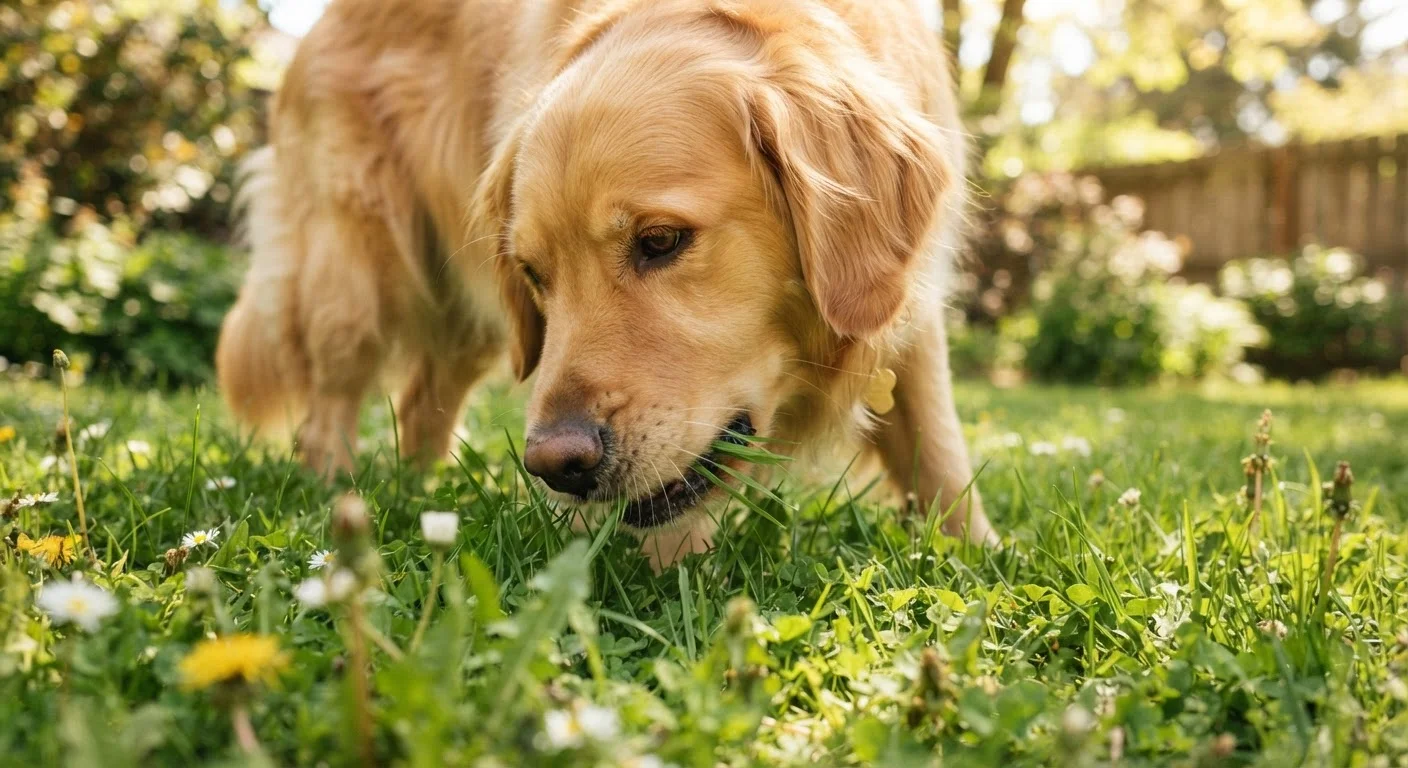
Grass-eating - formally called pica when it involves non-food items - is one of the most frequently reported dog behaviors in veterinary practices. Despite how common it is, the scientific literature is still catching up to owner curiosity. What research does confirm is this: the behavior is widespread across breeds and ages, it's observed in both indoor and outdoor dogs, and it doesn't reliably predict illness.
A survey-based study involving over 1,500 dog owners found that grass was the most commonly consumed plant material and that the behavior was significantly less frequent in puppies compared to older dogs. Importantly, most owners did not report signs of illness either before or after the grass-eating episodes.
Myth
Dogs eat grass because they're sick and need to make themselves vomit.
Fact
Most grass-eating dogs show no signs of illness beforehand, and the majority do not vomit after.
This is probably the most widespread assumption about the behavior, but the evidence doesn't support it. A commonly cited study published in Applied Animal Behaviour Science found that fewer than 25% of dogs who ate grass vomited regularly afterward, and the vast majority appeared healthy before eating it. Vomiting does occur in some cases, but it appears to be a side effect rather than the goal.
Myth
Grass-eating always signals a nutritional deficiency.
Fact
While fiber intake can influence the behavior, grass-eating is common in dogs eating complete, balanced diets.
Some veterinary nutritionists suggest that dogs eating lower-fiber diets may graze more frequently, and increasing dietary fiber sometimes reduces the behavior. However, grass-eating is also common in dogs on nutritionally complete commercial diets. Pointing to a single deficiency as the universal explanation oversimplifies what appears to be a multi-cause behavior. If you're concerned about your dog's diet, see our breakdown of dry vs. wet food nutrition for a more complete picture.
Myth
Only sick or anxious dogs eat grass.
Fact
Grass-eating is observed in healthy, relaxed dogs and may simply be an inherited ancestral behavior.
Wild canids, including wolves, have been observed consuming plant matter, and grass or other vegetation has been found in the stomach contents of wild animals. This suggests the behavior may be deeply ingrained rather than pathological. In domestic dogs, it's frequently observed during outdoor play or relaxed sniffing sessions - not just during moments of stress or illness.
Myth
Letting your dog eat grass is always harmless.
Fact
Grass treated with pesticides, herbicides, or fertilizers can be toxic to dogs, and some ornamental plants nearby pose serious risks.
The grass itself is generally not harmful, but what's on it frequently is. Lawns treated with chemical fertilizers, weed killers, or pesticides can leave residues that are dangerous if ingested. Additionally, dogs grazing near landscaping may accidentally consume toxic plants - such as sago palm, oleander, or certain mushrooms - that grow alongside grass. Always know what products have been applied to any lawn your dog accesses.
Myth
If your dog eats grass, no further action is ever needed.
Fact
Occasional grass-eating in an otherwise healthy dog is usually benign, but certain accompanying signs require veterinary evaluation.
Frequency and context matter. A dog who occasionally nibbles grass on a walk is very different from one who obsessively seeks it out and vomits repeatedly. Signs that deserve veterinary attention include: persistent or forceful vomiting after eating grass, visible blood in vomit or stool, sudden changes in appetite, lethargy, abdominal bloating, or a dramatic increase in the behavior. These can signal gastrointestinal issues, parasites, or other conditions that need professional diagnosis.
Common Triggers Behind the Behavior
Without a single definitive cause, veterinarians and behaviorists point to several plausible explanations that vary by dog:
- Boredom or under-stimulation: Dogs left in yards without enough mental or physical enrichment may graze simply to occupy themselves.
- Taste and texture preference: Some dogs appear to genuinely enjoy the taste of fresh grass, particularly in spring when new growth is tender.
- Instinct: As noted above, plant consumption has evolutionary precedent in canid ancestors.
- Digestive sensation: Some dogs may seek grass when experiencing mild GI discomfort, even if vomiting isn't the intended outcome.
Understanding which trigger applies to your dog requires observing the circumstances - when it happens, how urgently the dog seeks grass, and whether any other behavioral changes accompany it.
Watch for Nearby Plants, Not Just the Grass
When dogs graze, they don't always discriminate between grass blades and the plants growing among them. Common landscaping plants like sago palm, azalea, and lily of the valley are highly toxic to dogs. If your yard or a park contains ornamental plantings, familiarize yourself with what's growing there before giving your dog unsupervised grazing access.
When to Stop Waiting and Call the Vet
For most dogs, occasional grass-eating needs no intervention beyond ensuring the lawn is free of chemical treatments. But there are clear signals that the behavior warrants a professional look.
Contact your veterinarian if you observe:
- Vomiting that is frequent, forceful, or contains blood
- Diarrhea lasting more than 24 hours, or blood in the stool
- Sudden, compulsive increase in grass-seeking behavior
- Signs of abdominal pain - hunching, whining, reluctance to move
- Loss of appetite combined with lethargy
These patterns may indicate underlying gastrointestinal disease, intestinal parasites, or other conditions that require diagnosis - not watchful waiting. If your annual wellness exam is coming up, it's worth noting the behavior and its frequency; see our guide to annual vet visit prep for a checklist of what to track and ask.
This article provides general educational information about dog behavior and is not a substitute for professional veterinary advice. Always consult a licensed veterinarian for concerns about your pet's health.
The content on this site is provided for informational purposes only and should not be considered a substitute for professional advice. While we strive to provide accurate and up-to-date information, we make no guarantees regarding its completeness or accuracy. Always consult a qualified professional for advice specific to your circumstances before making any decisions.