

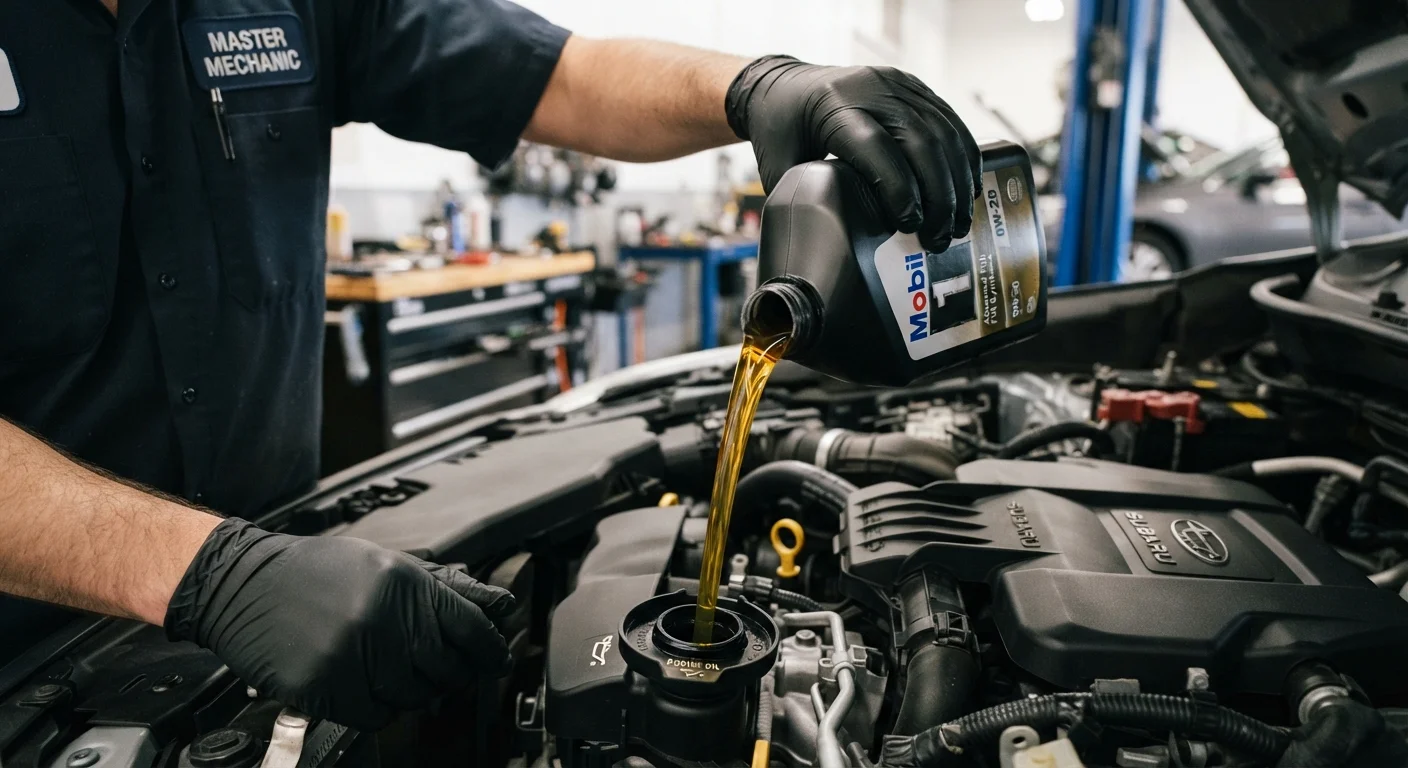
Option A
Synthetic Motor Oil
The engineered, high-performance option.
Best for: Drivers with newer vehicles, extreme climates, long intervals between oil changes, or demanding driving conditions.
Option B
Conventional Motor Oil
The time-tested, straightforward choice.
Best for: Drivers of older, lower-mileage vehicles with simple driving patterns who follow frequent change intervals.
How Each Oil Is Made - and Why It Matters
The fundamental difference between synthetic and conventional motor oil comes down to origin and consistency. Conventional motor oil is refined directly from crude petroleum. While refiners remove many impurities, naturally occurring variations in the molecular structure remain. Those inconsistencies affect how the oil behaves under heat, cold, and prolonged use.
Synthetic motor oil, by contrast, is either fully engineered from chemical compounds or built from a highly refined petroleum base that undergoes additional processing. The result is a more uniform molecular structure - one that resists breakdown more effectively, flows more predictably in cold temperatures, and maintains a stable viscosity (its resistance to flow) at high operating temperatures.
There's also a middle ground: synthetic blend oil, which mixes conventional base stock with synthetic compounds. It typically offers better performance than straight conventional at a lower price point than full synthetic. For a deeper look at how oil labels decode these differences, see what the numbers on motor oil bottles actually mean.
| Criterion | Synthetic Motor Oil | Conventional Motor Oil |
|---|---|---|
| Origin | Chemically engineered or heavily refined | Refined from crude petroleum |
| Molecular consistency | Highly uniform | Naturally variable |
| Cold-temperature flow | Faster, more protective | Slower at very low temps |
| Heat resistance | Higher resistance to breakdown | Degrades faster under sustained heat |
| Typical service interval | Often 7,500-10,000+ miles (per manufacturer) | Often 3,000-5,000 miles (per manufacturer) |
| Cost per oil change | Higher upfront | Lower upfront |
| Suits older engines? | Yes, generally compatible | Yes, often the designed-for choice |
| Required by some manufacturers? | Yes - check your owner's manual | Rarely required in newer vehicles |
Performance Differences That Affect Real Drivers
For most everyday driving, both oil types will keep an engine lubricated adequately - but performance gaps emerge under stress. Cold starts are one of the most damaging moments for an engine, because oil must flow immediately to protect moving parts. Synthetic oil flows faster in low temperatures, reducing the window when metal surfaces run with minimal lubrication.
At the other end, sustained high-heat driving - highway miles, towing, stop-and-go traffic in summer - causes conventional oil to oxidize and degrade faster. Synthetic oil resists this thermal breakdown, which is part of why it's associated with longer service intervals. That said, extended intervals are only appropriate when both the oil and your vehicle's manufacturer specifically support them. Never rely solely on marketing claims to set your change schedule.
~10,000 miles
Typical synthetic oil change interval
Many vehicle manufacturers and oil industry guidelines suggest full synthetic oil can last between 7,500 and 10,000 miles or more, depending on the vehicle and driving conditions.
~5 seconds
Critical lubrication window at cold start
Engineering studies have long identified the first few seconds after a cold start - before oil pressure builds fully - as disproportionately responsible for engine wear.
Drivers dealing with high-mileage engines should also note that some formulations are designed specifically for that situation - understanding those label distinctions helps you make a confident choice without guesswork.
Cost, Intervals, and What Your Manual Actually Says
A single synthetic oil change typically costs more than a conventional one - sometimes significantly. However, synthetic oil's longer recommended service intervals can partially close that gap over the course of a year. A driver changing conventional oil every 5,000 miles may pay less per visit but more total visits annually than a driver on a synthetic schedule.
The key variable most drivers overlook: your owner's manual. Automakers specify the oil type and viscosity grade - such as 5W-30 - that engineering and testing determined is right for that engine. If your manual calls for synthetic, using conventional oil instead may not provide adequate protection. If it lists conventional as sufficient, upgrading to synthetic won't hurt, but it isn't necessarily required.
The persistent belief that oil must be changed every 3,000 miles regardless of type is one of the most outdated pieces of automotive advice still in circulation. The 3,000-mile rule has been overtaken by modern engine and oil technology - and following it with synthetic oil in a modern vehicle often means discarding usable oil prematurely. More broadly, this is just one of several car maintenance myths that cost drivers money each year.
The content on this site is provided for informational purposes only and should not be considered a substitute for professional advice. While we strive to provide accurate and up-to-date information, we make no guarantees regarding its completeness or accuracy. Always consult a qualified professional for advice specific to your circumstances before making any decisions.