

Breaking Down the Code: What Those Numbers Mean
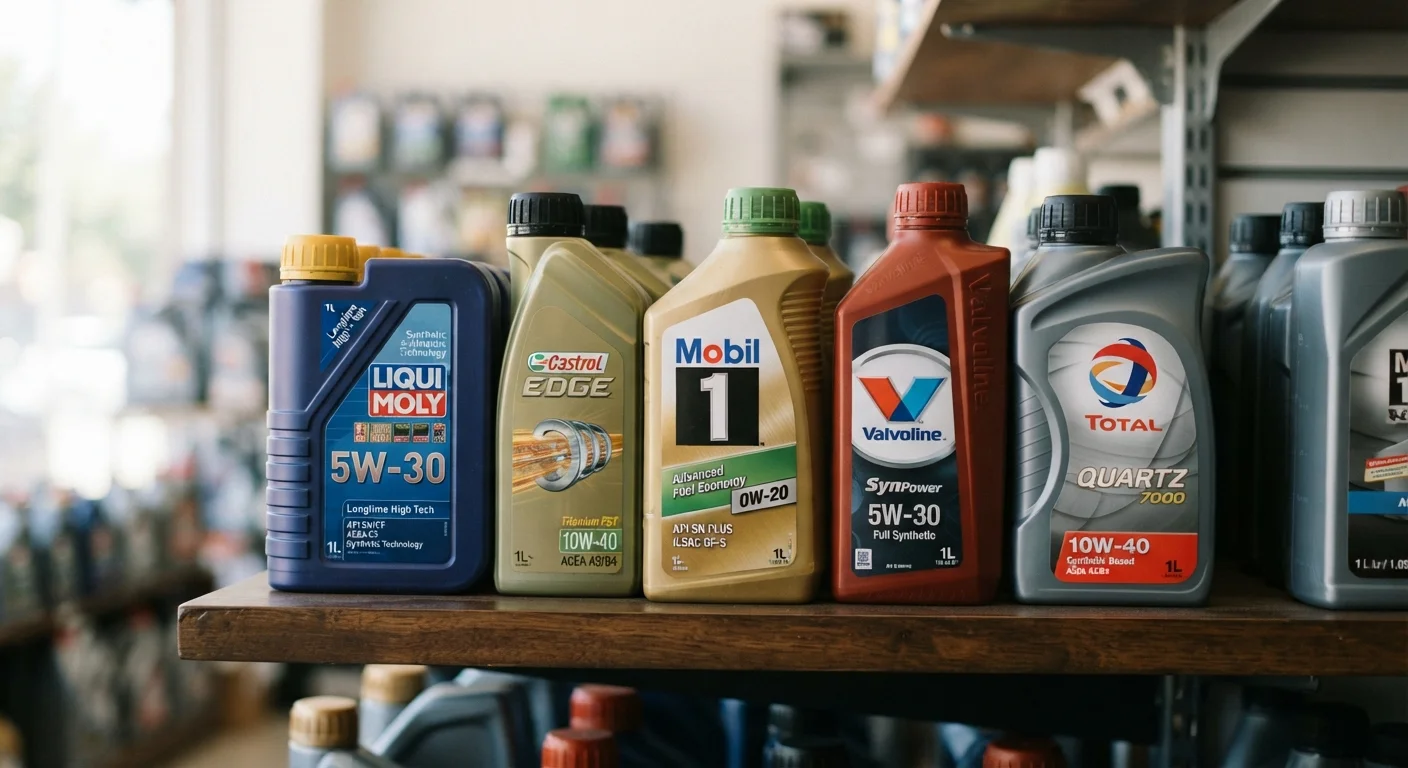
Pick up any bottle of motor oil and you'll see a code like 5W-30 or 10W-40 printed prominently on the label. This is the oil's SAE viscosity grade, established by the Society of Automotive Engineers. It tells you two critical things about how the oil behaves inside your engine.
The number before the W (which stands for Winter, not weight) measures how easily the oil flows when your engine is cold - such as on a freezing morning before you turn the key. A lower number means the oil stays thinner in the cold and reaches engine components faster during startup, which is when a large share of engine wear occurs. Common cold ratings include 0W, 5W, and 10W.
The number after the W describes the oil's viscosity at normal engine operating temperature, around 212°F. A higher number means the oil is thicker at heat. So a 10W-40 is thicker when hot than a 10W-30, which can matter in high-stress or high-heat applications.
75,000+
Miles that typically qualify an engine for high-mileage oil
Most high-mileage oil formulations are marketed and tested for engines above this threshold, though exact criteria vary by product.
~25%
Engine wear occurring during cold startup
Industry engineers frequently cite cold-start conditions as a disproportionate contributor to overall engine wear, underscoring why cold-temperature viscosity ratings matter.
Oil Types: Conventional, Synthetic, and Everything In Between
Beyond viscosity, the type of oil matters just as much. The four main categories you'll encounter are:
- Conventional (mineral) oil: Refined directly from crude oil. It meets baseline lubrication needs and suits many older or simpler engines running under normal conditions.
- Full synthetic oil: Engineered from chemically modified base stocks. It offers superior performance across extreme temperatures, resists oxidation longer, and is required by many modern turbocharged and high-output engines. For a deeper comparison, see how synthetic and conventional oils really differ.
- Synthetic blend oil: A mix of conventional and synthetic base stocks. It provides better protection than straight conventional oil at a lower cost than full synthetic - often a practical middle ground.
- High-mileage oil: Formulated specifically for engines with approximately 75,000 miles or more. It typically includes seal conditioners, antioxidants, and extra detergents to address the kinds of wear and minor seepage that accumulate over time.
The label on a quality oil bottle will also carry an API donut - a certification symbol from the American Petroleum Institute - confirming the oil meets current performance standards for gasoline engines.
Check Your Cap, Not Just the Bottle
Many vehicles have the recommended oil viscosity printed directly on the oil filler cap - typically something like '5W-30 recommended.' This is a quick confirmation you can use right at the dipstick. It doesn't replace reading your owner's manual, but it's a handy on-the-spot reference.
How to Know Which Oil Your Engine Actually Needs
The single most reliable source for the correct oil specification is your vehicle owner's manual. Manufacturers specify viscosity grade and sometimes oil type based on the engine's tolerances, operating temperatures, and warranty requirements. Ignoring that recommendation isn't just guesswork - it can accelerate wear or affect your warranty coverage.
A few practical factors also influence your choice:
- Climate: Drivers in very cold regions often benefit from a lower winter rating (like 0W) to ensure fast oil flow on frigid mornings.
- Engine age and mileage: Higher-mileage engines may benefit from a slightly thicker oil or a high-mileage formulation - but consult a qualified mechanic before switching grades.
- Driving conditions: Frequent towing, stop-and-go traffic, or extreme heat can put extra thermal stress on oil, sometimes making a more robust formulation worthwhile.
Understanding oil is one piece of a broader maintenance picture. If you want to see how oil changes fit alongside other service milestones, your car's maintenance schedule decoded walks through what each interval actually means. And if you've heard that every car needs an oil change every 3,000 miles, it's worth reading about common maintenance myths that cost drivers money - the reality is more nuanced than many drivers realize.
Frequently Asked Questions
5W-30 is a viscosity grade. The '5W' indicates how the oil flows at cold temperatures - lower numbers flow better in the cold. The '30' describes the oil's thickness at normal engine operating temperature. Together, they tell you the oil is formulated for good cold starts and stable high-temp protection.
It's generally not advisable. Your engine is designed around a specific viscosity for proper lubrication and clearance. Using the wrong grade can reduce fuel economy, accelerate wear, or void your powertrain warranty. Always consult your owner's manual or a qualified mechanic before switching.
Full synthetic oil performs better across a wider temperature range and resists breakdown longer, but 'better' depends on your engine, age, and driving conditions. Many newer vehicles require synthetic, while others run fine on conventional. Check your owner's manual for the manufacturer's recommendation.
High-mileage oil is formulated with conditioners and seal-swelling agents aimed at engines with 75,000 or more miles. These additives help address minor leaks and compensate for wear over time. Whether you need it depends on your engine's condition - a mechanic can help you assess.
Change intervals vary by oil type, engine, and driving conditions. Conventional oil typically requires changes every 3,000-5,000 miles, while many full synthetic formulations are rated for 7,500-10,000 miles or more. Always follow your vehicle manufacturer's recommendation in the owner's manual.
The content on this site is provided for informational purposes only and should not be considered a substitute for professional advice. While we strive to provide accurate and up-to-date information, we make no guarantees regarding its completeness or accuracy. Always consult a qualified professional for advice specific to your circumstances before making any decisions.