

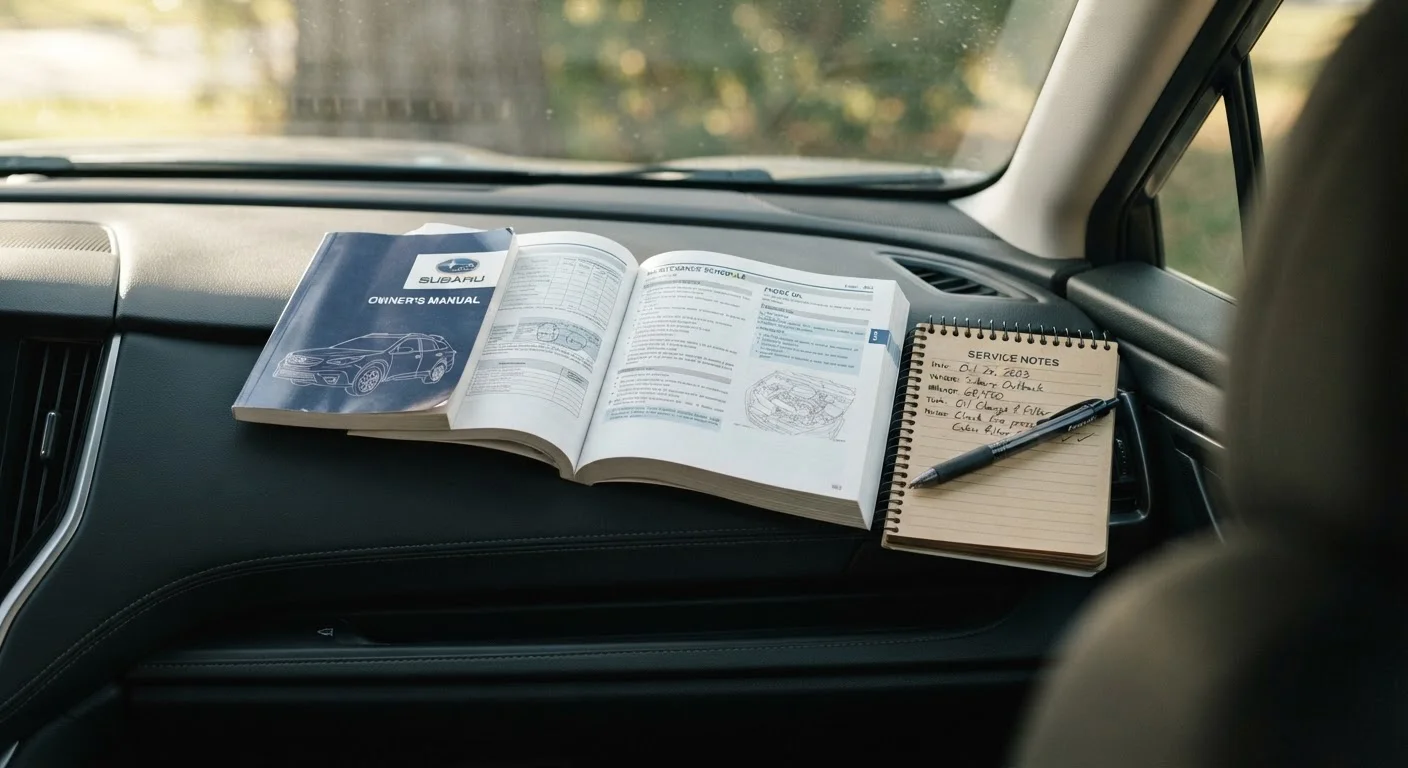
What the Mileage Milestones Actually Mean
Maintenance schedules are organized around mileage intervals - typically every 5,000, 15,000, 30,000, 60,000, and 100,000 miles - because vehicle components wear at rates tied to use. Each milestone signals a different set of tasks.
Every 5,000-7,500 miles: This window covers the most frequent service items, usually an oil and filter change and a tire rotation. Modern synthetic oils have extended these intervals well beyond the old 3,000-mile benchmark, but the specific recommendation depends on your engine and oil type. See our guide to engine oil types for a breakdown of what those label numbers really mean.
Every 15,000-30,000 miles: Air filters, cabin air filters, and brake fluid inspections commonly appear here. These items don't announce their decline - a clogged air filter quietly reduces fuel efficiency and engine performance before you notice anything wrong.
Every 30,000-60,000 miles: Spark plugs, transmission fluid, and coolant often fall into this range. Ignoring spark plug replacement can lead to misfires, reduced fuel economy, and strain on the ignition system.
60,000-100,000 miles and beyond: Timing belts (on vehicles that have them), serpentine belts, and major fluid flushes are common here. A timing belt failure can cause catastrophic engine damage - this is one interval where skipping is genuinely high-stakes.
1 in 3
Cars on U.S. roads overdue for an oil change
Industry estimates from automotive research groups suggest roughly one-third of vehicles in circulation are operating past their recommended oil change interval.
5,000-10,000 mi
Typical modern oil change interval range
Most current manufacturer recommendations for vehicles using full synthetic oil fall between 5,000 and 10,000 miles, well beyond the old 3,000-mile rule of thumb.
$1,200+
Average cost of a timing belt failure repair
According to automotive repair cost estimates, engine damage from a broken timing belt can result in repair bills exceeding $1,200, far more than a scheduled replacement.
Normal vs. Severe Driving: Which Schedule Applies to You?
Most owner's manuals publish two maintenance tracks: one for normal driving and one for severe or special operating conditions. The gap between them can be significant - sometimes cutting intervals in half.
Severe conditions, as defined by most manufacturers, include: frequent short trips under five miles (the engine never fully warms up, causing moisture and fuel dilution to accumulate in the oil), sustained stop-and-go city traffic, towing or hauling heavy loads, and driving in extreme temperatures or on unpaved roads.
If your daily commute is a short urban drive - common for millions of American drivers - you likely qualify for the severe schedule even though your car never sees a dirt road or a trailer hitch. Using the wrong schedule means your fluids and components may be degrading faster than your service intervals account for.
Check Both Schedules in Your Manual
Before your next service visit, open your owner's manual and locate both the normal and severe maintenance schedules. Honestly assess your typical driving pattern - short city trips, temperature extremes, or regular towing may mean the severe schedule is the right one for you. Following the correct track from the start is far less expensive than repairing preventable wear.
Time-Based Intervals: Why Mileage Isn't the Whole Story
A driver who puts only 5,000 miles on their car each year might assume their maintenance schedule barely applies to them. That assumption can be costly. Many service items carry a time-based trigger alongside the mileage one - often expressed as "every X miles or X months, whichever comes first."
Engine oil absorbs moisture and oxidizes over time, losing protective properties even in a lightly used vehicle. Coolant becomes acidic with age, corroding internal components. Brake fluid is hygroscopic - it absorbs water from the atmosphere - reducing boiling point and braking effectiveness. Rubber belts and hoses become brittle regardless of how many miles they've turned.
If a warning light appears on your dashboard, it may signal something that time-based neglect accelerated, not just mileage.
Keeping Track and Protecting Your Investment
Following the schedule is only half the equation - documenting it is the other. A complete service history shows prospective buyers that the vehicle was cared for, gives mechanics context when diagnosing problems, and provides proof of compliance if a warranty claim arises.
Our guide to keeping a vehicle maintenance log walks through exactly what to record and why it pays off at resale. Consistent documentation also connects to the bigger picture of ownership costs - a well-maintained vehicle depreciates more slowly than a neglected one, as explored in our piece on how your car's depreciation curve actually works.
If you're new to car ownership, our introduction to car maintenance for new drivers provides a grounded starting point without the overwhelm.
A driver with a short urban commute follows only the normal-condition oil change schedule, changing oil every 7,500 miles. After two years, the mechanic notes significant sludge buildup in the engine.
A retired couple drives their car just 4,000 miles a year and skips service because the mileage trigger hasn't been reached. Two years pass without an oil change or brake fluid inspection.
A vehicle owner diligently follows the 60,000-mile timing belt replacement interval specified in the owner's manual, despite the belt appearing visually fine.
Frequently Asked Questions
It's printed in your vehicle's owner's manual, usually in a dedicated 'Maintenance' or 'Service' section. Many automakers also publish this information on their websites by entering your vehicle's model year and trim. If you've lost your manual, a dealership's service department can typically provide a copy.
For most modern vehicles, no. Advances in engine design and synthetic oil formulations have extended oil change intervals considerably - many manufacturers now recommend 5,000 to 10,000 miles or more. Always follow your owner's manual rather than a generic rule of thumb.
Missing one service isn't always catastrophic, but repeated delays can allow wear to go unchecked and may void manufacturer warranty coverage. Components like timing belts, for example, can cause severe engine damage if they fail because replacement was postponed.
Yes. Fluids absorb moisture and break down over time regardless of mileage, and rubber seals, belts, and hoses degrade with age. Many maintenance schedules include a time-based interval (such as every 12 months) alongside a mileage trigger - whichever comes first applies.
Manufacturers typically define severe conditions as frequent short trips under five miles, stop-and-go city traffic, extreme heat or cold, towing or hauling heavy loads, and driving on unpaved or dusty roads. If these describe your regular driving, follow the severe-duty service intervals in your manual.
Absolutely. A complete service history protects your warranty, helps mechanics diagnose problems more accurately, and supports your vehicle's resale value. A simple logbook or a dedicated app works well for tracking dates, mileage, and what was done.
The content on this site is provided for informational purposes only and should not be considered a substitute for professional advice. While we strive to provide accurate and up-to-date information, we make no guarantees regarding its completeness or accuracy. Always consult a qualified professional for advice specific to your circumstances before making any decisions.