

Why a Maintenance Log Is Worth the Effort
Most drivers don't think about their vehicle's service history until they're sitting across from a mechanic trying to remember when the transmission fluid was last changed - or standing in a parking lot negotiating a used-car price with no paperwork to back up their claims. A maintenance log closes that gap.
A written or digital record of every service your vehicle receives does three practical things: it helps you stay ahead of scheduled maintenance, it gives mechanics a diagnostic shortcut when something goes wrong, and it adds measurable credibility when you sell or trade in the vehicle. Buyers and dealers place real weight on documented care. For more on the full case for keeping records, see our article on why a maintenance log matters more than most owners realize.
What to Record - and How to Stay Consistent
The format of your log matters far less than what goes into it. A pocket notebook in the glove compartment, a spreadsheet, or a dedicated app all work well - as long as entries are made promptly and completely.
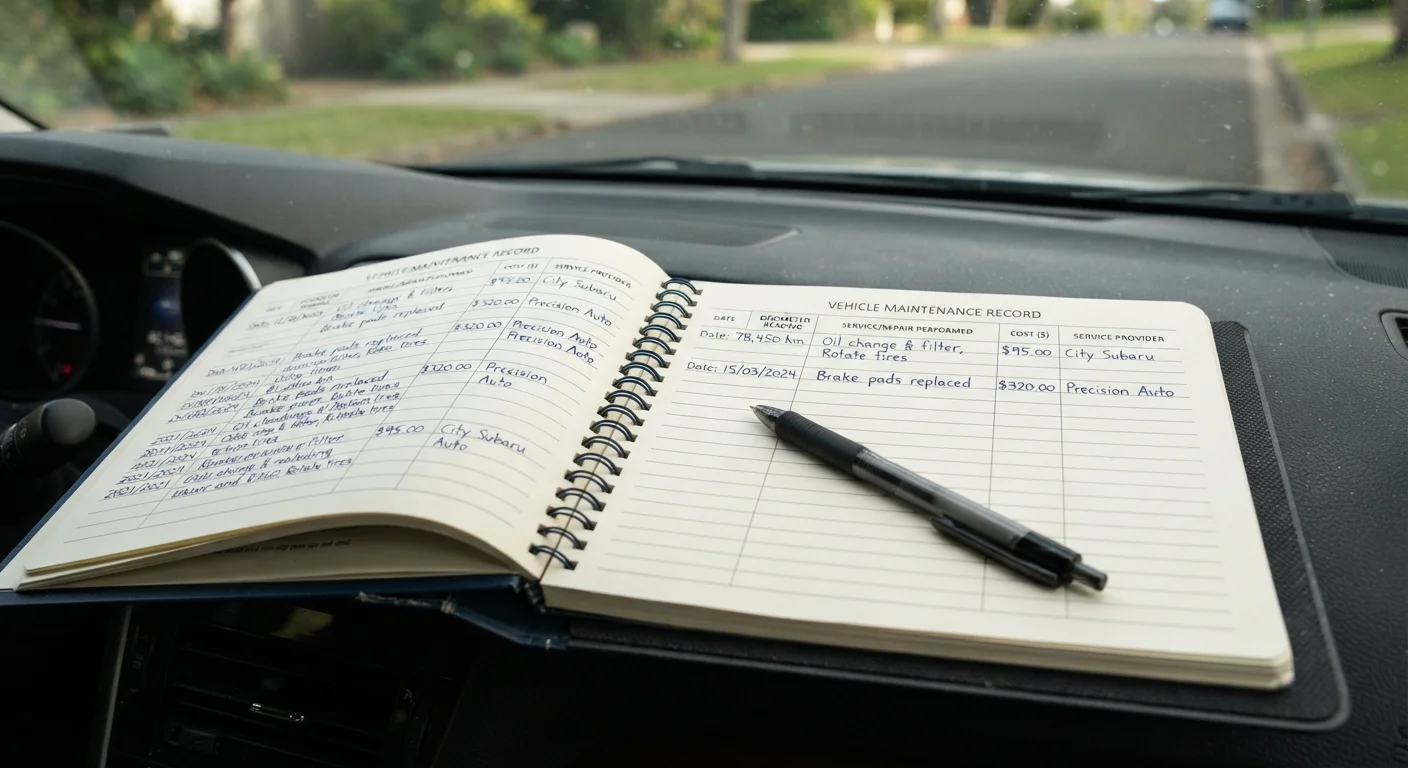
Every entry should capture: the date, current odometer reading, what service was performed, which parts or fluids were used, total cost, and who performed the work (you, a shop, or a dealership). Receipt photos attached to a digital log add an extra layer of verification.
If you're just getting started with vehicle care basics, our guide on car maintenance for new drivers outlines the foundational services worth logging from day one. Drivers with older, higher-mileage vehicles should also review how maintenance priorities shift over time, since the list of items worth tracking expands as vehicles age.
Turning Records Into Smarter Ownership Decisions
A log isn't just an archive - it's an active tool. Reviewing your entries regularly lets you cross-reference against your manufacturer's maintenance schedule and catch overdue services before they become expensive failures. Patterns also emerge over time: if you're replacing the same component repeatedly, that's diagnostic information worth sharing with your mechanic.
When costs are logged accurately, you can also make more informed decisions about repair-versus-replace thresholds - a particularly useful calculation for higher-mileage vehicles. For broader ownership decisions including insurance and cost management, the Car Ownership hub provides additional context.
A thorough log ultimately shifts you from reactive to proactive ownership. That shift protects your vehicle, your safety, and your wallet over the long run.
The content on this site is provided for informational purposes only and should not be considered a substitute for professional advice. While we strive to provide accurate and up-to-date information, we make no guarantees regarding its completeness or accuracy. Always consult a qualified professional for advice specific to your circumstances before making any decisions.