

What a Maintenance Log Actually Is
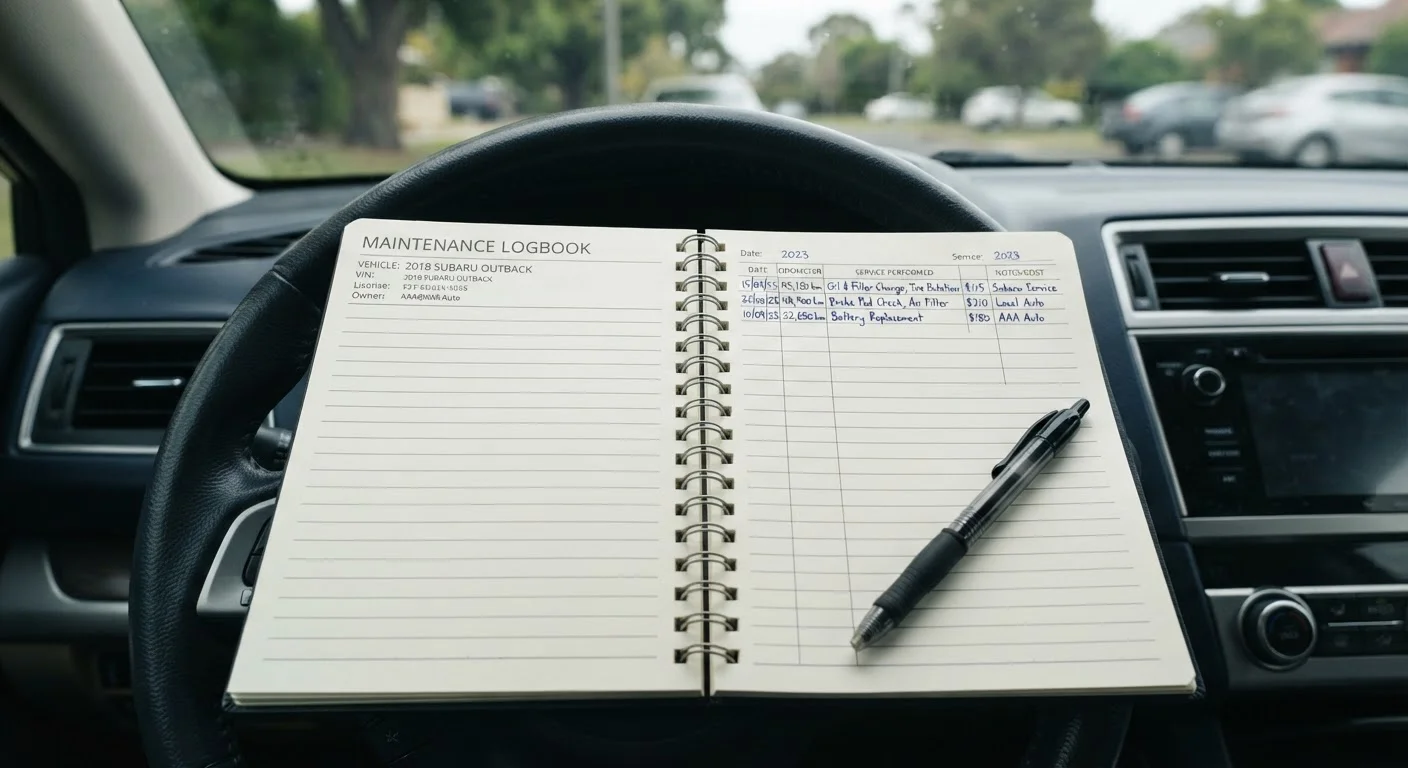
A vehicle maintenance log is a running record of every service, repair, and inspection performed on your car - who did the work, when, at what mileage, and what was found or replaced. It's not a complex document. At its simplest, it's a dated list kept in a glove compartment notebook or a free smartphone app.
What it isn't is optional, at least not if you care about long-term ownership costs. For most drivers, a car is the second-largest financial commitment they make. Treating its service history as an afterthought is a bit like skipping receipts on a major home renovation. The Car Maintenance hub covers the full landscape of upkeep needs - the log is the thread that connects all of it over time.
The Real-World Reasons Logs Matter
Three concrete benefits stand out, each affecting a different stage of ownership.
Warranty Protection
Most new-vehicle warranties require that owners follow the manufacturer's recommended service schedule. If a covered component fails and you can't demonstrate that maintenance was performed on time, the manufacturer or dealer may dispute the claim. A dated log - especially one supported by receipts or shop invoices - is your documentation. If you want to understand what those service intervals actually require, see our guide to decoding your car's maintenance schedule.
Resale Value
Private buyers and dealers both assign real weight to documented service history. A car with a complete log signals that the owner was attentive, reducing a buyer's perceived risk. While no log guarantees a specific price outcome, vehicles with verifiable records are generally easier to sell and attract more serious buyers.
Faster, More Accurate Diagnostics
When a check-engine light appears, a mechanic's first question is often: what's been done to this car, and when? A clear log can eliminate guesswork, narrow the likely culprits, and reduce diagnostic time - which translates to lower labor costs and a faster turnaround for you.
~$1,500
Estimated resale premium for documented service history
Industry observers and automotive consumer research consistently note that buyers assign measurable value to verifiable maintenance records, though the exact figure varies by vehicle age and condition.
30-45 min
Typical diagnostic time saved with a complete service log
Mechanics and service advisors widely report that a clear service history reduces the time spent ruling out prior work as a cause of current symptoms.
Best Practices for Building and Keeping Your Log
Record every service entry within 48 hours of the work being done.
Memory fades quickly, and a log entry made a week later often omits key details like the exact mileage or what parts were used. Timely entries keep the record accurate and usable.
Keep physical receipts or digital photos of every invoice alongside your log.
A log entry is your summary; the receipt is your proof. Warranty disputes and resale negotiations are far easier when you can produce the actual paperwork rather than just notes.
Note what was inspected but not replaced, not just what was serviced.
A record that only captures replaced parts misses valuable diagnostic context. Knowing that brakes were inspected and had 4mm of pad remaining six months ago helps a mechanic make a more confident assessment today.
Log any unusual symptoms you notice between service visits.
Intermittent noises, vibrations, or warning lights that come and go are notoriously difficult to diagnose. A logged pattern - 'clunking noise on cold starts, three times this week' - gives a mechanic actionable data they wouldn't otherwise have.
Transfer the log - or a summary of it - when selling the vehicle.
The log's value doesn't end at sale. Handing it to the next owner is a transparent, goodwill gesture that can expedite the sale and demonstrate the vehicle's condition more convincingly than any verbal assurance.
If you handle any work yourself, logging it is especially important. DIY maintenance can save money, but without documentation, those efforts become invisible to future mechanics and buyers alike.
Getting Started Without Overthinking It
The most common reason owners don't keep a log is that they wait for the perfect system. Don't. A basic notebook with three columns - date, mileage, service performed - is enough to start. If you prefer digital, several free apps sync with your vehicle's VIN and can remind you of upcoming intervals.
Owners of older or high-mileage vehicles have the most to gain. As vehicles age, the relationship between different systems becomes harder to track from memory alone. Our article on high-mileage vehicle upkeep explains how maintenance priorities shift after 100,000 miles - and a log is essential context for all of it.
New drivers building habits for the first time will find that starting a log early is one of the lowest-effort, highest-payoff habits available. See Car Maintenance for New Drivers for a grounded introduction to the essentials.
The content on this site is provided for informational purposes only and should not be considered a substitute for professional advice. While we strive to provide accurate and up-to-date information, we make no guarantees regarding its completeness or accuracy. Always consult a qualified professional for advice specific to your circumstances before making any decisions.