

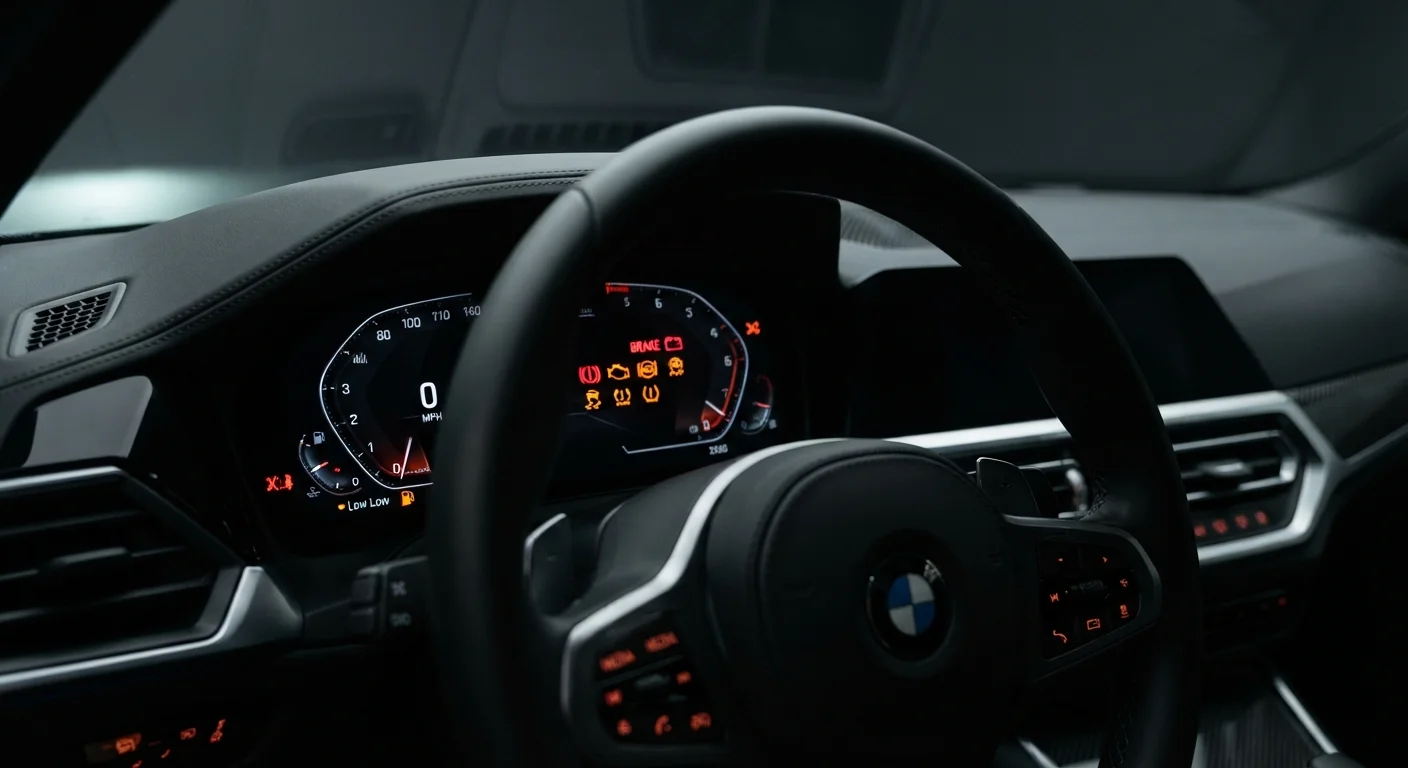
What Dashboard Warning Lights Are Actually Doing
Modern vehicles use an onboard diagnostic system (OBD) that continuously monitors dozens of sensors across your engine, transmission, brakes, and other systems. When something falls outside normal operating parameters, the system triggers a dashboard warning light to flag it. These lights aren't suggestions - they're data points your car is surfacing for you.
Colors follow a broadly consistent logic across most vehicles: red signals stop-immediately urgency, amber or yellow indicates a condition that needs attention soon, and green or blue simply confirms a system is active (think headlights or turn signals). White lights often appear on newer vehicles to indicate a system status.
For a deeper look at the systems behind these alerts, see our plain-language guide to what each system does.
| Red warning light meaning | Stop / urgent - pull over or seek immediate service |
| Amber/yellow warning light meaning | Service needed soon - schedule within days to weeks |
| Flashing check engine light | Reduce speed immediately and seek service - more severe than a steady light |
| TPMS inflation reference | Use the sticker on your driver's door jamb, not the tire sidewall number |
| Fault code retrieval | Any OBD scan tool can read codes; many auto parts stores offer free scans |
| Owner's manual | Always the authoritative reference for your vehicle's specific warning lights |
The Lights You Should Never Ignore
Certain warning lights demand immediate action - pulling over safely and shutting the engine off is often the right call. Continuing to drive can escalate a manageable repair into serious vehicle damage or a safety emergency.
OBD (On-Board Diagnostics)
A standardized system built into modern vehicles that monitors sensor data from the engine, transmission, and other components. When the system detects a fault, it stores a diagnostic trouble code and may illuminate a warning light.
Fault Code
A specific alphanumeric code stored by the OBD system when a sensor reading falls outside acceptable limits. Mechanics use a scan tool to read these codes and pinpoint what triggered a warning light.
TPMS
Tire Pressure Monitoring System - a sensor-based system that alerts the driver when one or more tires drops significantly below the recommended inflation pressure.
Charging System
The combination of the alternator, battery, and associated wiring that keeps your vehicle powered while the engine runs and replenishes the battery. A charging system failure leaves the vehicle running on battery reserve only.
Oil Pressure
The force at which oil circulates through the engine to lubricate moving parts. Low oil pressure means parts are not being adequately protected, and continued operation can cause rapid, severe engine damage.
- Oil Pressure Warning (red oil can symbol): Signals dangerously low oil pressure. Pull over, shut off the engine, and check oil level only after the engine has cooled. Do not drive the vehicle further until the cause is diagnosed by a qualified mechanic.
- Engine Temperature Warning (thermometer in water): Your engine is overheating. Pull over safely, turn the engine off, and do not open the radiator cap until the engine is fully cool. Continuing to drive risks severe engine damage.
- Battery / Charging System (battery symbol): The charging system has failed. Your vehicle is running on battery reserve only - electrical systems will begin shutting down. Drive directly to a service location if safe, or pull over and call for help.
- Brake Warning Light (exclamation mark inside circle): Could indicate low brake fluid, a brake system fault, or an engaged parking brake. If the parking brake is fully released and the light stays on, treat this as urgent. See signs your brakes are telling you something for more context.
If any red warning light comes on while you're driving and you're not sure what to do, our guide to roadside emergencies walks through how to respond safely.
Amber Lights: Attend to These Soon
Amber or yellow lights signal a condition that doesn't require stopping immediately but does require a service appointment within a reasonable timeframe - typically days to a couple of weeks, not months.
- Check Engine (engine outline): One of the most misunderstood lights on any dashboard. It can represent anything from a loose gas cap to a misfiring cylinder. A OBD scan at most auto parts stores or a mechanic can retrieve the specific fault code. Don't ignore it - a steady light means schedule service soon; a flashing check engine light means reduce speed and seek service immediately.
- Tire Pressure Monitoring System - TPMS (flat tire with exclamation mark): One or more tires is significantly under-inflated. Check pressure when tires are cold and inflate to the specification on your driver's door jamb sticker, not the number printed on the tire sidewall.
- Traction Control / Stability Control: Flashing briefly during slippery conditions is normal. A solid light means the system has been disabled or a fault is detected - have it checked.
- Transmission Temperature: The transmission is running too hot, often from towing or stop-and-go traffic. Reduce load and schedule an inspection.
Keeping up with scheduled service intervals reduces the likelihood of many amber lights appearing. Your car's maintenance schedule, decoded explains what each service milestone actually covers.
What to Do When a Light Comes On
Stay calm and follow this sequence: note which light appeared, observe whether any other symptoms are present (unusual sounds, smells, or handling changes), and consult your owner's manual - it contains the definitive guide to every light specific to your vehicle's year and trim.
If you don't have your owner's manual handy, many automakers offer digital versions through their websites. For fault codes tied to the check engine light, a scan tool or a visit to a mechanic will give you the specific code to research further.
When in doubt about severity, err toward caution. Driving on a red warning light to avoid inconvenience frequently results in significantly higher repair costs. A qualified mechanic is always the right resource when a warning light's cause isn't immediately clear or the repair involves safety-critical systems.
This article provides general educational information about vehicle warning systems and is not a substitute for professional mechanical diagnosis. Always consult a qualified mechanic for your specific vehicle.
The content on this site is provided for informational purposes only and should not be considered a substitute for professional advice. While we strive to provide accurate and up-to-date information, we make no guarantees regarding its completeness or accuracy. Always consult a qualified professional for advice specific to your circumstances before making any decisions.