

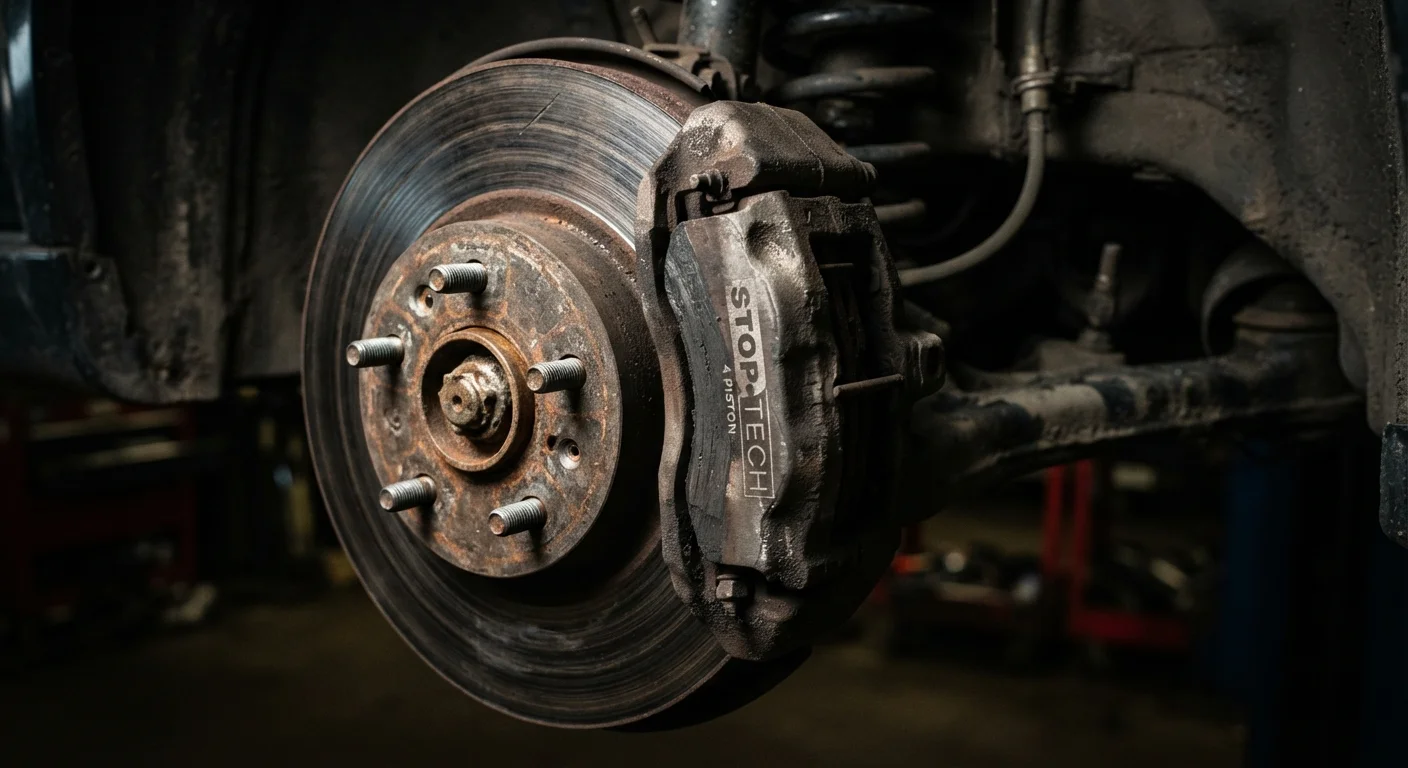
When Your Brakes Are Trying to Get Your Attention
Your brake system is one of the most safety-critical components on your vehicle, and it rarely fails without warning. The challenge is knowing how to read those warnings before a minor issue becomes a dangerous one. Whether you're commuting on city streets or driving on the highway, your brakes communicate through sounds, sensations, and even smells. Understanding what each signal typically means puts you in a far better position to act quickly and describe the problem clearly to a mechanic.
For a broader look at how braking fits into your vehicle's overall architecture, see our plain-language guide to your car's systems. Below are the most common brake symptoms everyday drivers encounter - and what each one generally indicates.
High-pitched squealing when you apply the brakes
A persistent squeal during braking is often the first sign that brake pads are approaching the end of their service life. Most modern pads include a small metal wear indicator - a thin strip designed to contact the rotor and produce a high-pitched noise once the pad material wears down to a critical level. Think of it as a built-in alert system.
If the squealing happens consistently across different weather conditions and doesn't fade after a few stops, schedule an inspection. Pads that are ignored past this point will wear through completely, leading to metal-on-metal contact and far more expensive rotor damage.
A built-in wear indicator produces that squeal - it's your brake system asking for attention.
Grinding or growling noise during braking
Grinding is the next stage beyond squealing, and it's a more urgent signal. When brake pads wear completely through, the metal backing plate contacts the rotor directly. That metal-on-metal friction causes a deep grinding or growling sound and can rapidly damage the rotor surface - turning a pad replacement into a pad-and-rotor job.
Grinding can also occur if a small stone or road debris becomes lodged between the pad and rotor. Either way, don't delay having it checked. Driving on grinding brakes not only increases repair costs but reduces your stopping power.
Grinding means metal is meeting metal - stopping distance and repair costs both increase rapidly.
Vehicle pulling to one side when braking
If your car drifts left or right when you press the brake pedal - rather than stopping in a straight line - the braking force is being applied unevenly. Common causes include a stuck or seized brake caliper on one side, uneven pad wear between the left and right wheels, or a brake hose that has deteriorated internally and is restricting fluid flow to one caliper.
Pulling during braking is different from pulling during normal driving (which often points to alignment or tire issues). A mechanic can isolate which component is responsible relatively quickly, and addressing it restores balanced, predictable stopping.
Uneven braking force - not driver error - is almost always behind a vehicle that pulls when stopping.
A soft, spongy, or low brake pedal
A healthy brake pedal should feel firm and consistent under your foot. When it feels soft, spongy, or sinks closer to the floor than usual before the brakes engage, that's a signal that something is wrong with the hydraulic side of the system. Air in the brake lines is a common cause - air compresses under pressure in ways that brake fluid does not, reducing pedal firmness and responsiveness.
A brake fluid leak is another possibility, whether at a caliper, brake line, or the master cylinder. Low fluid levels can also result from worn pads (fluid fills the caliper as pads wear), so always check the brake fluid reservoir if the pedal feels off. Any significant change in pedal feel warrants prompt professional attention.
A spongy pedal points to air or fluid loss in the hydraulic system - both reduce stopping effectiveness.
Vibration or pulsing through the pedal or steering wheel
Feeling a rhythmic pulsing or shuddering through the brake pedal - or through the steering wheel when braking - typically indicates warped or unevenly worn rotors. Rotors can warp from excessive heat buildup, often from prolonged heavy braking (such as descending long grades without engine braking) or from thermal shock, like driving through deep water immediately after hard braking.
When a rotor isn't perfectly flat, the caliper and pads don't make consistent contact, creating that pulsing sensation. Depending on the severity, rotors may be able to be resurfaced or may need replacement. Either way, a vibrating brake pedal is worth inspecting - it affects both comfort and braking consistency.
Pedal pulsation is almost always a rotor issue - warped surfaces create inconsistent pad contact.
A burning smell after heavy braking
A sharp, acrid burning odor after sustained hard braking - especially on steep descents - can indicate overheated brakes. When friction material gets excessively hot, it can temporarily lose effectiveness in a phenomenon known as brake fade. This is more common in drivers who ride the brakes continuously downhill rather than using lower gears and engine braking to control speed.
If you notice a burning smell combined with reduced braking power, pull over safely and allow the brakes to cool before continuing. Persistent burning smells under normal driving conditions - not after a long downhill stretch - may indicate a stuck caliper that is keeping the pad in constant contact with the rotor, which requires mechanical attention.
Brakes that smell burnt after normal driving may have a stuck caliper keeping pads constantly engaged.
What to Do When You Notice These Signs
No brake symptom should be left to linger. Some warnings - like a faint squeal early in the morning that disappears - can be benign, caused by light surface rust on rotors. But recurring or worsening symptoms warrant a professional inspection without delay. Brake components are designed to give you a window of time to act, not an indefinite grace period.
Describe symptoms precisely to your mechanic
When you bring your vehicle in, tell the mechanic exactly when the symptom occurs - only when braking, only at certain speeds, only in the morning, or continuously. Note whether you hear it from the front or rear and whether the steering wheel vibrates. The more specific your description, the faster a technician can isolate the cause and give you an accurate assessment.
If your brakes feel severely compromised - such as a pedal going to the floor or sudden, significant pulling - treat it as an emergency. Pull over safely and do not continue driving. Our guide to handling roadside emergencies covers what to do when your vehicle becomes unsafe to drive. And if road conditions are also a factor, the way you use your brakes matters enormously - see how surface conditions affect braking for practical context.
Staying alert to your dashboard is equally important. A brake warning light - even without obvious pedal symptoms - should be checked promptly. Our dashboard warning lights reference explains what each indicator means and how urgently to respond.
The content on this site is provided for informational purposes only and should not be considered a substitute for professional advice. While we strive to provide accurate and up-to-date information, we make no guarantees regarding its completeness or accuracy. Always consult a qualified professional for advice specific to your circumstances before making any decisions.