

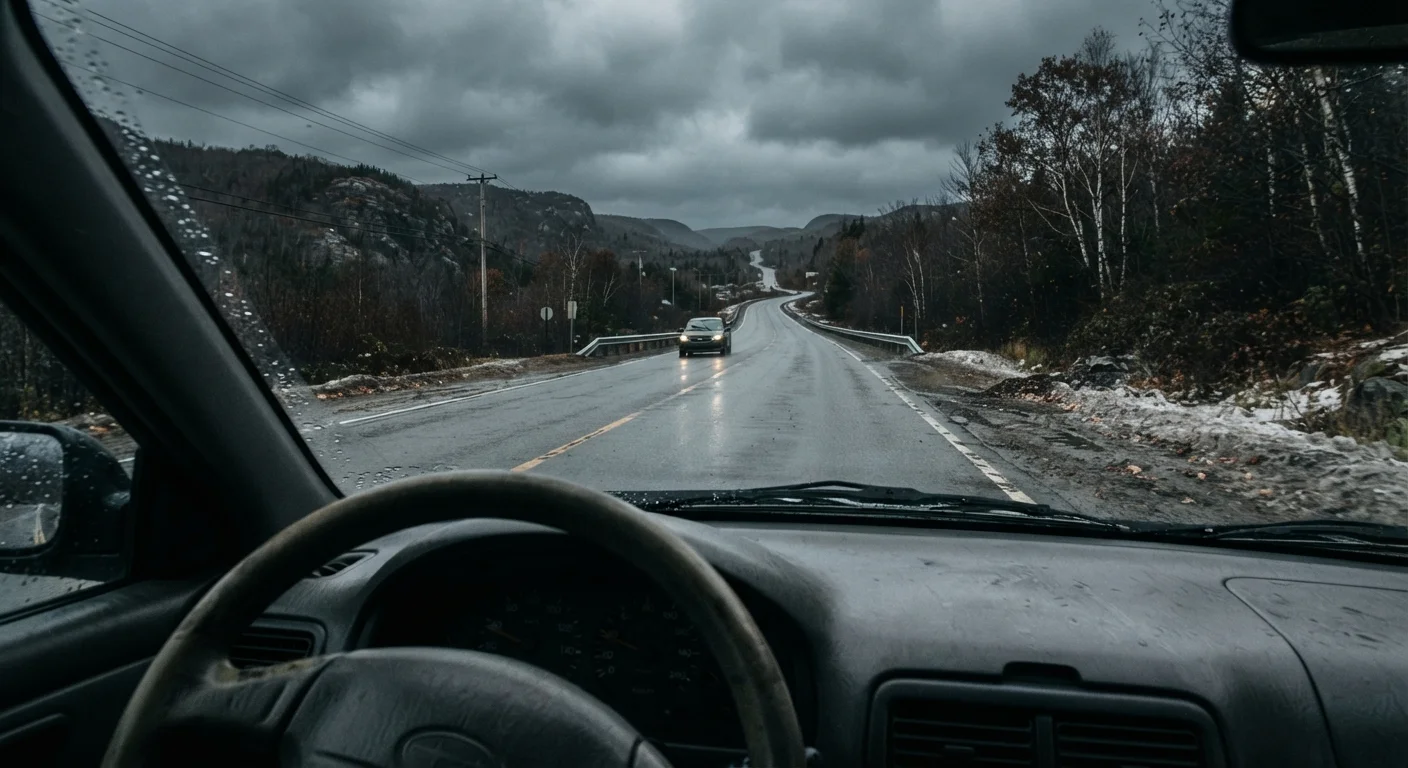
Why Surface Conditions Change Everything
Most drivers adjust for weather - they grab an umbrella, wear a coat - but they don't always adjust their driving with the same deliberateness. The physics underneath your tires, however, demand it. Traction is the fundamental link between your vehicle's controls and the road. When that link weakens, every input you make - braking, accelerating, steering - takes longer to translate into a result, if it translates at all.
Road surfaces vary enormously in the friction they provide. Dry asphalt offers the highest grip. Wet asphalt reduces it substantially. Packed ice can deliver a fraction of the grip dry pavement provides. Loose gravel is unpredictable in a different way - it shifts, scatters, and moves beneath tires rather than holding them steady.
Understanding what's happening under your wheels isn't just academic. It shapes the gap you leave between you and the car ahead, the speed you choose entering a curve, and whether you'll be able to stop in time. See our guide to underestimated road hazards for a closer look at conditions that are easy to miss until it's too late.
Reduce speed progressively before reaching a known low-traction surface
Braking distance increases dramatically on wet or icy roads. Slowing down before you reach the hazard - rather than on it - keeps your tires in their most effective operating range and reduces the risk of skidding. A vehicle traveling at 45 mph on ice may take four to ten times the stopping distance of the same vehicle on dry pavement.
Increase following distance significantly on wet or slippery roads
The standard three-second following distance assumes dry pavement. On wet roads, a following gap of at least five to six seconds is more appropriate. On ice, experts suggest eight seconds or more. Longer gaps give you more time to react and more space to stop without relying on traction that isn't there.
Use smooth, gradual inputs on gravel - avoid abrupt braking or steering
Loose gravel behaves differently from bound road surfaces. Sharp braking causes tires to plow into loose material rather than grip it, often reducing stopping effectiveness. Sudden steering inputs can cause the front tires to wash out. Smooth, deliberate movements keep tires in contact with as much stable surface as possible.
Look for surface cues before you reach them - color, texture, and shine all signal grip levels
Road surfaces communicate information visually. A dark, glossy look on pavement in freezing temperatures often indicates black ice. Matte, dry-looking gravel typically offers more grip than wet or muddy gravel. Training yourself to read these visual signals gives you a crucial extra second or two to adjust.
Avoid cruise control on any surface with reduced traction
Cruise control is designed to maintain a constant speed by applying throttle as needed. On wet, icy, or loose surfaces, this can cause a wheel-spin event at precisely the wrong moment. Disabling cruise control keeps throttle management in your hands, where it can respond to feedback from the road in real time.
Check tire condition before seasonal or weather-pattern changes
Tires are the only interface between your vehicle and the road. Worn tread dramatically reduces the ability to channel water away from the contact patch on wet roads, and reduces bite on gravel and ice. Correct inflation also matters - both over- and under-inflation reduce effective contact area and grip. Tires in poor condition undermine every other adjustment you make.
Best Practices for Each Surface Type
Adjusting to changing surfaces requires specific, deliberate habits - not just a general sense of caution. The following practices address each major surface type with the precision the situation demands.
70%
Of weather-related crashes occur on wet pavement
According to the U.S. Federal Highway Administration, the majority of weather-related vehicle crashes involve wet pavement rather than snow or ice.
4-10×
Longer stopping distance on ice vs. dry pavement
Engineering and safety research consistently shows that stopping distances on ice can be four to ten times greater than on dry asphalt at equivalent speeds.
Keep in mind that tires are the single component making all of these adjustments possible. Worn tread, improper inflation, or mismatched tires undermine everything else. The seasonal vehicle preparation guide covers how to align your maintenance routine with the conditions ahead.
Surface Transitions and the Danger You Don't See Coming
Often the most dangerous moment isn't when you're already on ice or wet pavement - it's the split second you transition onto it. A bridge deck freezes before the surrounding road. A shaded stretch of road holds moisture long after sun-exposed sections dry out. A highway on-ramp made of concrete meets asphalt with a completely different grip profile.
“The road doesn't warn you before it changes. Your job as a driver is to read what's ahead and adjust before the surface demands it of you.”
— National Safety Council, Leading U.S. nonprofit focused on eliminating preventable deaths, including roadway fatalities
The key habit is anticipation. Scanning ahead systematically - as experienced drivers do - gives you time to read bridge markers, shaded patches, and road-surface seams before you're already on them. Slow before the transition, not during it.
Sudden steering corrections or braking on a surface transition are where skids and loss of control begin. If your vehicle does begin to slide, ease off the brake or accelerator and steer gently in the direction you want the front of the car to go. Avoid overcorrecting. If your car has anti-lock brakes (ABS), maintain steady brake pressure and let the system do its job - don't pump the pedal.
For deeper context on braking behavior and stopping distances, see what happens in the seconds before a rear-end collision - the chain of events there applies directly to how surface changes extend your stopping distance without warning.
Finally, remember that defensive driving is the broader framework that ties all of these practices together. Adjusting for changing surfaces isn't a one-time reaction - it's a continuous, proactive habit every time conditions shift.
The content on this site is provided for informational purposes only and should not be considered a substitute for professional advice. While we strive to provide accurate and up-to-date information, we make no guarantees regarding its completeness or accuracy. Always consult a qualified professional for advice specific to your circumstances before making any decisions.