

Summary
22 items · 30-60 minutes
Why Seasonal Maintenance Matters
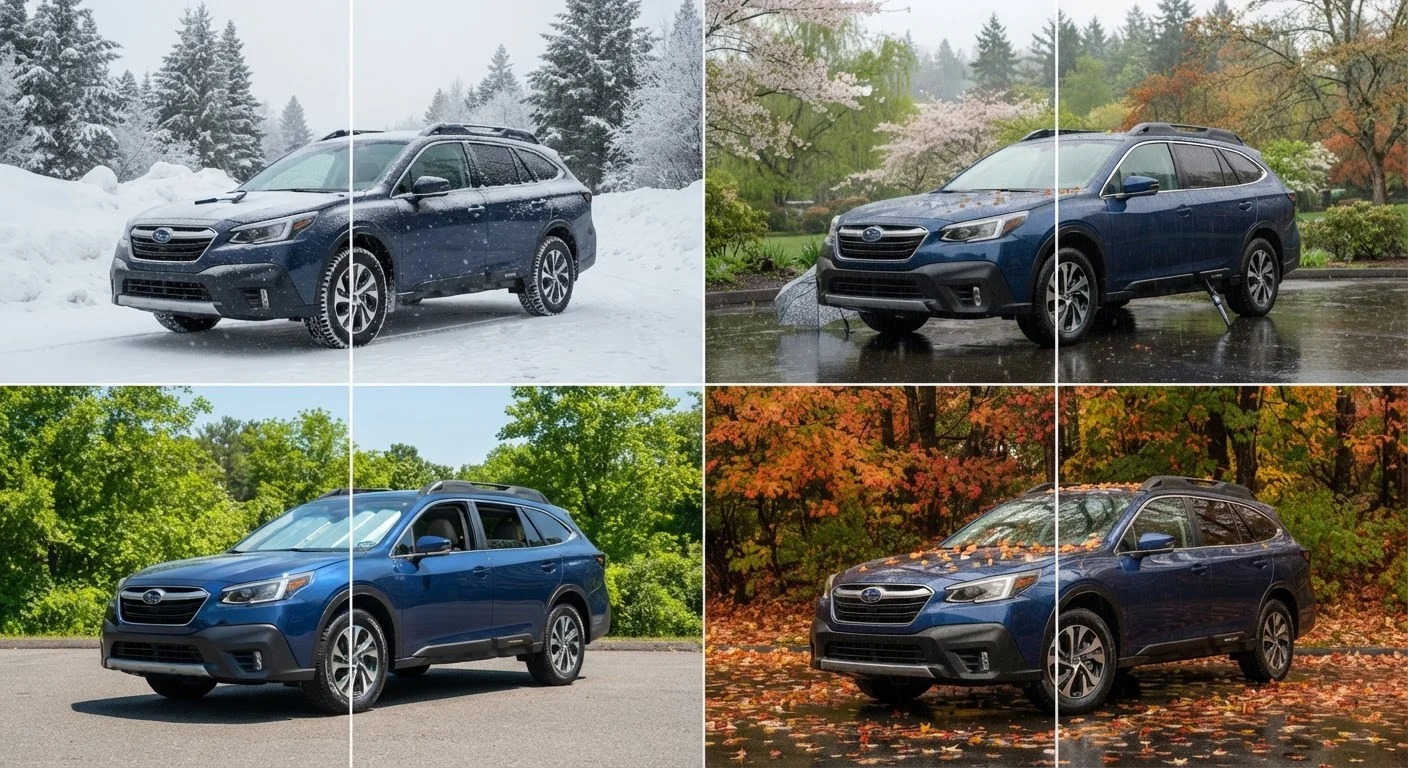
Most vehicle systems are engineered to operate within a range of conditions - but weather pushes them toward their limits. Cold thickens engine oil and drains battery reserves. Summer heat stresses coolant, belts, and rubber seals. Transition seasons bring rain, road debris, and unpredictable surfaces that test your tires and brakes in new ways.
Treating car care as a year-round rhythm rather than a single annual event helps you stay ahead of failures instead of reacting to them. Drivers who use seasonal checkpoints tend to catch worn components - a cracking serpentine belt, a battery losing cold-cranking amps - before those components fail at the worst possible moment. For a deeper look at how maintenance priorities evolve as your odometer climbs, see our high-mileage vehicle upkeep guide.
The checklist below is organized by season and system, so you can work through it efficiently whether you're prepping for the first freeze or the first heat wave.
Tire Pressure Gauge
Accurately measure tire PSI at each seasonal change and monthly in between - digital gauges offer easy readability.
Battery Tester or Multimeter
Check battery voltage and cold-cranking amp capacity before winter - many auto parts stores offer this service free.
Coolant Test Strips or Refractometer
Verify antifreeze concentration and freeze-protection level before cold weather arrives.
Tread Depth Gauge
Measure remaining tire tread precisely - a penny works as a rough check, but a gauge gives an accurate reading in 32nds of an inch.
Flashlight or Inspection Light
Illuminate tight spaces under the hood and undercarriage for inspecting hoses, belts, and brake components.
Emergency Road Kit
Keep jumper cables, a reflective triangle, ice scraper, and basic first-aid supplies in the trunk year-round.
How to Use This Checklist
Work through each group at the seasonal transition that applies to your region. Some items - like tire inspection and fluid checks - appear across multiple seasons because they're that consequential. Items marked must are non-negotiable for safe operation. Should items are strongly recommended to prevent premature wear. Nice-to-have items improve comfort, longevity, or resale value but won't leave you stranded if skipped.
For tasks that seem beyond your skill level or require special equipment, have a qualified mechanic handle them. Knowing your limits is part of responsible vehicle ownership. If you're heading to a shop anyway, our pre-shop preparation checklist will help you get the most from that visit.
Fall / Pre-Winter Preparation
Spring / Post-Winter Recovery
Summer / Heat Preparation
Year-Round Essentials
Don't Skip the Battery Test Before Winter
A battery that tests marginal in October is very likely to fail in January when cold temperatures suppress its ability to deliver starting power. Battery testing is quick, widely available, and inexpensive - do not defer it. If your battery is more than four years old and showing reduced capacity, replacing it proactively is far less disruptive than a no-start situation in freezing weather.
Cooling System Work Requires Caution
Never open a radiator cap or cooling system component when the engine is hot - pressurized coolant can cause serious burns. Allow the engine to cool completely before inspecting hoses or adding fluid. If you notice your temperature gauge climbing into the red or steam coming from under the hood, pull over safely and contact a qualified mechanic rather than continuing to drive.
Staying Road-Ready Between Seasons
Completing a seasonal checklist doesn't mean setting it aside until next quarter. A few habits extend the benefit year-round. Visually inspect your tires, lights, and fluid levels monthly - takes under five minutes. Pay attention to new sounds, vibrations, or dashboard warnings, and address them promptly rather than monitoring indefinitely.
Where you store your vehicle also affects how quickly seasonal wear accumulates. Garage versus street parking has a measurable impact on battery life, paint condition, and rubber deterioration. And because road conditions change as fast as the weather, pairing good vehicle prep with adjusted driving technique matters - our guide to driving on wet roads, ice, and gravel covers what to do once you're behind the wheel.
Seasonal maintenance is one of the most cost-effective things you can do as a vehicle owner. Small, consistent checks today prevent the large, inconvenient repairs that follow neglect.
This article is for general informational purposes only. Always consult a qualified mechanic before performing any maintenance tasks you are unfamiliar with, and follow your vehicle manufacturer's guidelines.
The content on this site is provided for informational purposes only and should not be considered a substitute for professional advice. While we strive to provide accurate and up-to-date information, we make no guarantees regarding its completeness or accuracy. Always consult a qualified professional for advice specific to your circumstances before making any decisions.