

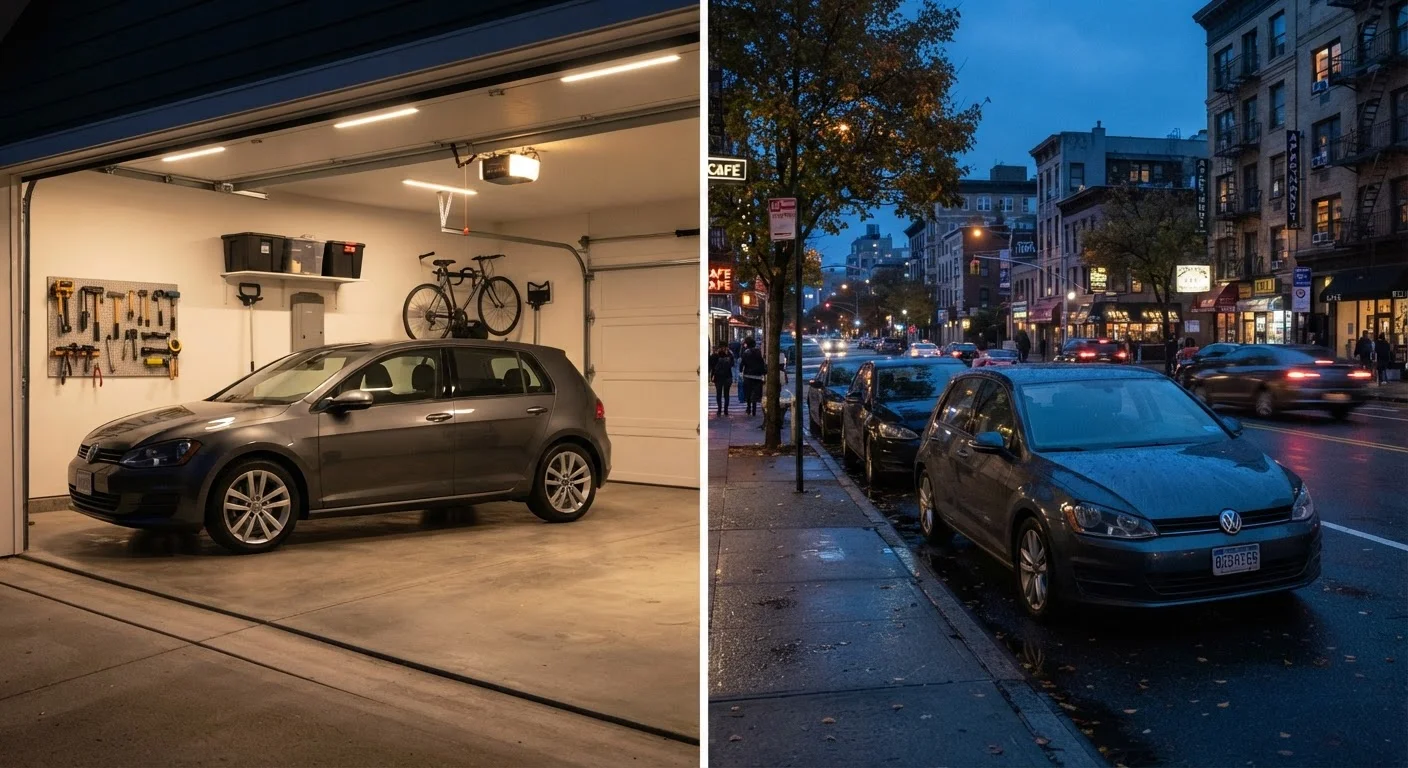
Option A
Garage Parking
The protected, controlled-environment option.
Best for: Owners who prioritize long-term vehicle condition, reduced maintenance costs, and weather protection.
Option B
Street Parking
The convenient, widely available everyday alternative.
Best for: Urban dwellers or renters who lack garage access and need a practical, no-cost parking solution.
How Parking Environment Affects Vehicle Condition
Most drivers think of parking as a passive activity - park it, walk away, come back later. In reality, your vehicle's storage environment is one of the most consistent stressors it faces. Every hour a car sits exposed to sun, rain, road salt spray, or freezing temperatures, it's accumulating wear that compounds over years of ownership.
Garage parking places the vehicle in a controlled microclimate. Temperatures inside a garage are significantly more stable than ambient outdoor temperatures - this matters because heat cycles are a leading cause of seal cracking, battery capacity loss, and fluid breakdown. UV exposure inside a garage is also dramatically lower, which slows oxidation of paint clear coat and the degradation of plastic trim, rubber seals, and wiper blades.
Street parking, by contrast, subjects a vehicle to the full range of environmental conditions: direct sunlight for hours at a time, precipitation, wind-driven debris, bird droppings (which are mildly acidic and can etch paint), and in winter climates, road salt that settles on the undercarriage and accelerates corrosion. None of these are catastrophic in isolation, but consistently over months and years, the cumulative effect is measurable.
Seasonal vehicle care becomes especially critical for street-parked vehicles, since they face weather transitions without any buffer.
| Criterion | Garage Parking | Street Parking |
|---|---|---|
| UV / Sun Exposure | Minimal - significantly reduced | High - daily direct exposure |
| Temperature Stability | More stable microclimate | Full ambient temperature swings |
| Paint & Clear Coat Wear | Slower degradation | Faster fade and oxidation |
| Corrosion / Rust Risk | Lower (less salt/moisture exposure) | Higher in winter/coastal areas |
| Theft & Vandalism Risk | Generally lower | Higher in urban environments |
| Insurance Premium Impact | May lower premiums | May result in higher premiums |
| Upfront / Ongoing Cost | Potential rental or build cost | Often free or low-cost |
| Maintenance Frequency | Standard schedule | More frequent exterior care needed |
Insurance, Security, and the Hidden Financial Picture
Where you park regularly can influence your auto insurance premium. Many insurers consider garaging status when calculating risk - a vehicle stored in a locked private garage is generally seen as less exposed to theft, vandalism, and collision damage from passing traffic. While the exact impact varies by insurer and policy, it's worth discussing your parking situation with your insurance provider to understand whether it affects your rate.
Security is another dimension. Street-parked vehicles are statistically more accessible to opportunistic theft and break-ins than garaged vehicles. This doesn't mean street parking is inherently dangerous, but it's a practical consideration - particularly in densely populated areas or neighborhoods with higher vehicle crime rates.
~1 in 38
Odds of vehicle theft per registered car annually
According to FBI Uniform Crime Report data, vehicle theft remains a consistent risk, with street-parked cars more accessible to opportunistic theft.
Up to 40°F
Temperature difference: garage vs. outdoor peak summer heat
Automotive research indicates enclosed garages can remain significantly cooler than direct-sun outdoor temperatures, reducing heat stress on fluids and electronics.
For owners weighing the broader financial picture of vehicle ownership, parking environment is one variable among many. If you're also evaluating whether to lease or own, our guide on leasing vs. financing a vehicle covers how ownership structure intersects with long-term costs.
Maintenance Adjustments Based on Where You Park
Neither parking situation eliminates the need for regular maintenance - it simply changes what you should prioritize and how often. Street-parked vehicles benefit from more frequent exterior washing to remove contaminants, particularly after winter road salt exposure or pollen season. Checking paint condition, tire sidewalls for cracking, and rubber door seals for brittleness should be part of a routine inspection for any car regularly exposed to the elements.
Garaged vehicles are not maintenance-free. A closed garage can trap moisture, especially in humid climates, which can promote corrosion underneath the vehicle if it's regularly brought in wet. Garage floors should be checked for fluid leaks periodically, as contained drips are easier to miss. Battery condition is still worth monitoring regardless of where you park, since short daily trips - common in urban environments - can undercharge a battery over time.
Regardless of your parking situation, the fundamentals remain constant: regular oil changes, tire rotations, and fluid checks form the backbone of vehicle longevity. Where you park affects the rate of wear on certain components - it doesn't change which components need attention.
The content on this site is provided for informational purposes only and should not be considered a substitute for professional advice. While we strive to provide accurate and up-to-date information, we make no guarantees regarding its completeness or accuracy. Always consult a qualified professional for advice specific to your circumstances before making any decisions.