

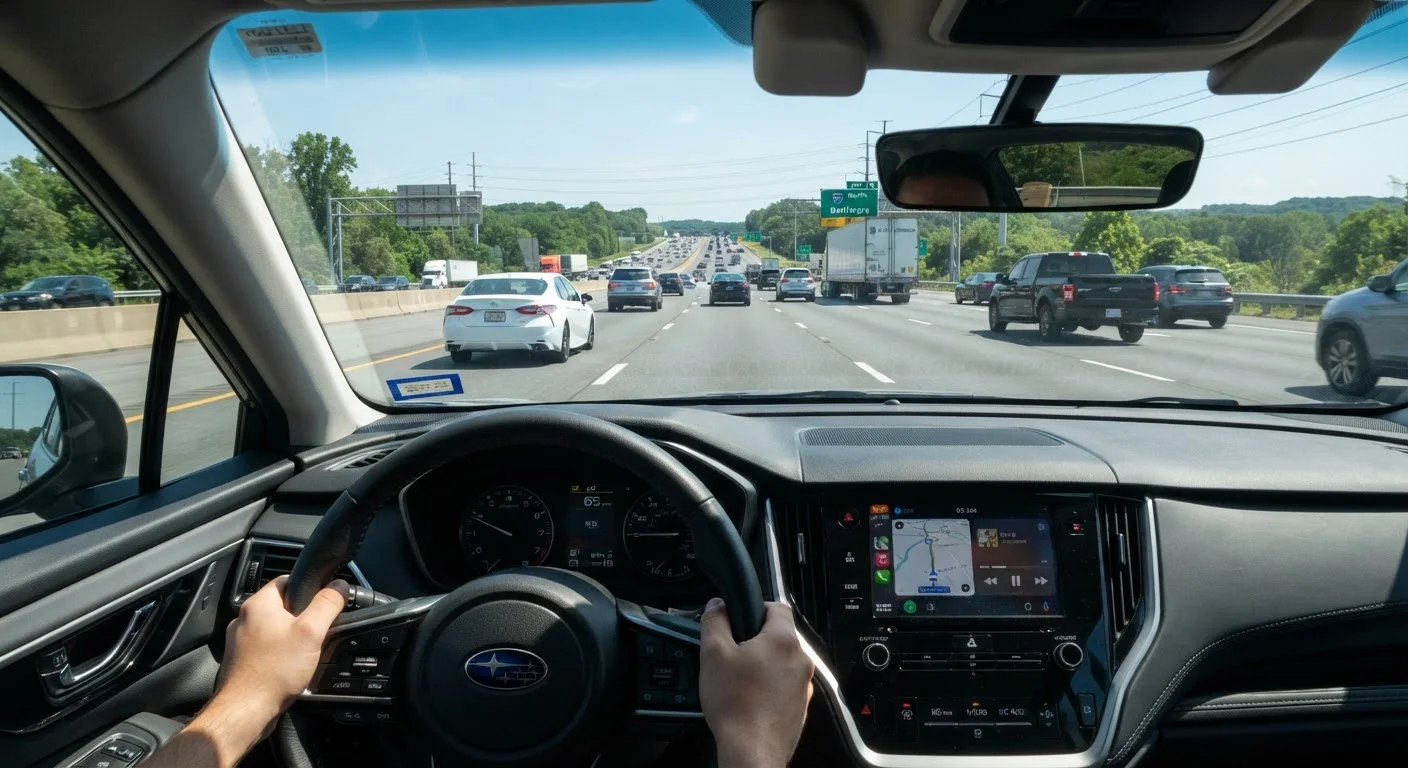
Why Scanning Is a Skill, Not Just Looking
Most drivers believe they're watching the road simply because their eyes are open and pointed forward. But where your eyes actually move - and how your brain processes what they see - separates a competent driver from a truly skilled one. Vision while driving is an active, deliberate process, not a passive one.
Novice drivers tend to fixate on the vehicle immediately ahead, reacting to what's already happening. Experienced drivers scan continuously, reading traffic patterns, spotting potential conflicts before they develop, and positioning their vehicle with time to spare. This approach - sometimes called forward visual scanning - is a teachable habit that meaningfully reduces the risk of collision.
Defensive driving principles are built on exactly this foundation: the earlier you see a hazard, the more options you have.
Look Further Than You Think You Should
One of the most consistent recommendations in driver training programs is the 12-15 second rule: aim your primary focus roughly 12-15 seconds of travel time ahead of your vehicle. At 60 mph, that's about a quarter mile of roadway. On city streets at 30 mph, it's roughly 200 feet.
Looking that far ahead gives your brain time to identify a slowing vehicle, a pedestrian stepping off a curb, a merging truck, or a signal change - and to respond smoothly rather than abruptly. Abrupt responses, like hard braking, are themselves a hazard to drivers behind you, as explored in our look at what happens in the seconds before a rear-end collision.
Mirror Checks and the Full Picture Behind You
Forward scanning accounts for what's ahead, but experienced drivers also maintain a continuous mental map of what's around and behind them. A practical rhythm is checking your mirrors every 5-8 seconds - your rearview and relevant side mirrors - cycling them briefly between forward glances.
This isn't just safety theater. Knowing who is behind you, how close they're following, and what's in your blind spots directly informs your decisions about lane changes, braking force, and escape routes. Following distance decisions, for instance, depend in part on how aggressively the vehicle behind you is closing the gap.
Reading Movement, Not Just Position
Objects in traffic aren't static - experienced drivers watch for movement patterns rather than fixed locations. A vehicle that appears to be drifting toward a lane line, brake lights flickering three cars ahead, or a cyclist whose head is turning toward the road - these are motion cues that signal what's about to happen, not what's already done.
This is particularly important on roads with variable surfaces or reduced visibility. Invisible hazards like black ice or standing water can be anticipated partly through scanning for context clues - shaded pavement, pooling at road edges, or traffic ahead suddenly braking without visible reason.
Highway environments demand a wider visual scan since speeds compress reaction time dramatically. Highway driving requires sweeping across multiple lanes regularly rather than fixating on a single lane ahead. Before any trip, a pre-trip walkaround also helps ensure your mirrors, windows, and lights are in the right condition to support effective scanning once you're moving.
The content on this site is provided for informational purposes only and should not be considered a substitute for professional advice. While we strive to provide accurate and up-to-date information, we make no guarantees regarding its completeness or accuracy. Always consult a qualified professional for advice specific to your circumstances before making any decisions.