

Summary
22 items · 5-10 minutes
Why a Walkaround Matters More Than Most Drivers Think
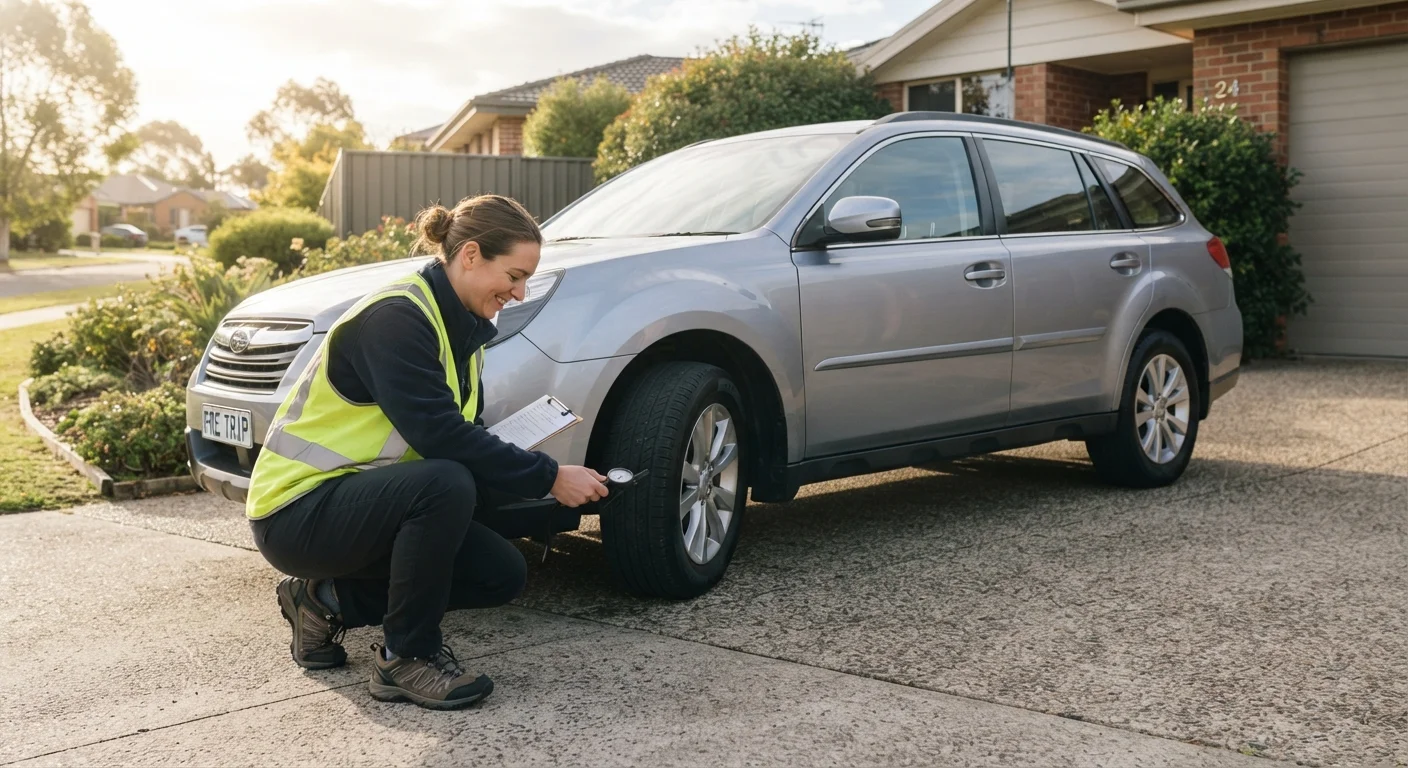
Most drivers hop in, start the engine, and go - skipping a step that professional drivers, commercial truckers, and test pilots all treat as non-negotiable. A pre-trip walkaround is a structured visual check of your vehicle's exterior and interior before you drive, and it doesn't require any tools or mechanical knowledge to complete.
The goal is simple: catch small problems before they become emergencies. A slow tire leak, a fluid puddle under the engine bay, or a side mirror knocked out of position overnight are all fixable in minutes when caught early. On the road, those same issues can escalate into blowouts, engine damage, or a lane-change collision.
This checklist is designed for everyday drivers - not mechanics. It covers the checks that matter most, organized so you can move efficiently around and through your vehicle. For a deeper dive into scheduled upkeep, see our car maintenance hub and the companion guide on fluid checks every driver should know.
Ground Check - Before You Touch the Car
Tires and Wheels
Exterior Body and Glass
Under the Hood (Quick Check)
Interior Readiness
Final Situational Checks
How to Use This Checklist Effectively
Walk around the vehicle in a consistent direction - most drivers find it easiest to start at the driver's front corner and move clockwise. This prevents you from skipping a panel or forgetting a side. The interior checks come last, once you've confirmed the outside is clear.
Don't Skip the Check in a Rush
Running late is the most common reason drivers skip this routine - and it's exactly when the check matters most. A flat tire or brake issue discovered in your driveway costs minutes to address; the same problem on the highway can cost far more. Build the habit during low-stakes moments so it's automatic when time pressure is high.
You don't need to memorize every item on day one. Within a week of daily practice, the routine becomes automatic and takes under five minutes. If you drive in changing seasons, pair this walkaround habit with seasonal vehicle preparation for a fuller maintenance picture. New to car ownership? Our maintenance guide for new drivers is a practical starting point alongside this checklist.
Brake or Steering Changes Require Immediate Attention
If your brake pedal feels soft, spongy, or sinks toward the floor without resistance, do not drive the vehicle until it has been inspected by a qualified mechanic. Similarly, if the steering feels unusually loose or pulls strongly to one side, this is not a wait-and-see situation. These are safety-critical systems - driving on compromised brakes or steering puts you and others at serious risk.
The content on this site is provided for informational purposes only and should not be considered a substitute for professional advice. While we strive to provide accurate and up-to-date information, we make no guarantees regarding its completeness or accuracy. Always consult a qualified professional for advice specific to your circumstances before making any decisions.