

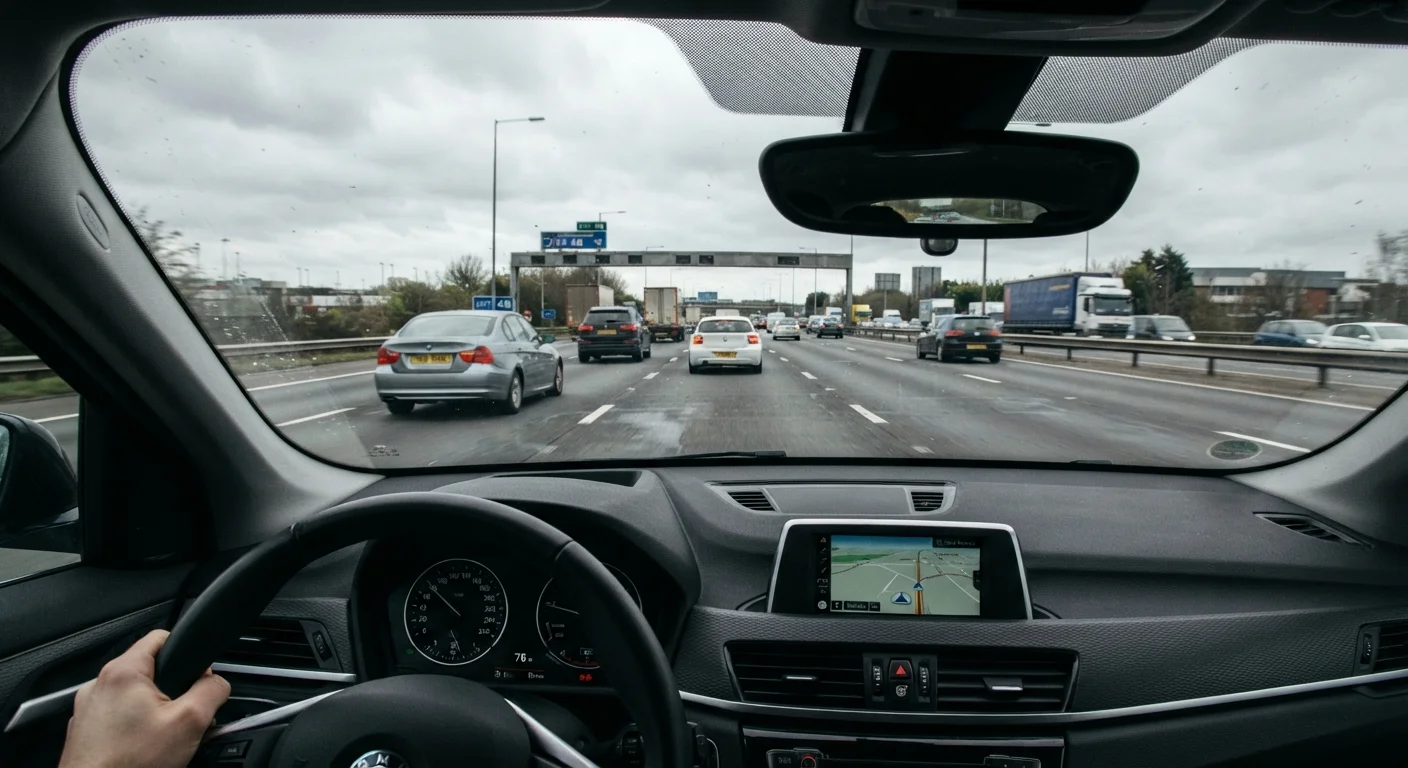
Why Gap Management Is a Core Safety Skill
Most drivers think of following distance as a courtesy issue - a matter of not crowding the car ahead. In reality, it's a physics problem. The gap between your front bumper and the vehicle ahead is the only buffer standing between a normal commute and a rear-end collision.
Rear-end crashes are among the most frequently reported collision types in the U.S., and the vast majority share a common factor: the following driver did not have enough time or space to stop. Understanding why that gap closes so quickly - and what determines how much you actually need - is essential for anyone who drives regularly.
Defensive driving treats following distance not as a passive habit but as an active decision made every few seconds based on speed, conditions, and traffic flow. That mindset shift makes a measurable difference.
The Three-Second Rule - and When to Extend It
The three-second rule is the standard taught in U.S. driver education: allow at least three seconds of travel time between your vehicle and the car ahead. To check your gap, pick a stationary landmark - a highway sign, overpass, or lane marking - and count the seconds after the lead vehicle passes it. Reaching that point in under three seconds means you're too close.
Three seconds is a minimum baseline, not a universal answer. Several factors demand a larger buffer:
- Speed above 60 mph: At freeway speeds, three seconds of travel covers a significant distance - but braking forces also increase, making four or more seconds more appropriate.
- Wet or icy roads: Reduced traction means your tires need far more distance to scrub speed. Six seconds is commonly advised on rain-slicked roads; ice conditions can demand even more.
- Heavy or loaded vehicles: A pickup truck, SUV, or van carries more momentum than a compact car and will require a longer stopping run even with good brakes.
- Reduced visibility: At night or in fog, your ability to perceive a hazard is delayed, which effectively eats into your reaction time budget. Night driving conditions already compress your margin - a shorter gap makes it worse.
~1.5 sec
Average driver reaction time before braking
Research on driver perception-reaction time consistently places the average between 1.5 and 2.5 seconds depending on alertness and driving conditions.
300+ ft
Total stopping distance at 60 mph on dry pavement
NHTSA and traffic engineering references cite combined reaction and braking distances of over 300 feet for typical passenger vehicles at highway speeds.
29%
Of all U.S. crashes involve rear-end collisions
According to NHTSA crash data analysis, rear-end collisions consistently represent a significant share of all reported traffic crashes each year.
Reaction Time, Braking Distance, and What Actually Happens
Stopping a vehicle is a two-phase process, and many drivers only think about the second phase. The first is reaction time - the interval between perceiving a hazard and physically pressing the brake pedal. Under normal, alert conditions, this averages roughly 1.5 seconds for most drivers. During that time, your car is still traveling at full speed.
The second phase is braking distance - how far your vehicle slides after the brakes engage, depending on speed, tire condition, road surface, and brake performance. At 60 mph on dry pavement, a typical passenger car requires approximately 180 feet of braking distance alone, plus an additional 132 feet of travel during the reaction phase - totaling well over 300 feet to stop completely.
This is why the sequence before a rear-end crash unfolds so quickly. Understanding the chain of events - perception lag, the reaction gap, then braking - reveals exactly where safe following distance intervenes.
A driver on the interstate is traveling at 65 mph, about one car length behind a sedan, when the sedan's brake lights suddenly illuminate.
A commuter driving in light rain keeps the standard three-second gap they use in dry conditions.
A driver in a loaded pickup truck follows a compact car at the same gap another compact car driver maintains.
On a congested urban highway, a driver notices they've crept to within one second of the car ahead in stop-and-go traffic, then traffic suddenly breaks and speeds rise to 50 mph.
Common Situations That Compress Your Gap
Following distance doesn't just shrink when you tailgate intentionally. Several routine driving situations erode your safety buffer without drivers realizing it:
- Highway merges: Vehicles entering from on-ramps can close gaps rapidly. Adjusting your speed early to accommodate merging traffic - rather than holding position - is safer for everyone. See more on how highway merges work.
- Stop-and-go traffic: Drivers often creep close in slow traffic, then fail to adjust when speed picks up again. Maintaining even a modest gap in congestion reduces accordion-effect chain reactions.
- Distraction: Glancing at a phone, instrument cluster, or passenger for even two seconds at 60 mph means traveling 176 feet without eyes on the road - potentially the entire safety gap you had.
- Following large vehicles: Trucks and buses block sightlines significantly. A larger gap isn't just about stopping distance; it's about being able to read the road ahead and spot hazards before the lead vehicle reacts to them.
Recalibrate Your Gap After Every Speed Change
Following distance in seconds stays constant only if you actively reset it when your speed changes. After accelerating onto a highway, merging into faster traffic, or picking up pace after construction zones, take a moment to re-check your gap using the three-second count. Speed changes are the most common moment drivers unknowingly compress their safety buffer.
Frequently Asked Questions
The three-second rule means you should allow at least three seconds of travel time between your vehicle and the one ahead. Pick a fixed point - a sign or bridge - and count the seconds after the vehicle ahead passes it. If you reach that point before three seconds are up, you're following too closely.
Yes. At higher speeds, your vehicle covers more ground each second, so the physical gap must be larger to maintain the same time buffer. Many safety experts recommend four or more seconds at freeway speeds above 60 mph, and even more in adverse conditions.
Rain, snow, and ice significantly reduce tire traction and increase stopping distances. On wet roads, doubling your following distance to six seconds is a widely recommended baseline. On ice, stopping distances can be eight to ten times longer than on dry pavement.
In all U.S. states, following too closely is a traffic violation. Enforcement varies, but the legal standard generally requires drivers to maintain a reasonable and prudent distance given speed and conditions. At-fault tailgating in a rear-end collision typically carries significant legal and insurance consequences.
Significantly. A fully loaded pickup truck or SUV carries far more momentum than a compact car at the same speed, requiring a longer stopping distance even with identical brakes. Drivers of larger or heavier vehicles should add additional seconds to their following gap.
Avoid braking suddenly or engaging with the driver. Instead, gradually increase your own following distance to the car ahead - this gives you more room to slow down smoothly and reduces the tailgater's risk of hitting you. If it continues, consider changing lanes or pulling over safely to let the vehicle pass.
The content on this site is provided for informational purposes only and should not be considered a substitute for professional advice. While we strive to provide accurate and up-to-date information, we make no guarantees regarding its completeness or accuracy. Always consult a qualified professional for advice specific to your circumstances before making any decisions.