

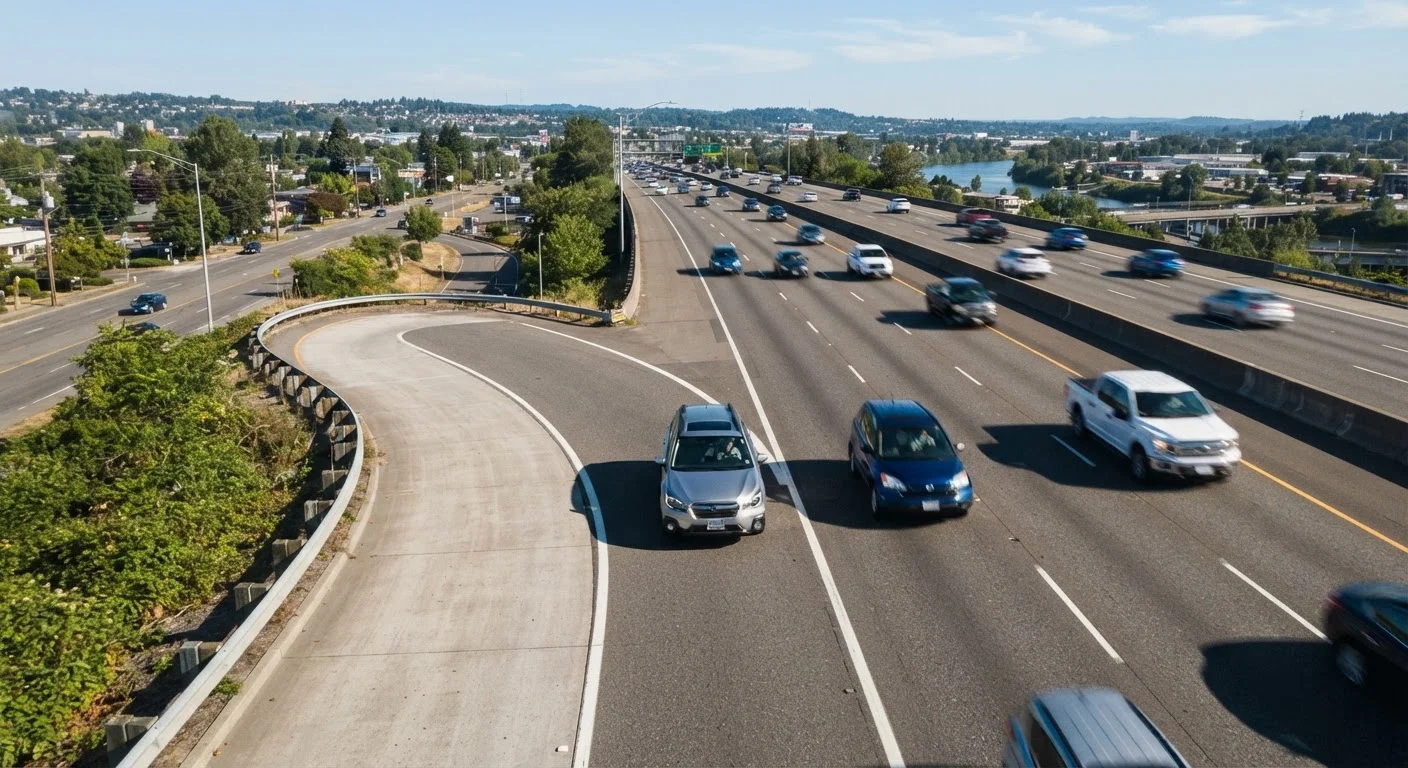
Why Highway Merging Goes Wrong
Merging onto a highway is one of the most frequently mishandled maneuvers in everyday driving, yet it's also one of the most predictable. The problems fall into a small number of categories: arriving too slowly, selecting an inadequate gap, failing to signal in time, or - worst of all - stopping at the end of the ramp. Each of these errors introduces a speed differential between the merging vehicle and highway traffic, which is the root cause of most merge-related collisions.
Highway traffic typically flows between 55 and 75 mph depending on the road and conditions. A vehicle arriving at the merge point doing 35 mph creates a 20-40 mph speed difference that gives other drivers very little reaction time. Understanding the physics of that gap matters. For more context on how speed differentials translate into crash risk, see our piece on what happens in the seconds before a rear-end collision.
Road conditions can further complicate the merge. Rain, gravel, or ice reduce tire grip and extend stopping distances for everyone - meaning gaps that feel adequate in dry weather may be insufficient. Refer to our guidance on adjusting your driving for changing road surfaces before merging in poor conditions.
What you will need
Step-by-Step: How to Merge Properly
The following sequence covers a complete, safe highway merge from on-ramp entry to settled lane position. Each step is interdependent - skipping or rushing one affects the others.
Activate your turn signal as you enter the on-ramp
The moment you commit to the on-ramp, turn on your signal. This is not a last-second courtesy - it's an early broadcast of your intentions. Highway drivers behind and beside you need time to process what you're about to do and adjust their spacing. Signaling late, or not at all, removes that buffer entirely.
Begin accelerating aggressively up the ramp
The on-ramp exists for one purpose: to give you the distance needed to reach highway speed before you arrive at the merge point. Use it fully. Accelerate firmly - not timidly - so that by the time you reach the gore point (the painted triangle where the ramp meets the highway), you're at or very close to the speed of traffic already on the road. Arriving too slowly creates a dangerous speed differential that forces highway drivers to brake suddenly.
Scan for a gap while building speed
Simultaneously with accelerating, begin evaluating traffic in the right lane. Look for a gap - a space between vehicles - that is at least four seconds long when measured at highway speed. To estimate this, pick a fixed point on the road and count how long it takes the vehicle ahead of a gap to pass it, then how long until the following vehicle reaches the same point. You're looking for a consistent, unhurried opening, not a tight squeeze. For more on why gap size matters so much, see our article on following distance and gap management.
Check your mirrors and blind spot before committing
Once you've identified your target gap, do a final confirmation: check your driver-side mirror, then glance over your left shoulder into your blind spot. Highway vehicles can close distance faster than mirrors suggest, especially if they're traveling above posted speeds. This physical blind-spot check takes less than a second and can prevent a serious collision. Good scanning technique is what separates reactive driving from proactive driving.
Merge smoothly into the gap at matching speed
Move into the lane with a gradual, deliberate steering input - not a sharp jerk. You should be at or very near traffic speed at this moment. Slide into the gap confidently, maintain your speed, and avoid braking once in the lane unless traffic conditions ahead require it. Sudden deceleration immediately after merging can catch the vehicle behind you off guard.
Cancel your signal and establish lane position
Once fully in the travel lane, cancel your turn signal and center your vehicle within the lane. Check your mirrors again to confirm you've cleared the vehicle behind you, then focus on maintaining a safe following distance from the vehicle ahead. Highway driving demands consistent attention - the merge is complete, but the need for situational awareness continues. The skill set highway driving demands is distinct from city driving, and the merge is just the entry point.
Highway Drivers Can Help Too
If you're already on the highway and see a vehicle merging from an on-ramp, moving to the center lane - when it's safe and clear - removes the conflict entirely. This cooperative behavior is legal in most states and significantly reduces merge-related risk for everyone involved.
What to Do When the Merge Doesn't Go as Planned
Even well-executed merges can be disrupted by uncooperative traffic. If highway drivers are not creating space or a gap simply doesn't appear, you have a few responsible options:
- Slow down within the ramp to allow a gap to open before you reach the merge point - this is preferable to stopping outright.
- Yield at the ramp end if absolutely necessary, but remain aware of vehicles behind you on the ramp who may not expect you to slow.
- Never force a merge by cutting off a vehicle that has no reasonable ability to brake. The merging driver yields to existing traffic under standard rules of the road.
If you regularly find merges stressful or unpredictable, building better overall scanning habits will help. The road-scanning techniques experienced drivers use translate directly into better gap identification and earlier decision-making during merges.
Never Stop on a Live On-Ramp
Coming to a complete stop at the end of an on-ramp is one of the most dangerous things a driver can do. Vehicles behind you on the ramp are accelerating and may not have time to react. If conditions make merging momentarily impossible, slow down within the ramp - but stopping, especially on a high-speed ramp, dramatically increases collision risk from the rear.
The content on this site is provided for informational purposes only and should not be considered a substitute for professional advice. While we strive to provide accurate and up-to-date information, we make no guarantees regarding its completeness or accuracy. Always consult a qualified professional for advice specific to your circumstances before making any decisions.