

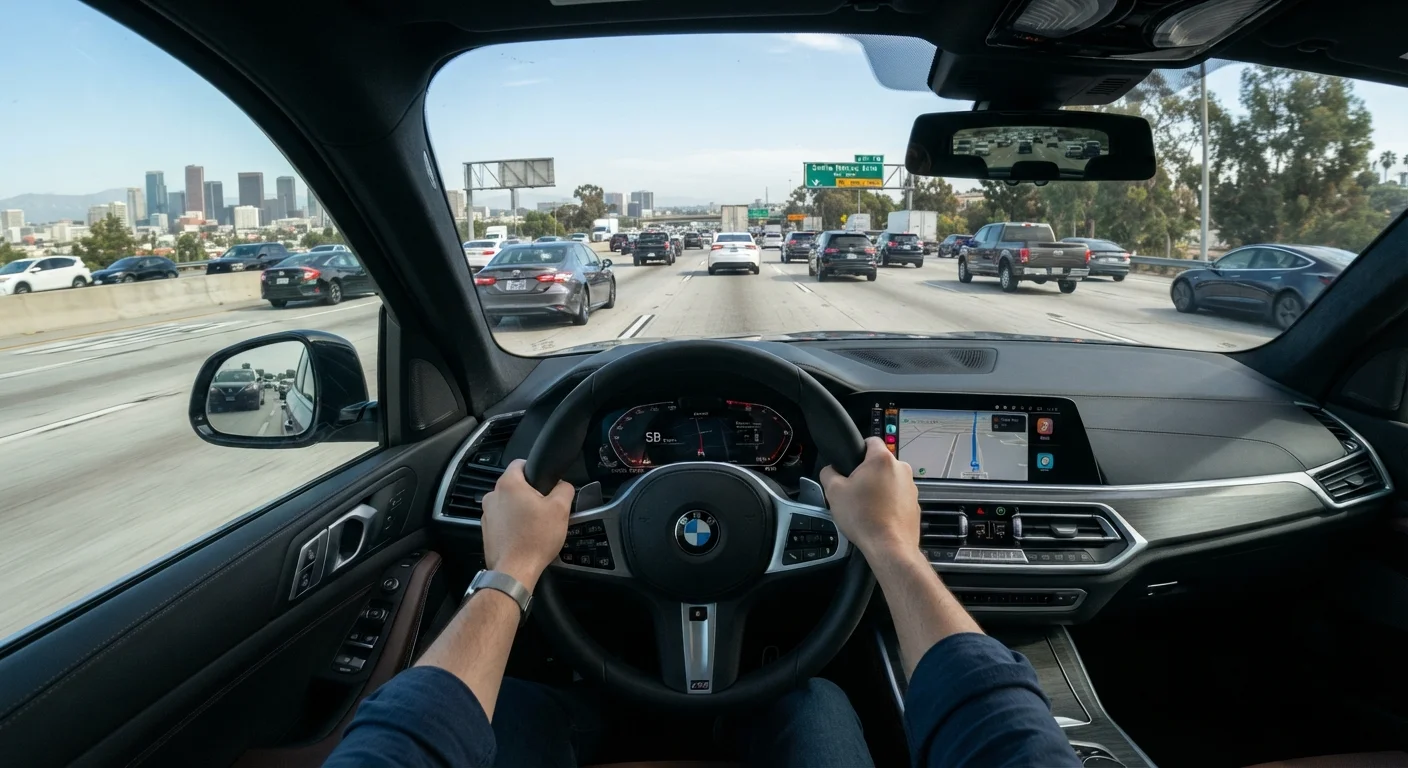
What Defensive Driving Actually Means
The term gets used broadly, but defensive driving has a precise meaning: it's the practice of operating a vehicle in a way that reduces risk by actively anticipating hazards rather than simply complying with traffic rules. Following the speed limit and stopping at red lights are baseline requirements. Defensive driving goes further - it's about reading traffic, predicting other drivers' behavior, and giving yourself enough time and space to respond safely when something unexpected happens.
Think of it as a shift from passive to active engagement. A passive driver reacts to what happens directly in front of them. A defensive driver is already processing what could happen based on what they're observing 12 to 15 seconds ahead. That time-and-distance buffer is what separates a close call from a collision.
This mindset applies whether you're navigating a congested urban intersection or cruising on an open interstate. The specific hazards change, but the underlying approach does not. For a closer look at how driving environments demand different skill sets, see our article on highway vs. city driving.
The Three Pillars: Space, Vision, and Anticipation
Space management is the most immediately actionable defensive habit. Maintaining adequate following distance gives you reaction time - the physical gap between your car and the one ahead is the margin that prevents a rear-end collision when traffic stops suddenly. The three-second rule (counting the time between the vehicle ahead passing a fixed point and your vehicle reaching the same point) is a reliable baseline. In rain, fog, or on unfamiliar roads, that buffer should grow. Understanding what unfolds in the seconds before a rear-end crash illustrates exactly why that gap matters so much.
Visual scanning is the engine of defensive driving. Experienced drivers don't fixate on the car immediately ahead - they sweep their eyes across lanes, check mirrors every five to eight seconds, and identify potential entry points for merging vehicles before they arrive. Scanning techniques used by experienced drivers can be deliberately learned and practiced.
Anticipation ties space and vision together. It means asking continuously: what could the car three vehicles ahead do that would force a chain reaction? What is that pedestrian likely to do at this intersection? Is that driver in the adjacent lane signaling a merge they haven't committed to yet? Defensive drivers make decisions based on probable futures, not just present conditions.
~94%
Crashes involving human error as a factor
According to the National Highway Traffic Safety Administration (NHTSA), approximately 94% of serious crashes involve human choice or error as a critical contributing factor.
3 seconds
Minimum recommended following distance
Safety organizations including the NSC recommend a minimum three-second following gap under normal driving conditions, with greater margins advised in adverse weather.
12-15 sec
How far ahead defensive drivers scan
Professional driving instructors and safety programs consistently recommend scanning 12 to 15 seconds ahead to identify developing hazards early enough to respond.
Distraction, Fatigue, and the Conditions You Can't Control
Defensive driving also means recognizing that your own state affects your ability to drive safely. Distraction and fatigue are two of the most significant contributors to crash risk, and both impair the situational awareness that defensive driving depends on. A driver scanning 15 seconds ahead while fatigued processes far less of what they're seeing.
Beyond your own condition, road surfaces introduce variables that no amount of alertness fully neutralizes - they only give you more time to respond. Adjusting your driving for wet roads, ice, and gravel covers how surface changes demand immediate technique adjustments. Defensive drivers treat changing conditions as a prompt to expand their safety margins, not maintain the same behavior.
Environmental awareness also includes understanding your vehicle. A car with worn tires or degraded brakes cannot respond as quickly as a well-maintained one - which means your safety margin on paper (following distance, reaction time) may be smaller in practice than you realize. Basic car maintenance habits directly support your ability to drive defensively by ensuring the vehicle responds when you need it to.
“The goal of defensive driving is not to make you a timid driver - it's to make you a driver who is always aware of what could happen next and positioned to handle it.”
— National Safety Council, U.S. nonprofit organization focused on eliminating preventable deaths, including roadway fatalities
Turning Mindset Into Habit
The gap between knowing defensive driving principles and actually practicing them consistently is where most drivers fall short. Knowledge doesn't automatically translate to habit - deliberate repetition does. Each drive is an opportunity to practice scanning earlier, checking mirrors more systematically, and leaving more space than feels strictly necessary.
Formal defensive driving courses, offered through organizations like the National Safety Council and AAA, provide structured reinforcement of these habits and often include updates on emerging risks like distracted driving patterns. Beyond formal training, self-assessment matters: after any near-miss or tense moment on the road, asking what you saw, when you saw it, and what you could have done earlier is a practical feedback loop.
Defensive driving isn't about fear or excessive caution - it's about competence and control. The driver who consistently anticipates, maintains space, and manages their own condition is not a timid driver. They're a skilled one.
Frequently Asked Questions
The core principle is anticipation - assuming that other drivers may make errors and positioning yourself to respond safely before a hazard becomes an emergency. It involves active scanning, controlled following distance, and consistent situational awareness rather than passive, reactive driving.
Most drivers focus primarily on their own vehicle's immediate path. Defensive drivers actively monitor the broader traffic environment, including vehicles several cars ahead, potential entry points for merging traffic, and road surface changes. The difference is proactive awareness versus reactive response.
Research and safety organizations broadly support that defensive driving behaviors - such as maintaining following distance and scanning ahead - reduce exposure to crash scenarios. No driving style eliminates all risk, but consistently applied defensive habits meaningfully lower the probability of involvement in a collision.
A commonly recommended guideline is the three-second rule: pick a fixed point ahead, and ensure at least three seconds pass between when the vehicle in front passes it and when you do. In adverse conditions such as rain, ice, or low visibility, that gap should be extended significantly.
No - defensive driving applies equally to experienced drivers. Familiarity with roads can breed complacency, which is itself a risk factor. Experienced drivers benefit from periodic refreshers on scanning habits, distraction management, and updated knowledge of traffic patterns.
Many insurers offer discounts for completing an approved defensive driving course, though eligibility and discount amounts vary by state and insurer. It's worth contacting your insurance provider directly to confirm what programs qualify and what documentation is required.
The content on this site is provided for informational purposes only and should not be considered a substitute for professional advice. While we strive to provide accurate and up-to-date information, we make no guarantees regarding its completeness or accuracy. Always consult a qualified professional for advice specific to your circumstances before making any decisions.