

Why a Clear Plan Makes All the Difference
A vehicle breakdown can happen to any driver - regardless of how well-maintained their car is. Tires fail, alternators give out, and fuel gauges sometimes deceive. What separates a manageable inconvenience from a dangerous situation is almost always preparation and a clear sequence of actions taken in the right order.
Most drivers have only seconds to make decisions once a mechanical problem becomes apparent. Knowing in advance exactly what to do - and what not to do - removes hesitation from a moment that doesn't allow for it. Being familiar with your dashboard warning lights can also give you earlier notice of developing problems, buying you more time to respond safely.
The steps below apply whether you're on a rural two-lane road or a busy interstate. Adapt them to your specific conditions, but treat the sequence - visibility, position, communication - as your baseline every time.
What you will need
Tools and Equipment to Keep in Your Vehicle
You can't predict when a breakdown will happen, but you can control how equipped you are when it does. The items below represent a practical emergency kit that fits in most trunks and glove compartments. New drivers especially benefit from assembling this kit early - for more foundational guidance, see our car maintenance essentials for new drivers.
Reflective warning triangles or road flares
Alerts approaching drivers to your stopped vehicle, especially on curves or low-visibility roads.
High-visibility safety vest
Makes you visible to passing traffic if you must exit the vehicle on a busy road.
Flashlight with spare batteries
Essential for nighttime breakdowns to assess your vehicle and signal for help.
Jumper cables or a portable jump starter
Allows a battery restart if your vehicle's battery is the cause of the breakdown.
Fully inflated spare tire and jack
Enables a tire change if a flat tire is the cause of the breakdown.
First aid kit
Provides basic medical supplies in case of injury during or after the breakdown.
Build a Trunk Emergency Kit Now
Packing a small emergency kit before you ever need it takes less than 20 minutes and costs very little. At minimum, include a flashlight, reflective triangles, a basic first aid kit, a phone charging cable, and a waterproof jacket. Checking and refreshing this kit once a year keeps it ready when it matters most.
Step-by-Step: Responding to a Breakdown
Follow these steps in sequence. The first priority is always safety - yours and other drivers'. Diagnosis and repair come after you've secured your position and called for help.
Never Attempt Repairs Near Active Traffic
Changing a tire or checking under the hood while parked on a live highway shoulder exposes you to serious injury risk. Secondary crashes - where a vehicle strikes a previously stopped car - are a well-documented cause of roadside fatalities. If you cannot move your vehicle completely clear of traffic, the safest action is to remain belted inside and wait for professional assistance.
Activate your hazard lights immediately
The moment you sense something is wrong - a warning light, unusual sound, or loss of power - turn on your hazard lights. Do this before you've stopped or even fully assessed the problem. Hazard lights give following drivers maximum notice that your vehicle is slowing unexpectedly, reducing the risk of a rear-end collision.
Steer safely to the shoulder or exit
Signal your intention to move right and ease off the roadway gradually. Aim for the furthest point off the travel lane - ideally beyond the white fog line on a highway. If an exit ramp is within reach and your vehicle has enough power, take it; parking lots and side streets are dramatically safer than highway shoulders. Avoid stopping on a curve, hill crest, or merge zone where visibility is limited.
Get your vehicle as visible as possible
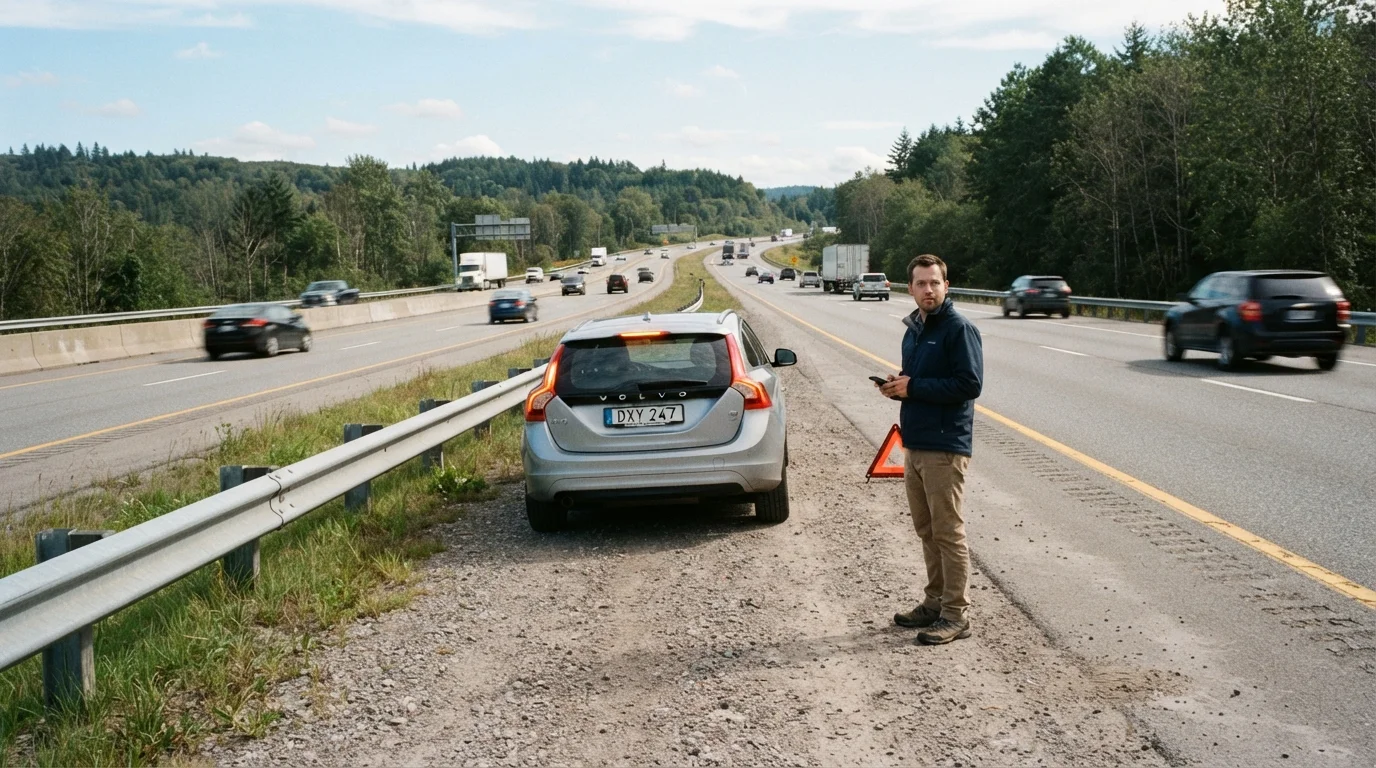
Once stopped, keep your hazard lights running. If you have reflective warning triangles, place them at least 200 feet behind your vehicle - further on high-speed roads. Place a second triangle closer to your car's rear. Flares serve the same purpose but require careful handling away from fuel or dry vegetation. A high-visibility vest significantly increases your own visibility if you must stand outside.
Decide whether to stay in or exit the vehicle
On a busy highway, staying inside the vehicle with your seatbelt fastened is often safer than standing outside - especially at night or in poor weather. Exit only if you smell smoke, see flames, or another hazard makes staying inside dangerous. If you do exit, do so from the door furthest from traffic and move well beyond the guard rail or off the shoulder entirely.
Call for roadside assistance or emergency services
Contact your roadside assistance provider if you have one. If not, a towing company or a trusted mechanic can dispatch help. If you're on an interstate and feel unsafe, calling 911 is appropriate - many highway patrol units are equipped to assist stranded drivers or can expedite a service response. Be ready to give your exact location: mile marker numbers, highway name and direction of travel, and visible landmarks.
Assess and communicate the problem clearly
While waiting for help, take stock of what happened: when the problem started, any warning lights that appeared, sounds or sensations you noticed, and whether the vehicle is drivable at low speed. This information helps roadside technicians or a mechanic diagnose the issue faster. If you're unsure whether to attempt any minor fix yourself - such as a spare tire change - only do so if you're away from traffic and confident in the procedure. Otherwise, wait for professional help. Our preparation checklist for your mechanic visit can help you communicate symptoms clearly once your vehicle is in the shop.
After the Breakdown: What Comes Next
Once your vehicle is with a qualified mechanic, a clear account of what you observed - sounds, smells, warning lights, and the circumstances of the breakdown - will significantly speed up diagnosis. If your brakes behaved unusually before or during the event, our guide to brake warning signs is worth reviewing before your shop visit.
Breakdowns often point to maintenance gaps that were developing quietly. Use the experience as a prompt to review your vehicle's service history and upcoming scheduled maintenance. Staying current with routine upkeep - covered in our car maintenance hub - is still the most reliable way to reduce the frequency of roadside emergencies.
Safe driving practices on challenging road surfaces can also reduce the mechanical stress that contributes to unexpected failures. Our guide to driving on wet roads, ice, and gravel covers the adjustments that protect both you and your vehicle in adverse conditions.
The content on this site is provided for informational purposes only and should not be considered a substitute for professional advice. While we strive to provide accurate and up-to-date information, we make no guarantees regarding its completeness or accuracy. Always consult a qualified professional for advice specific to your circumstances before making any decisions.