

What Is a Declarations Page?
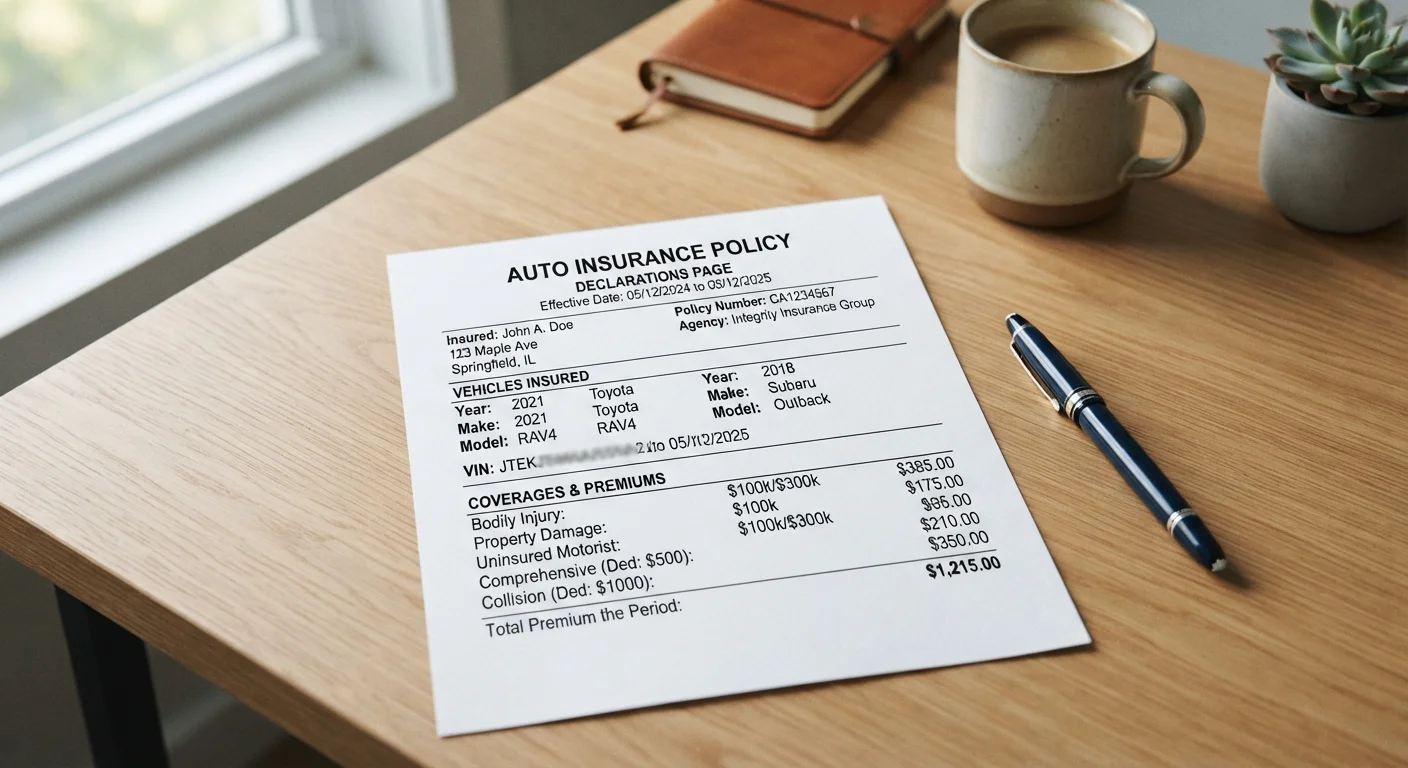
Every auto insurance policy comes with a declarations page - commonly called a dec page - that summarizes the coverage you've purchased. Think of it as the cover sheet for your entire policy: one or two pages that distill your insurer's obligations and your premium into a single reference document.
Your dec page is mailed or emailed at the start of each policy term and again after any mid-term change, such as adding a vehicle or updating your address. It is separate from the full policy contract, which contains exclusions, conditions, and fine print. When you need proof of insurance or want to quickly confirm your coverage levels, the dec page is your first stop.
| Document Type | Policy summary (not the full contract) |
| Issued When | At policy start and after any mid-term change |
| Typical Length | 1-2 pages |
| Key Use Cases | Proof of insurance, coverage verification, renewal review |
| Deductible Range (Common) | $250-$1,500 for collision and comprehensive (General industry range; varies by policy) |
| Policy Term Options | 6-month or 12-month terms most common in the U.S. |
Key Sections and What They Mean
Most dec pages follow a similar structure across insurers, though layout and terminology can vary. Here are the core elements to locate and understand:
- Named Insured & Address: Confirms whose name the policy is under and the garaging address. Errors here can affect claim eligibility, so verify this is accurate.
- Policy Number & Term: Your unique identifier and the exact dates coverage is in force (e.g., six-month or annual term). Note the expiration date - coverage lapses if you miss renewal.
- Vehicles Covered: Lists each vehicle by year, make, model, and VIN. Any car not on this list is not covered under this policy.
- Drivers Listed: Identifies every driver assigned to the policy. Unlisted regular household drivers can be a basis for claim denial.
- Coverage Types & Limits: The most detail-dense section. Each coverage is listed with its per-person and per-occurrence limit, or a single limit. See the glossary for definitions of the most common types.
- Deductibles: The amount you pay out of pocket before insurance applies, listed separately for collision and comprehensive. A higher deductible typically lowers your premium.
- Premium Breakdown: Shows what you're paying for each coverage component, any discounts applied, and the total amount due for the term.
- Lienholder or Loss Payee: If you have an auto loan or lease, your lender is listed here and receives claim payments for physical damage up to their interest in the vehicle.
Liability Coverage
Pays for injuries and property damage you cause to others in an at-fault accident. It is split into bodily injury liability (per person and per accident) and property damage liability.
Collision Coverage
Covers damage to your own vehicle resulting from a collision with another car or object, regardless of fault. Subject to a deductible.
Comprehensive Coverage
Covers damage to your vehicle from non-collision events such as theft, fire, hail, flooding, and animal strikes. Also subject to a deductible.
Uninsured/Underinsured Motorist
Protects you if you're hit by a driver who has no insurance or whose limits are too low to cover your losses. Often abbreviated UM/UIM on the dec page.
Personal Injury Protection (PIP)
Covers medical expenses and sometimes lost wages for you and passengers after an accident, regardless of who was at fault. Required in no-fault states.
Deductible
The dollar amount you agree to pay out of pocket when filing a claim before your insurer covers the remainder. Common amounts range from $250 to $1,500.
Coverage Limit
The maximum dollar amount your insurer will pay for a covered loss under a given coverage type. Amounts above your limit are your responsibility.
Lienholder
A lender or leasing company with a financial interest in your vehicle. They are listed on the dec page and must be paid before you on physical damage claims.
To understand how your premium is calculated from these inputs, see our guide to how car insurance premiums are actually calculated.
What to Double-Check Before Your Next Renewal
Renewal is the ideal moment to audit your dec page rather than file it away. Before your next term begins, review these specifics:
- Confirm all vehicles and drivers are accurate. A recently purchased car, a teenager who started driving, or a household member who no longer lives with you can all affect coverage and eligibility.
- Check your liability limits against your assets. State minimum limits are often far lower than what a serious accident could cost. If your net worth has grown, your liability limits may need to grow with it.
- Review your physical damage coverage choices. If you carry both collision and comprehensive, confirm the deductibles still reflect your preferences. For older vehicles with low market value, the cost-benefit of these coverages shifts over time. Our article on comprehensive vs. collision coverage explains what each actually covers.
- Verify optional add-ons. Roadside assistance, rental reimbursement, and gap coverage are easy to forget about - confirm you have what you need and aren't paying for what you don't.
- Look for discounts listed. If a promised discount (multi-car, good driver, or other) doesn't appear on the premium breakdown, contact your insurer before the new term starts.
This article provides general educational information about auto insurance documentation and is not legal or financial advice. Coverage terms, limits, and regulations vary by state and insurer. Consult your insurance agent or broker for guidance specific to your policy and situation.
The content on this site is provided for informational purposes only and should not be considered a substitute for professional advice. While we strive to provide accurate and up-to-date information, we make no guarantees regarding its completeness or accuracy. Always consult a qualified professional for advice specific to your circumstances before making any decisions.