

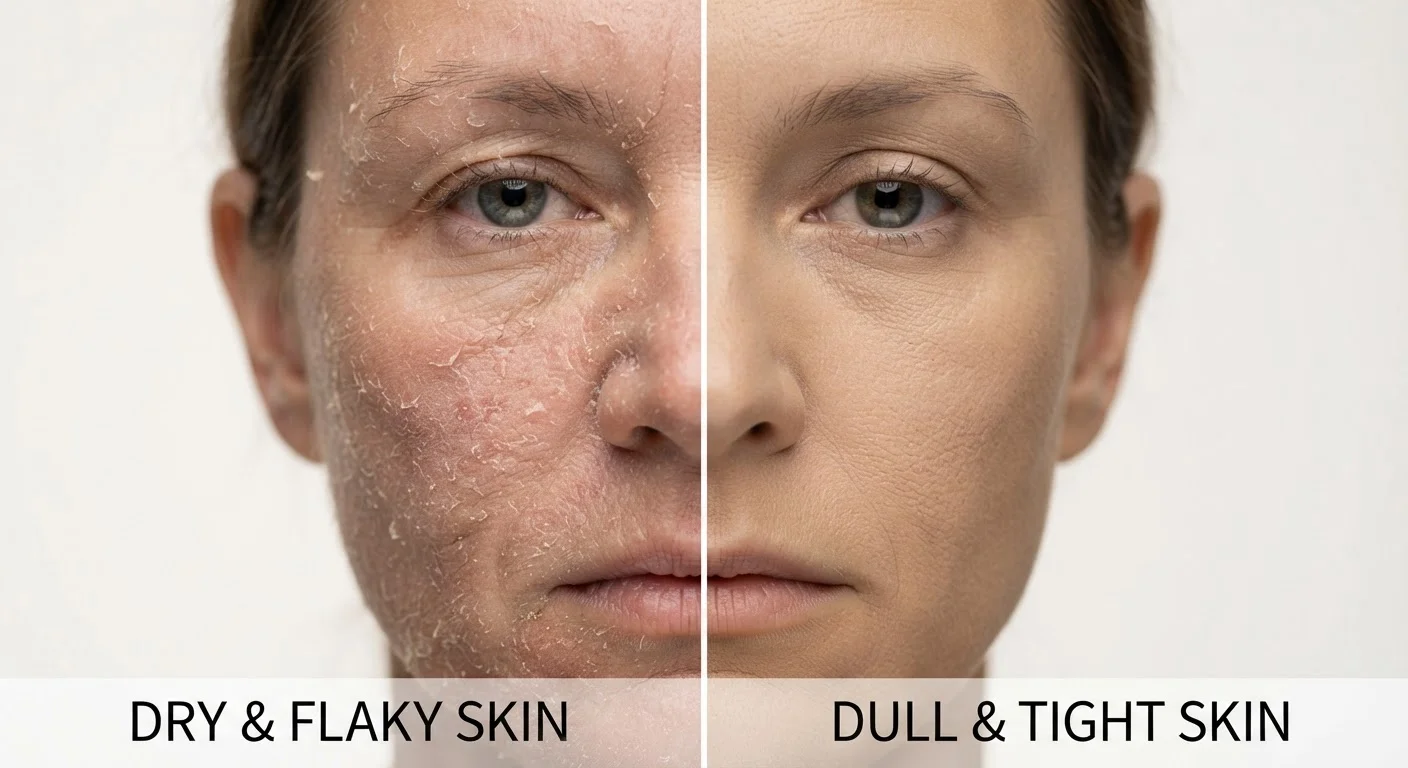
Option A
Dry Skin
A skin type defined by insufficient oil production.
Best for: Understanding as a long-term, genetic characteristic that requires ongoing lipid-replenishing care.
Option B
Dehydrated Skin
A temporary skin condition caused by a lack of water.
Best for: Identifying as a correctable condition that responds to hydration-focused adjustments in routine and lifestyle.
What's Actually Different Between These Two Conditions
The terms "dry skin" and "dehydrated skin" are often used interchangeably, but they describe two distinct problems with different root causes. Understanding how skin type differs from skin condition is the first step toward choosing the right approach for either one.
Dry skin is a skin type - a largely inherited characteristic in which the skin produces less sebum (natural oil) than average. Sebum forms part of the skin's protective barrier; without enough of it, moisture evaporates more easily and the skin surface becomes rough, flaky, and prone to irritation. This characteristic tends to be consistent over time and across seasons, though it may worsen in cold or low-humidity environments.
Dehydrated skin is a skin condition - a temporary state in which the skin lacks adequate water content in its outermost layer (the stratum corneum). Because it's a condition rather than a type, it can affect anyone, including people with oily or combination skin. Common triggers include over-cleansing, harsh cleansers, caffeine or alcohol intake, air travel, cold weather, and inadequate water intake.
| Criterion | Dry Skin | Dehydrated Skin |
|---|---|---|
| Classification | Skin type (long-term) | Skin condition (temporary) |
| Root cause | Low sebum (oil) production | Insufficient water content in skin |
| Who it affects | Typically those with a genetic predisposition | Anyone, including oily skin types |
| Primary symptom | Flaking, roughness, persistent tightness | Dullness, fine lines, temporary tightness |
| Key ingredient approach | Emollients and occlusives | Humectants (e.g., hyaluronic acid) |
| Reversibility | Managed, not cured | Often correctable with routine changes |
| Common triggers | Cold weather, aging, genetics | Over-cleansing, diet, environment, travel |
One useful self-test: gently pinch a small section of skin on your cheek and release. Dehydrated skin tends to hold a slight crease momentarily before bouncing back, while well-hydrated skin springs back immediately. This is a general observational tool, not a diagnostic method - a dermatologist can provide a proper assessment if you're unsure.
How Each Condition Looks and Feels
Both dry and dehydrated skin can cause tightness and discomfort, but their specific signs differ in ways that can guide your response.
Signs of Dry Skin
- Persistent flakiness or rough, scaly patches
- Dull or ashy appearance, particularly on the body
- Sensitivity and redness, especially after washing
- Fine lines that appear etched or static
- Itching that worsens in winter or heated indoor environments
Signs of Dehydrated Skin
- Skin that looks dull or feels tight after cleansing
- Fine lines that seem more noticeable after a poor night's sleep or travel
- Excess oil production as the skin compensates for water loss
- Dark circles or shadows appearing more pronounced than usual
- Makeup settling into fine lines faster than normal
It's also possible to have both at the same time - dry skin type that is also temporarily dehydrated. This is where misidentification most commonly leads to ineffective care.
Oily Skin Can Still Be Dehydrated
One of the most counterintuitive facts about skin is that oiliness and hydration are not the same thing. Sebum (oil) and water content in skin cells are independent variables. When the skin is dehydrated, it may actually ramp up oil production to compensate - leading to an oily surface that still feels tight or looks dull underneath. This is why applying heavy oil-based products to visibly oily skin isn't always appropriate; the real need may be water-binding humectants rather than more lipids.
Building the Right Response for Each
Because the underlying causes differ, the most effective ingredients and habits differ too. For a deeper look at how moisturizing ingredients function, the guide to humectants, emollients, and occlusives explains how each class of ingredient addresses skin needs.
For Dry Skin
The goal is to replenish lipids and seal the barrier. Look for formulas that contain emollients (such as squalane or shea butter) that soften the skin surface, and occlusives (such as petrolatum or ceramides) that create a physical barrier to slow moisture loss. Cream or ointment textures tend to outperform lightweight gels for this skin type. If you're also considering body moisturizers, the comparison of body oils vs. lotions can help you decide between formats.
For Dehydrated Skin
The priority is drawing water into the skin and supporting its ability to retain it. Humectants - particularly hyaluronic acid and glycerin - are well-suited here because they attract water molecules to the skin's surface. Layering a humectant serum under a lighter moisturizer helps lock that water in. Equally important are lifestyle adjustments: avoiding very hot showers, switching to a gentler cleanser, and reducing factors like excess caffeine that can contribute to dehydration systemwide.
It's worth noting - as discussed in common skincare myths - that simply drinking more water does not reliably resolve skin dehydration on its own. Topical hydration and barrier support are generally necessary alongside any dietary adjustments.
Your routine timing also matters. Morning and evening skincare routines serve different purposes, and incorporating targeted hydration steps at the right time can improve how well your skin retains moisture throughout the day.
This article is for general informational purposes only and is not a substitute for professional dermatological advice. If you have persistent skin concerns, consult a qualified healthcare provider or dermatologist.
The content on this site is provided for informational purposes only and should not be considered a substitute for professional advice. While we strive to provide accurate and up-to-date information, we make no guarantees regarding its completeness or accuracy. Always consult a qualified professional for advice specific to your circumstances before making any decisions.