

Why the Confusion Exists - and Why It Matters
Walk into any beauty retailer and you'll be asked the same question: what's your skin type? The answer is supposed to unlock the right products. But many people find that what they buy doesn't behave the way they expected - because they confused a skin condition for a skin type.
Skin type and skin condition are related, but they operate on different timescales and have different causes. Skin type is the baseline you were born with. Skin condition is the state your skin is in right now. Both influence what your skin looks and feels like - which is exactly why they get mixed up.
The practical consequence of mixing them up: you end up treating something permanent as though it's temporary, or chasing a shifting condition with a permanent routine change. Neither approach works well, and both can make your skin harder to manage.
Conditions Can Mimic Types - and Vice Versa
Dehydrated skin often looks and feels just like dry skin - tight, dull, and sometimes flaky - but the cause and solution are different. Dry skin needs lipid replenishment (richer moisturizers); dehydrated skin needs water-binding ingredients like hyaluronic acid. Using the wrong approach can perpetuate the problem rather than fix it. When in doubt about what's driving your symptoms, a consultation with a dermatologist can provide clarity.
What Skin Type Actually Means
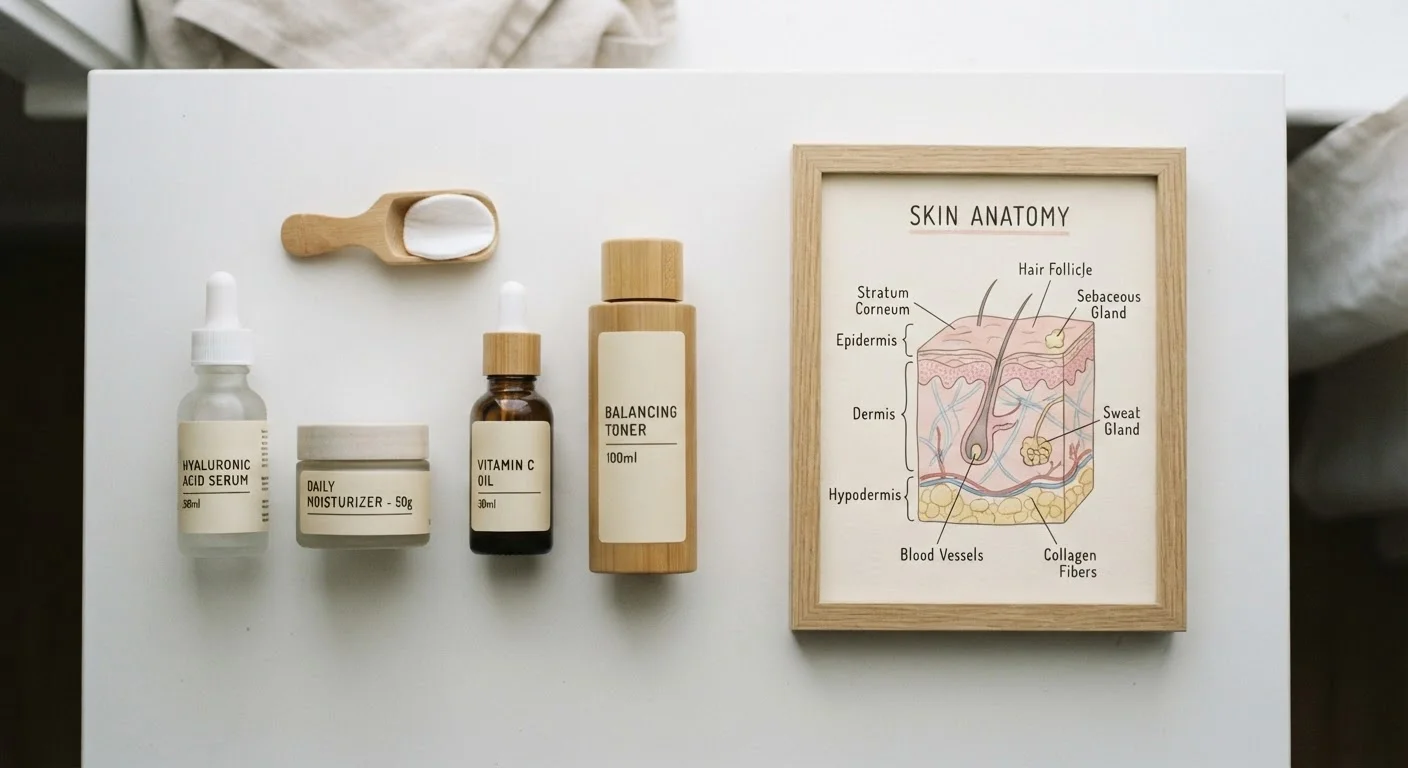
Your skin type reflects how your sebaceous glands function, how your skin barrier is structured, and how much natural oil (sebum) your skin consistently produces. These factors are largely genetic and don't change dramatically day to day.
- Oily skin produces excess sebum, often resulting in a shiny appearance and enlarged pores.
- Dry skin produces less sebum and tends to feel tight, rough, or flaky as a baseline.
- Combination skin features an oilier T-zone (forehead, nose, chin) with drier or normal cheeks.
- Normal skin is relatively balanced - neither excessively oily nor dry - with few sensitivities.
These categories describe your skin's default behavior under stable conditions. They guide which product formulations - lightweight gels vs. richer creams, for example - tend to work for you across the long term.
~50%
Adults who self-report sensitive skin
Research published in dermatology literature suggests roughly half of adults describe their skin as sensitive, though many are experiencing a temporary reactive condition rather than an inherent skin type.
4
Primary skin types recognized by dermatologists
The Fitzpatrick and Baumann classification systems both recognize four core skin types - normal, oily, dry, and combination - as the standard framework used in clinical and cosmetic settings.
What Skin Condition Means - and How It Changes
A skin condition describes a state your skin enters in response to internal or external factors. Unlike skin type, conditions are temporary and often reversible when the underlying cause is addressed. Common conditions include:
- Dehydration - a lack of water in the skin, distinct from dryness. Even oily skin types can be dehydrated.
- Sensitivity or reactivity - often triggered by overuse of active ingredients, a compromised skin barrier, or environmental exposure.
- Congestion or breakouts - can occur across skin types due to hormonal fluctuations, diet, occlusive products, or stress.
- Hyperpigmentation or uneven tone - influenced by sun exposure, inflammation, or hormonal changes.
The key question to ask yourself: Has my skin always been this way, or did something change? A sudden shift in how your skin behaves usually signals a condition worth investigating rather than a reason to overhaul your entire routine.
For a deeper look at how your skin's needs shift across the day, see our guide to morning vs. evening skincare.
Building a Routine That Accounts for Both
The most effective approach layers both concepts: use your skin type to set the foundation, and your current condition to make targeted adjustments.
For example, if you have oily skin (type) but notice your skin is flaking in winter (condition), the answer isn't to switch to a rich moisturizer permanently - it's to add a lightweight hydrating layer until the environmental stress passes. Similarly, if you have dry skin (type) experiencing a breakout (condition), you don't suddenly need oil-control products across the board.
A few practical principles:
- Cleanse for your type - your cleanser should address baseline oil production, not react to a temporary flare-up.
- Treat for your condition - serums and targeted treatments are where you respond to what's happening now.
- Moisturize to reinforce your barrier - nearly every skin type benefits from some level of moisturization, though the texture will differ.
- Protect daily - sunscreen is non-negotiable regardless of type or condition. See our explainer on physical vs. chemical sunscreen to choose what works for you.
Track Changes Before Changing Products
Before adjusting your routine, keep a simple log for one to two weeks noting what you applied and how your skin responded. This pattern often reveals whether a symptom is a consistent feature of your skin type or a reaction to a specific product, season, or habit - making your next step clearer and less likely to backfire.
If you're building or adjusting a skincare approach as your skin changes with age, our article on starting a skincare routine after 40 explores what shifts and what stays constant.
This article is for general informational purposes only and does not constitute medical or dermatological advice. For concerns about your skin's health, consult a qualified dermatologist or healthcare professional.
Frequently Asked Questions
Skin type is largely determined by genetics and tends to be stable, but it can shift gradually due to hormonal changes, aging, or significant lifestyle changes. For example, many people find their skin produces less oil as they get older. These shifts are slow, unlike the faster changes seen with skin conditions.
Dry skin is a type - it produces little oil and often feels tight consistently. Dehydration is a condition where the skin lacks water, and it can affect oily skin types too. A quick test: gently pinch a small amount of skin; if it looks slightly crepey or takes a moment to snap back, dehydration may be a factor.
Sensitivity can be both. Some people are genetically predisposed to a more reactive skin barrier, making it a type. For others, sensitivity is a temporary condition triggered by a product, allergen, or environmental stressor. Identifying the trigger usually reveals which category applies.
This is a classic sign of a skin condition overlaying your skin type. Oily skin can become dehydrated - often from over-cleansing or harsh products stripping moisture - causing the surface to feel tight or flaky even while sebaceous glands remain active beneath. Restoring hydration usually resolves the flakiness.
Start with your skin type as the foundation - it shapes which core products and formulations generally suit you. Then layer in targeted adjustments for your current condition. Think of your type as the permanent structure and your condition as the variable you respond to seasonally or situationally.
The content on this site is provided for informational purposes only and should not be considered a substitute for professional advice. While we strive to provide accurate and up-to-date information, we make no guarantees regarding its completeness or accuracy. Always consult a qualified professional for advice specific to your circumstances before making any decisions.