

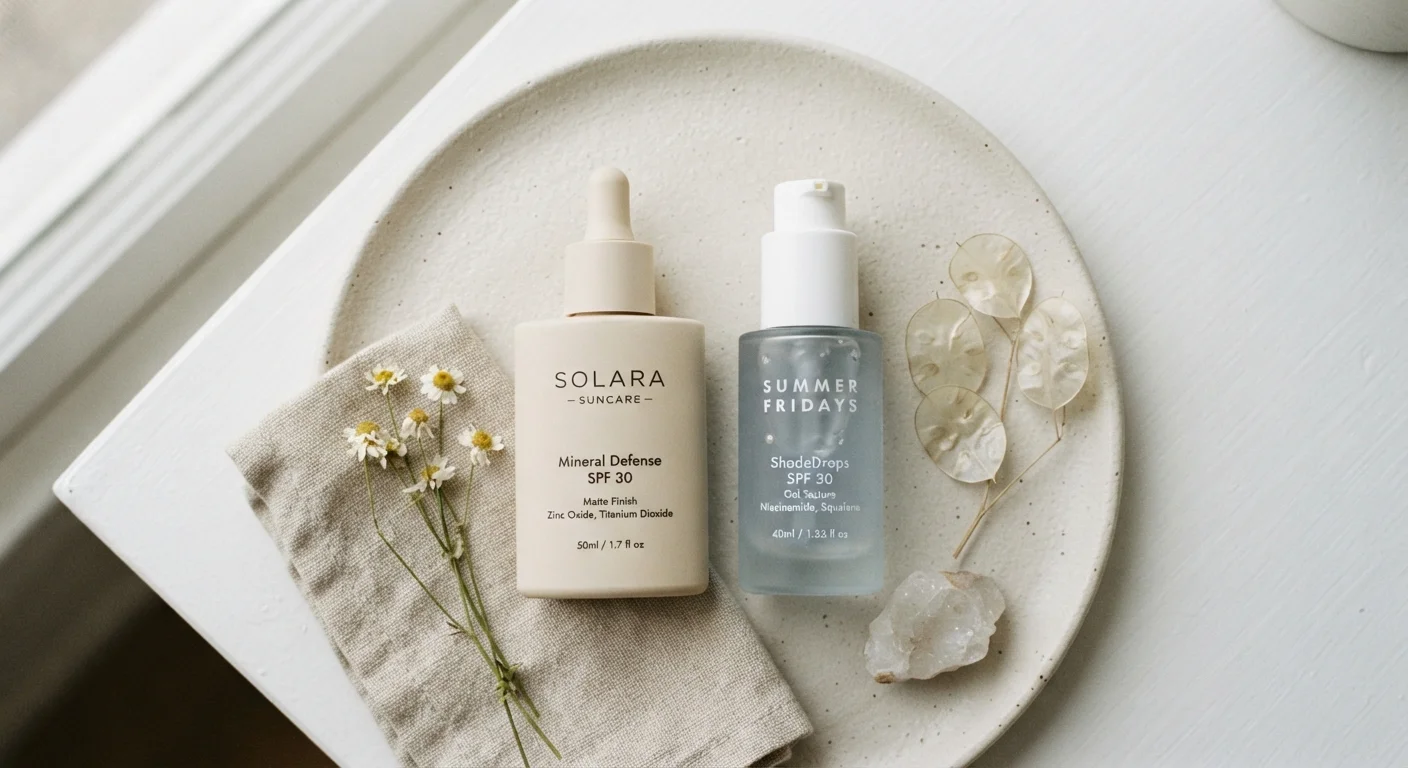
Option A
Physical Sunscreen
The mineral-based, barrier-forming protector.
Best for: Best for sensitive or reactive skin types that need immediate, broad-spectrum protection with minimal irritation risk.
Option B
Chemical Sunscreen
The lightweight, skin-absorbing UV filter.
Best for: Best for oily or active skin that benefits from a sheer, non-whitening formula that blends seamlessly under makeup.
How Each Type Actually Works
The core difference between physical and chemical sunscreens comes down to how they intercept ultraviolet (UV) radiation before it can damage skin cells.
Physical sunscreens - sometimes called mineral sunscreens - use active ingredients like zinc oxide or titanium dioxide. These minerals sit on top of the skin's surface and act as a physical shield, scattering and reflecting UV rays away before they can penetrate. Because they work on top of the skin rather than within it, they are sometimes described as a "barrier" approach to sun protection.
Chemical sunscreens contain organic (carbon-based) UV-filtering compounds such as avobenzone, octinoxate, or oxybenzone. These absorb into the outer layers of skin, where they capture UV energy and convert it into a small amount of heat, which dissipates harmlessly. Because they need to be absorbed to function, most dermatologists recommend applying them 15-20 minutes before sun exposure.
Understanding this mechanism is useful because it explains differences in texture, application timing, and how each formula interacts with your skin. For a broader look at why UV protection matters beyond sunburn prevention, see why daily sunscreen use is non-negotiable.
| Criterion | Physical Sunscreen | Chemical Sunscreen |
|---|---|---|
| Active ingredients | Zinc oxide, titanium dioxide | Avobenzone, octinoxate, oxybenzone, others |
| How it works | Reflects and scatters UV rays | Absorbs UV energy, converts to heat |
| Time to effectiveness | Immediately upon application | ~15-20 minutes after application |
| Texture | Thicker, can leave white cast | Lightweight, invisible on skin |
| Sensitivity suitability | Generally well tolerated | Some filters may irritate sensitive skin |
| Under makeup | Can feel heavy; improved in newer formulas | Blends easily; minimal residue |
| Water/sweat resistance | Varies by formula | Many formulas offer higher resistance |
Texture, Wearability, and Skin Compatibility
For many people, the decision between physical and chemical sunscreen is less about mechanism and more about how it feels and looks on their skin.
Physical sunscreens historically left a visible white cast on the skin, particularly on deeper skin tones. While newer formulations have improved significantly - using micronized particles to reduce this effect - it remains a consideration. Their texture also tends to be thicker, which some users find heavy under makeup or during warm weather.
Chemical sunscreens are typically lighter, more fluid, and invisible on the skin once absorbed. This makes them popular for daily wear, particularly for those with oily skin or anyone who layers skincare products before makeup.
Sensitive skin is a meaningful factor here. Some individuals react to chemical filters - particularly oxybenzone - with redness, stinging, or breakouts. Physical sunscreens are often recommended by dermatologists for those with sensitive, acne-prone, or rosacea-prone skin because mineral ingredients are less likely to cause irritation.
A Note on Combination Formulas
Some sunscreens combine both physical and chemical filters in a single product, aiming to balance the benefits of each. These hybrid formulas may offer lighter texture than a purely mineral sunscreen while including zinc oxide for broader spectrum coverage. They are increasingly common and worth considering if neither pure type feels ideal on your skin.
Your skin type and current skin condition both play a role in how your skin responds to different sunscreen formulas. Understanding the difference between the two can help you make a more informed choice.
What Both Types Have in Common - and What to Look For
Despite their differences, physical and chemical sunscreens share important common ground. Both are effective at reducing UV-related skin damage when used correctly, and both require consistent reapplication - typically every two hours during sun exposure - to maintain protection.
97%
UVB rays blocked by SPF 30
According to the FDA, SPF 30 filters out approximately 97% of UVB rays under standardized lab testing conditions.
2 hours
Maximum interval between reapplications
The American Academy of Dermatology recommends reapplying sunscreen at least every two hours during outdoor sun exposure.
When evaluating any sunscreen, look for:
- Broad-spectrum coverage: This means the formula protects against both UVA (aging) and UVB (burning) rays. This label is regulated by the FDA in the United States.
- SPF 30 or higher: SPF 30 blocks approximately 97% of UVB rays under controlled conditions. Higher SPFs offer modest additional protection but are not absolute barriers.
- Water resistance: Relevant for swimming or sweating. Note that no sunscreen is fully waterproof - reapplication after water exposure is always necessary.
It's also worth noting that how much sunscreen you apply matters considerably. Most people apply far less than the amount used in SPF testing, which can meaningfully reduce the protection received in practice.
Since sunscreen is a daily skincare step, its interaction with your skin barrier is worth considering - especially if you're already managing dryness, sensitivity, or compromised barrier function.
This article is for general informational and educational purposes only. It is not a substitute for advice from a qualified dermatologist or healthcare provider. If you have specific skin concerns or conditions, consult a skincare professional before making changes to your routine.
The content on this site is provided for informational purposes only and should not be considered a substitute for professional advice. While we strive to provide accurate and up-to-date information, we make no guarantees regarding its completeness or accuracy. Always consult a qualified professional for advice specific to your circumstances before making any decisions.