

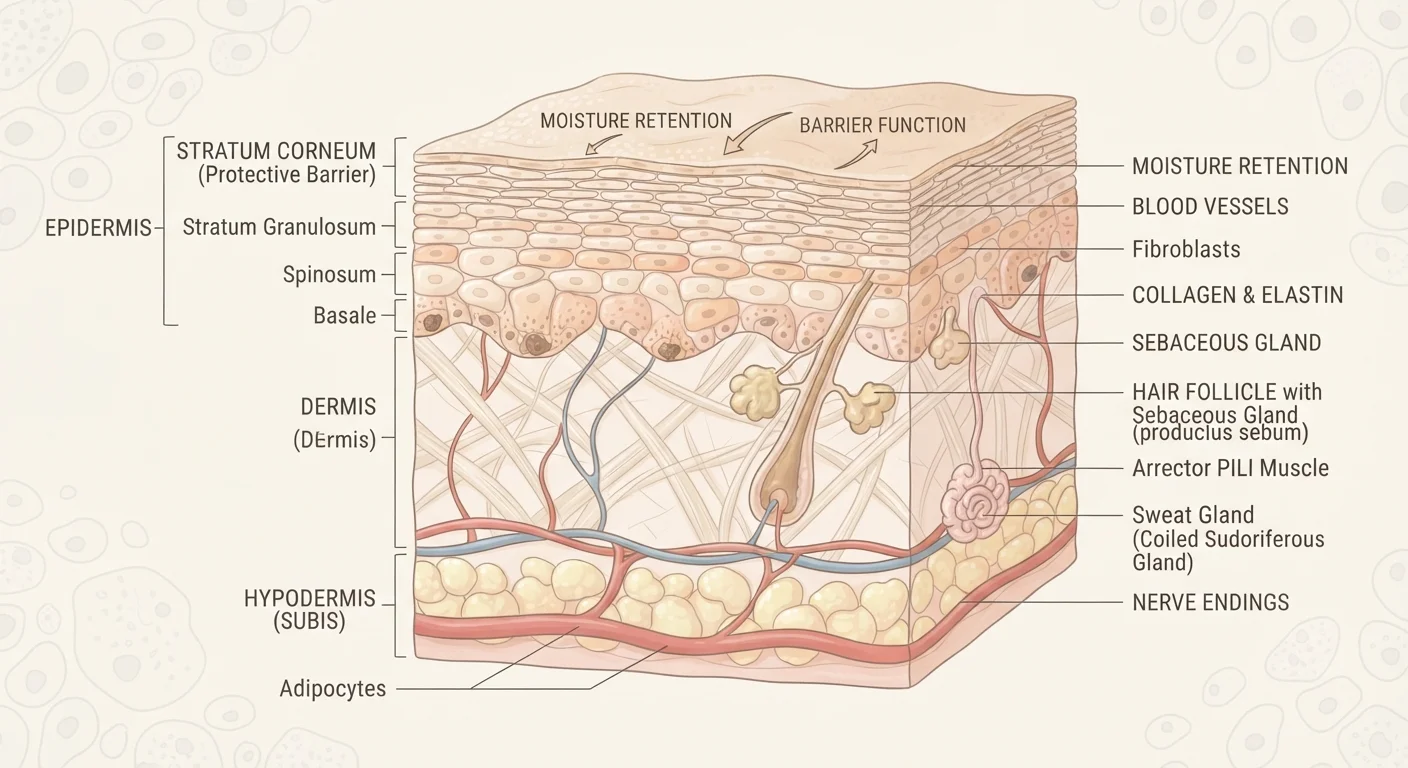
The Barrier's Two Core Jobs
Think of your skin barrier as a two-way filter. Its primary responsibilities are to retain moisture inside the skin and block external threats - pollution, bacteria, allergens, and UV radiation - from getting in. Both jobs happen simultaneously, around the clock, without any effort on your part.
When dermatologists talk about the skin barrier, they're referring specifically to the stratum corneum, the outermost layer of the epidermis. It's made up of layers of flattened, protein-rich dead skin cells surrounded by a mixture of lipids - mainly ceramides, cholesterol, and fatty acids. This structure is sometimes called the 'brick and mortar' model: the cells are the bricks, and the lipids are the mortar holding everything together.
Transepidermal water loss (TEWL) - the rate at which water evaporates through the skin - is the key measurement of how well the barrier is performing. A healthy barrier keeps TEWL low, which translates to skin that feels hydrated, resilient, and comfortable.
~50%
Of skin lipids are ceramides
Ceramides make up roughly half of the lipid composition in the stratum corneum, according to published dermatological research, making them a critical component of barrier integrity.
1 in 10
Americans affected by eczema
The National Eczema Association estimates that eczema - a condition directly linked to impaired skin barrier function - affects approximately 31 million Americans.
pH 4.5-5.5
Healthy skin surface acidity
The skin's acid mantle maintains a slightly acidic pH range that supports barrier enzyme activity and limits harmful bacterial growth, according to peer-reviewed dermatology literature.
What Disrupts the Skin Barrier
The skin barrier is surprisingly resilient - but it has clear vulnerabilities. Several everyday habits and environmental factors are well-documented disruptors:
- Harsh or alkaline cleansers: Soaps with a high pH can degrade the lipid matrix and disrupt the skin's naturally acidic environment (its 'acid mantle'), which supports barrier integrity.
- Over-exfoliation: Using chemical exfoliants like AHAs or BHAs too frequently, or layering them with other actives, removes more of the protective layer than the skin can quickly rebuild.
- Hot water: Long hot showers dissolve the lipid layer temporarily, increasing water loss after you step out.
- Environmental stress: Cold, dry air - common in winter - depletes surface lipids faster than the skin can replace them.
- Certain medications and skin conditions: Eczema (atopic dermatitis) is directly linked to a structural deficiency in the barrier, and some topical medications can thin the skin over time.
It's worth noting that barrier disruption is often gradual. You may not notice it until skin becomes reactive to products that previously caused no irritation - a common scenario explored in detail in why your skincare routine stopped working.
The Simplest Barrier Reset
If your skin feels reactive or irritated, try the 'bare minimum' reset: use only a gentle cleanser, a ceramide moisturizer, and a sunscreen for two to four weeks. Removing actives, exfoliants, and fragrances temporarily gives the barrier space to recover without ongoing chemical challenge. Reintroduce products one at a time after symptoms settle.
How to Support and Restore Barrier Function
Barrier repair doesn't require a complicated or expensive routine. Research consistently points to a few foundational approaches:
- Switch to a gentle, low-pH cleanser. A cleanser that maintains the skin's natural acidity (around pH 4.5-5.5) is less likely to disrupt the lipid layer. Look for descriptors like 'gentle,' 'non-stripping,' or 'for sensitive skin,' and check for fragrance-free options if your skin is reactive.
- Apply moisturizer while skin is still slightly damp. Applying a moisturizer within a minute or two of cleansing helps trap water in the skin before it can evaporate.
- Prioritize ceramide-containing moisturizers. Ceramides are one of the dominant lipids in the barrier, and topical ceramides are well-supported by research as effective for replenishing the barrier's lipid matrix.
- Temporarily simplify your routine. If your skin is showing signs of disruption - stinging, flaking, redness - paring back to a cleanser, moisturizer, and sunscreen gives the barrier room to recover without additional chemical stress.
Understanding how products interact with each other matters too. The order you apply them affects how well each one performs - see our guide to layering skincare products for a practical walkthrough.
Daily sunscreen is also part of barrier maintenance, not just sun protection. UV exposure degrades the structural proteins and lipids in the stratum corneum over time. Learn more in our article on why sunscreen is non-negotiable in any routine.
This article is for general informational and educational purposes only and is not a substitute for professional medical or dermatological advice. If you have persistent skin concerns, consult a qualified dermatologist.
Frequently Asked Questions
Common signs include persistent dryness, tightness after washing, redness, stinging when applying products, and increased sensitivity to ingredients you've used before. These symptoms don't always point to barrier damage exclusively, so if they're severe or persistent, consulting a dermatologist is a good step.
Most dermatologists suggest it can take anywhere from two to four weeks of consistent, gentle care to see meaningful improvement - though individual results vary depending on severity. Simplifying your routine and focusing on moisture retention tends to accelerate recovery.
No. Genetics, age, skin conditions like eczema or rosacea, and environmental factors all influence baseline barrier function. People with naturally drier skin or certain inherited traits may have a structurally thinner or more permeable barrier.
Yes. Exfoliating too frequently or using multiple exfoliating actives at once can strip away the lipid matrix that holds the barrier together. Dermatologists generally recommend limiting exfoliation to a few times per week at most, depending on skin tolerance.
Daily sunscreen use is one of the most effective ways to protect the skin barrier from UV-induced breakdown. UV radiation degrades the proteins and lipids in the stratum corneum over time, contributing to both barrier dysfunction and long-term skin aging.
Ceramides, fatty acids, cholesterol, niacinamide, and occlusives like petrolatum are commonly cited by dermatologists as helpful for barrier repair. These ingredients replenish the lipid matrix and reduce transepidermal water loss. This is general guidance - a dermatologist can advise based on your specific skin concerns.
The content on this site is provided for informational purposes only and should not be considered a substitute for professional advice. While we strive to provide accurate and up-to-date information, we make no guarantees regarding its completeness or accuracy. Always consult a qualified professional for advice specific to your circumstances before making any decisions.