

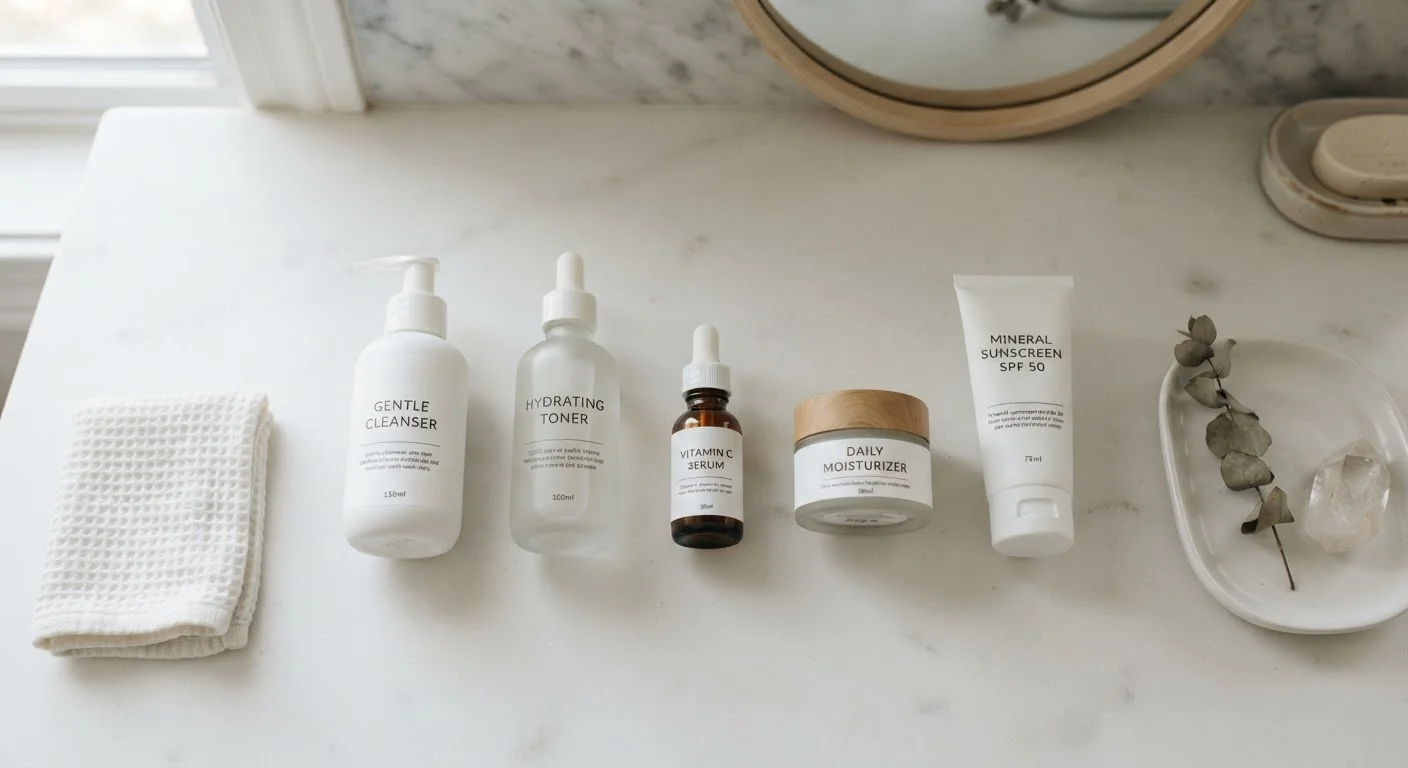
Why Application Order Actually Matters
Skincare products aren't interchangeable in sequence. The order you apply them directly affects how well active ingredients penetrate and whether your skin gets the benefit you're paying for. A moisturizer applied before a serum, for example, creates a barrier that limits how deeply the serum can reach.
The foundational rule is straightforward: go from thinnest to thickest consistency. Lightweight, water-based products absorb quickly and need unobstructed access to the skin. Heavier, oil-based products seal everything in - which is exactly why they come last.
Beyond texture, pH also plays a role. Some exfoliating acids work best at a lower pH and may become less effective if mixed immediately with alkaline products. If you're combining actives, layering correctly - or spacing them out - matters. For a closer look at which ingredients conflict, see our guide to ingredient pairings worth knowing before you layer.
Give Each Layer Time to Settle
Waiting 30-60 seconds between each product gives it time to partially absorb before the next layer goes on. This is especially important between serums and moisturizer. You don't need a timer - just use the time to complete another step in your routine, like brushing your teeth.
Before You Start: What You'll Need
You don't need a complex 10-step system. A basic effective routine uses just a handful of products applied in the right sequence. If you're still building your routine, our guide to building a skincare routine from scratch covers which steps are truly essential.
What you will need
Facial Cleanser
Removes dirt, oil, and impurities so subsequent products can absorb properly.
Toner or Essence
Preps and lightly hydrates skin after cleansing, often improving absorption of serums.
Treatment Serum
Delivers concentrated active ingredients (e.g., vitamin C, niacinamide, hyaluronic acid) directly to skin.
Eye Cream
Targets the delicate under-eye area with lighter formulas suited to thinner skin.
Moisturizer
Locks in hydration and supports the skin barrier after treatment layers.
Broad-Spectrum Sunscreen (SPF 30+)
Protects skin from UV damage; always the final step in a morning routine.
Step-by-Step: The Correct Layering Order
Follow these steps each time you go through your skincare routine. Morning and evening sequences are largely the same, with a few key differences - sunscreen belongs only in the morning, and heavier treatments like retinoids are typically reserved for nighttime. For a full breakdown of why your day and night routines should differ, see morning vs. evening skincare.
Cleanse
Start with a gentle cleanser to remove surface oil, sweat, and any residue from previous products. Use lukewarm water - hot water can strip the skin barrier. Pat dry with a clean towel rather than rubbing. For evening routines, double cleansing (an oil-based cleanser followed by a water-based one) helps remove sunscreen and makeup more thoroughly.
Apply Toner or Essence (if using)
If your routine includes a toner or essence, apply it to slightly damp skin while your face is still moist from cleansing. These lightweight liquids help restore the skin's pH balance and provide a first layer of hydration. Apply by pressing gently into the skin with clean hands rather than wiping with a cotton pad, which can pull moisture away.
Apply Treatment Serums
Serums are the most active part of your routine and should be applied directly to clean skin before any heavier products. If you use more than one serum, apply the thinner, more watery one first and let it absorb before adding the next. Press serums gently into the skin rather than rubbing - this reduces friction and helps ingredients penetrate rather than sit on the surface.
Apply Eye Cream (if using)
Eye creams are formulated for the thinner, more sensitive skin around the eyes. Apply a small amount - roughly the size of a grain of rice per eye - using your ring finger, which applies the least pressure. Tap gently around the orbital bone; avoid dragging or pulling. Eye cream goes on before moisturizer because it is typically lighter in texture.
Moisturize
Moisturizer seals in the layers applied before it and supports the skin's natural barrier. Apply while skin is slightly damp to help lock in hydration. Use upward, gentle strokes and don't forget the neck. Choose a formula suited to your skin type - gel-based for oily or acne-prone skin, cream-based for dry or mature skin.
Apply Sunscreen (Morning Only)
Sunscreen is the last step in any morning routine - applied over moisturizer, not under it. This positioning ensures the UV-filtering ingredients remain on top of the skin where they can function correctly. Apply a generous, even layer to the face and any exposed neck or ear areas. Allow it to fully set before applying makeup.
More Products Doesn't Mean Better Results
Stacking too many active ingredients in one session can overwhelm the skin, cause irritation, or make it impossible to tell which product is causing a reaction. Start with fewer steps and introduce new products one at a time, spacing additions at least two weeks apart so you can monitor how your skin responds.
Common Layering Mistakes - and How to Avoid Them
Even a well-chosen routine can underperform when applied incorrectly. The most frequent errors include applying oil-based products before water-based ones, not allowing adequate absorption time between steps, and applying SPF underneath rather than over moisturizer.
Another common mistake is piling on too many actives in a single session. Layering a vitamin C serum directly over a strong exfoliating acid, for instance, can cause stinging or reduced efficacy. If your routine has stopped delivering results, incorrect layering may be one reason - explore others in our article on why your skincare routine stopped working.
Your skin barrier also plays a central role in how it responds to layered products. Disrupting it - through over-exfoliation or harsh ingredients - undermines even a perfectly ordered routine. For a plain-language explanation of how the barrier works, see what your skin barrier actually does.
This article is for general informational purposes only and is not a substitute for advice from a qualified dermatologist or healthcare professional. If you have a skin condition or concerns about a specific ingredient, consult a licensed professional before making changes to your skincare routine.
The content on this site is provided for informational purposes only and should not be considered a substitute for professional advice. While we strive to provide accurate and up-to-date information, we make no guarantees regarding its completeness or accuracy. Always consult a qualified professional for advice specific to your circumstances before making any decisions.