

Start here
Why Simple Beats Complicated
Next
The Core Four Steps
Then
Morning vs. Evening: What Changes
When you're ready
How to Choose Products for Your Skin Type
Final step
Building the Habit
Why Simple Beats Complicated
Social media makes it easy to believe a good skincare routine requires a dozen bottles and a strict application sequence. Research and common dermatological practice tell a different story: the most effective routine is one you'll actually do consistently. Skipping a step in an eight-step system is far easier - and more likely - than skipping a step in a three-step one.
Starting from scratch is actually an advantage. You're not undoing bad habits or untangling product conflicts. You're building a clean, evidence-informed foundation.
Skin barrier
The outermost layer of skin that acts as a protective seal, keeping moisture in and irritants out. Disrupting it leads to dryness, sensitivity, and inflammation.
Broad-spectrum SPF
A sunscreen that protects against both UVA rays (which cause aging and DNA damage) and UVB rays (which cause sunburn). 'Broad-spectrum' on the label means both are covered.
Active ingredient
A skincare ingredient with a specific, clinically studied function - such as retinol for cell turnover or niacinamide for oil regulation. Actives are more potent and require careful introduction.
Ceramides
Naturally occurring lipids (fats) found in the skin that help maintain the barrier and retain moisture. Ceramide-containing products are especially useful for dry or compromised skin.
Hyaluronic acid
A humectant - a molecule that draws water to itself - naturally present in skin. In skincare, it helps attract and hold moisture in the upper layers of skin.
Once you have the fundamentals working, you can always expand thoughtfully. For guidance on how actives and treatments layer on top of the basics, the right product layering order is worth exploring once your foundation feels solid.
The Core Four Steps
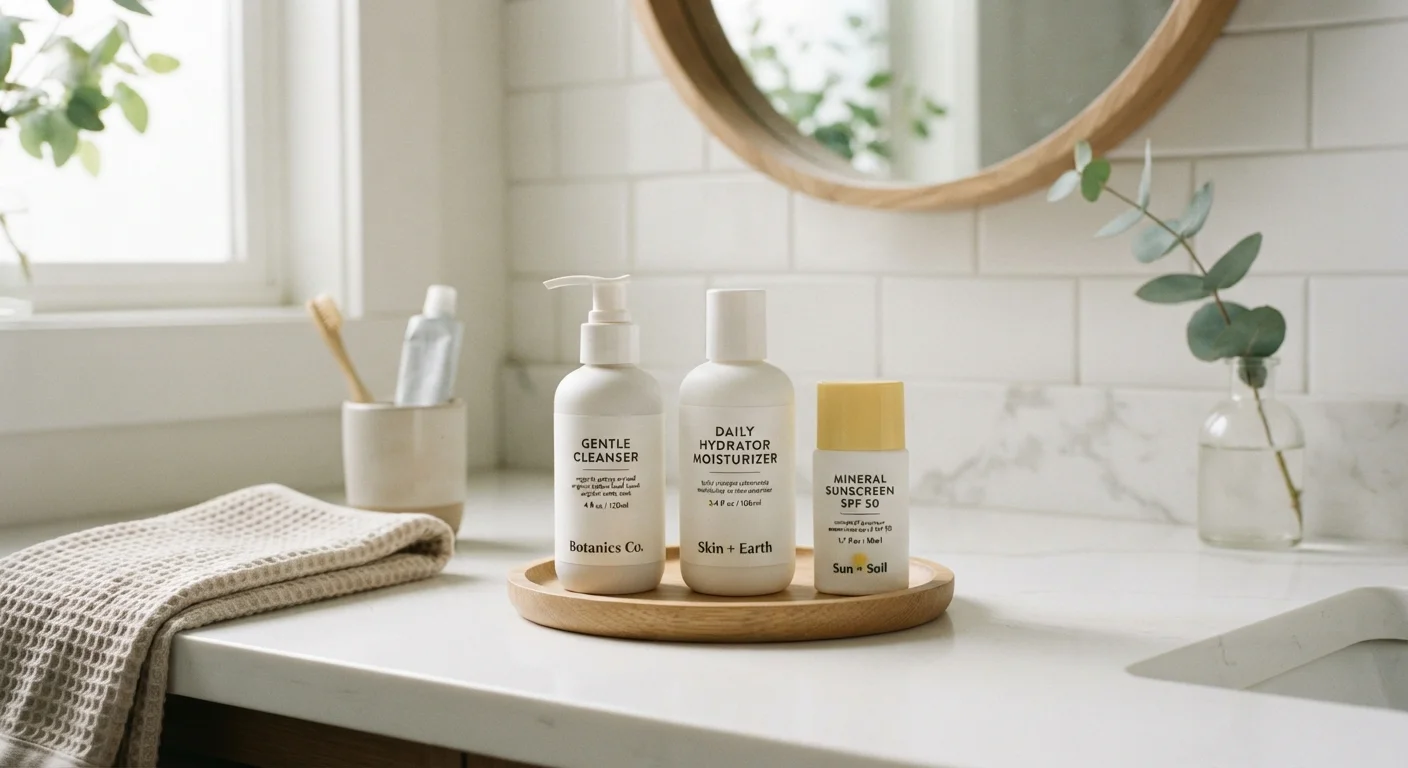
These four steps address the skin's most fundamental daily needs. They're supported by broad dermatological consensus and work across most skin types.
1. Cleanse
Cleansing removes accumulated dirt, oil, sweat, and pollutants that build up throughout the day. A gentle, non-stripping cleanser - one that leaves skin feeling clean but not tight - is the right starting point for nearly everyone. Over-cleansing is a real concern: washing more than twice daily can disrupt the skin's moisture barrier.
2. Treat (optional at this stage)
Targeted treatments - such as serums with vitamin C, niacinamide, or retinoids - address specific concerns like uneven tone or texture. These are valuable additions, but they belong after the basics are established. Introducing actives too early often leads to irritation before you've identified what your skin tolerates.
3. Moisturize
Moisturizer reinforces the skin's barrier by preventing water loss, not by adding water directly. Even oily skin types benefit from moisturizer - skipping it can trigger the skin to produce more oil as compensation. The formulation (gel, lotion, cream) should match your skin type.
3. Protect (AM only)
Broad-spectrum sunscreen - SPF 30 or higher - is the single most evidence-backed tool for preventing premature skin aging and reducing UV-related skin damage risk. It is applied as the final step in a morning routine and is non-negotiable regardless of skin tone or season.
Patch-test new products first
Before applying a new product to your entire face, apply a small amount to the inside of your wrist or behind your ear for 24 to 48 hours. This simple step can help you catch potential reactions before they affect a larger area. It's especially worth doing with any product containing active ingredients.
Morning vs. Evening: What Changes
Your morning routine is about protection: preparing skin for environmental exposure throughout the day. Your evening routine is about repair: supporting the skin's natural overnight recovery processes.
In practice, this means sunscreen is a morning-only step, while richer moisturizers and treatment actives - if and when you introduce them - are often better suited to evenings. Retinoids, for instance, are typically recommended for nighttime use due to photosensitivity concerns. For a full breakdown of the science behind splitting routines, see why morning and evening routines differ.
Evening cleansing is especially important for anyone who wears SPF or makeup, since both require thorough removal to avoid pore congestion and barrier disruption overnight.
How to Choose Products for Your Skin Type
Skin type shapes which product formulas work in your favor. Using products mismatched to your skin type is one of the most common reasons routines underperform.
- Dry skin: Look for cream or balm cleansers and richer moisturizers containing ingredients like ceramides, glycerin, or hyaluronic acid, which help retain moisture in the skin.
- Oily skin: Gel or foaming cleansers and lightweight, oil-free moisturizers tend to work well. Avoid skipping moisturizer entirely - it often makes oiliness worse.
- Combination skin: You may need to use different formulas on different areas or lean toward balanced, gel-cream hybrids that don't over-dry or over-hydrate.
- Sensitive skin: Fragrance-free formulas with minimal ingredient lists reduce the risk of reactions. Introduce any new product one at a time to isolate potential triggers.
If your skin changes with the seasons - which is common - your routine may need modest adjustments. This is also worth keeping in mind if you're building a routine after 40, when skin biology shifts in ways that affect product needs.
Building the Habit
Consistency is the active ingredient that most people overlook. A three-step routine done every day will outperform a ten-step routine done sporadically. The goal in the first month is simply to make the habit automatic - not to optimize every product choice.
A few practical principles help routines stick:
- Tie your routine to an existing habit, such as brushing your teeth. Habit stacking reduces the cognitive load of remembering a new behavior.
- Keep products where you can see them. Out of sight often means out of mind.
- Give any new product at least four weeks before judging whether it works. Skin turnover takes time.
If your results plateau after a few months, it may not mean the products have failed. For a look at why established routines sometimes stop delivering results, common reasons routines lose effectiveness covers the most frequent causes.
And if you're building out other care habits alongside your skincare practice, establishing a consistent body care routine follows a similar principle-first approach.
This article is for general informational purposes only and is not a substitute for professional medical or dermatological advice. If you have a skin condition or persistent skin concern, consult a qualified healthcare provider.
Frequently Asked Questions
Three to four steps is genuinely sufficient for most people: a cleanser, a moisturizer, and a broad-spectrum SPF (in the morning). An optional targeted treatment can be added once the basics feel comfortable. More steps are not automatically more effective.
Skin cells turn over roughly every four to six weeks, so meaningful changes typically take at least that long to appear. Avoid switching products too quickly - a routine needs consistent use to be fairly evaluated.
Your skin's needs differ by time of day. Daytime calls for sun protection; nighttime is when skin repairs itself, making it a better window for richer moisturizers or treatment actives. Using an identical routine for both misses these biological cues.
A simple self-test: wash your face, wait 30-60 minutes without applying anything, then observe. Tight or flaky skin suggests dryness; shine across the entire face suggests oily skin; shine only on the forehead, nose, and chin (T-zone) indicates combination skin. Redness or frequent reactions may suggest sensitivity.
UV rays can penetrate glass, and incidental sun exposure adds up over time. Dermatologists broadly recommend daily SPF use regardless of whether you plan to spend time outdoors, as consistent protection supports long-term skin health.
Persistent acne, unexplained rashes, moles that change shape or color, or any skin concern that doesn't respond to a consistent basic routine warrants a professional evaluation. General skincare guidance is not a substitute for medical advice.
The content on this site is provided for informational purposes only and should not be considered a substitute for professional advice. While we strive to provide accurate and up-to-date information, we make no guarantees regarding its completeness or accuracy. Always consult a qualified professional for advice specific to your circumstances before making any decisions.