

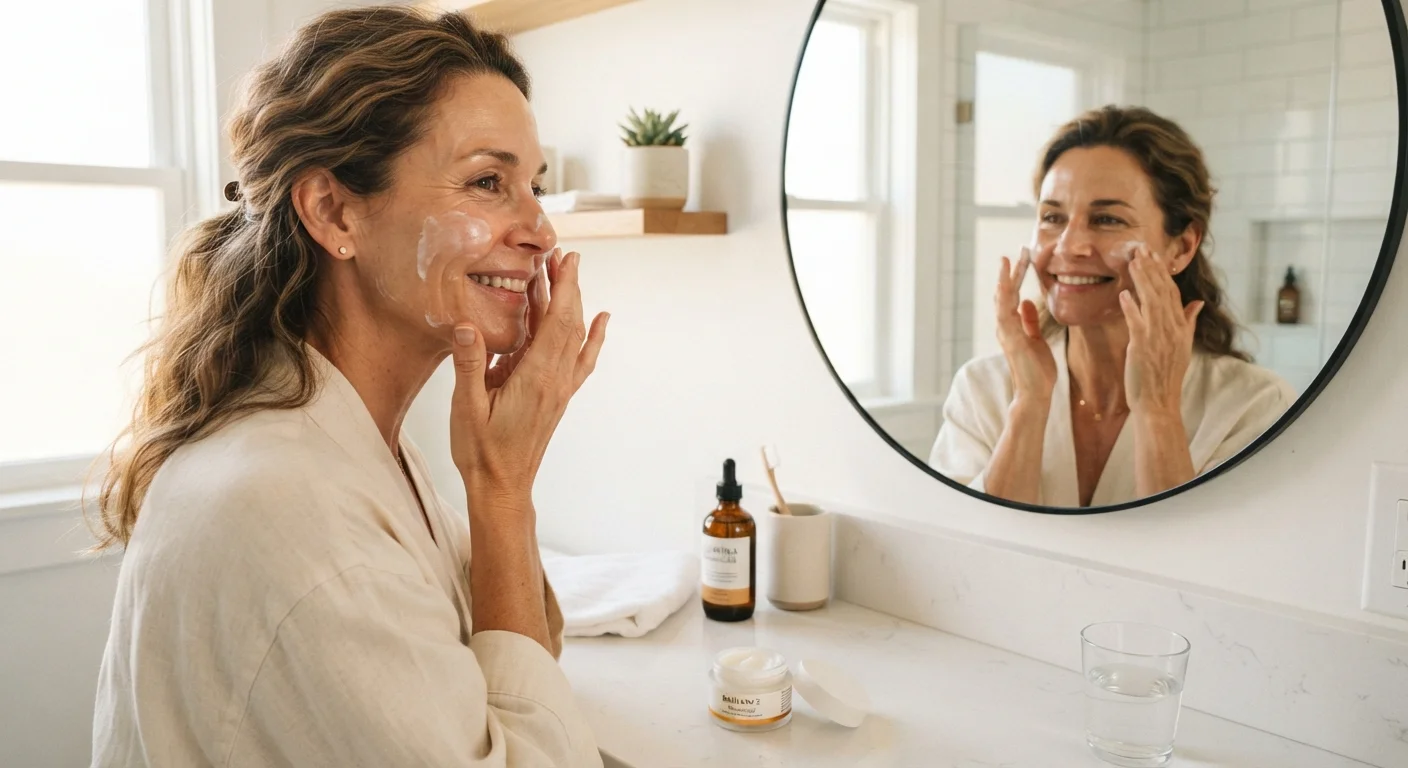
How Skin Actually Changes After 40
Skin biology undergoes measurable shifts across decades, and the changes that tend to accelerate around age 40 are well documented. Collagen and elastin - the proteins responsible for firmness and bounce - are produced more slowly. Cell turnover, the process by which fresh skin cells replace older ones, also slows. The result: skin may feel drier, look less even, and take longer to recover from irritation or sun exposure.
Hormonal changes, particularly around perimenopause and menopause, reduce the skin's natural oil production and alter its moisture barrier. This can transform previously balanced or oily skin into noticeably drier skin. Cumulative UV exposure from earlier years also becomes more visible in the form of hyperpigmentation and uneven texture. If you've noticed your routine losing effectiveness around this time, biology is often a contributing factor - not product failure.
~1%
Annual collagen loss after age 20
Research published in dermatology literature estimates collagen declines roughly 1% per year from early adulthood, accelerating further with UV exposure.
30%
Collagen lost in first 5 years post-menopause
Studies suggest skin loses a significant proportion of its collagen in the years immediately following menopause due to declining estrogen levels.
2x
Longer skin cell turnover cycle at 40+
Cell turnover, which takes approximately 28 days in younger adults, can take roughly twice as long by the fifth decade of life.
What Stays the Same: The Non-Negotiable Basics
Despite biological changes, the core principles of effective skincare don't expire. These fundamentals remain non-negotiable regardless of age:
- Gentle cleansing: Removing dirt, sunscreen, and environmental pollutants each day prevents buildup that can contribute to clogged pores and dullness. Harsh foaming cleansers, however, can strip aging skin - a gentle, low-pH cleanser is generally more appropriate.
- Consistent moisturizing: Maintaining the skin's moisture barrier is important at any age, and it becomes more pressing as natural oil production declines. Look for humectants (like hyaluronic acid) that draw moisture in and occlusives (like shea butter) that seal it.
- Daily broad-spectrum SPF: Sun protection is the single most evidence-supported step for preventing further visible aging and reducing skin cancer risk. This doesn't change at 40 - it becomes more important.
If you're unsure whether your current cleanser and moisturizer suit your skin, it's worth revisiting the difference between skin type and skin condition - a distinction that becomes more relevant as your skin evolves.
What's Worth Adjusting in Your Routine
Several practical shifts can make a meaningful difference when starting or updating a routine in your 40s:
- Swap harsh exfoliants for gentler ones. Physical scrubs can cause micro-tears in skin that has lost some of its earlier resilience. Chemical exfoliants - low concentrations of AHAs like lactic acid - can support cell turnover without abrasion.
- Rethink your AM and PM approach. Morning and evening skin needs are genuinely different, and this matters more as skin becomes drier and slower to recover. A richer moisturizer at night and a lighter, SPF-containing one in the morning reflects how your skin cycles throughout the day.
- Extend care to your neck and chest. These areas age at a similar rate but are often ignored in daily routines. Applying your moisturizer and SPF beyond the face is a low-effort adjustment with real benefit.
When introducing a retinoid, apply it every third night for the first two weeks before increasing frequency. This 'low and slow' approach significantly reduces the likelihood of irritation without sacrificing long-term results.
Retinoids are highly effective but commonly abandoned because of initial dryness and peeling. A gradual introduction allows the skin barrier to adapt before intensity is increased.
Apply your SPF as the final step in your morning routine, not underneath your moisturizer. This ensures the UV filters sit where they work best - at the outermost layer of the skin.
SPF efficacy depends on proper concentration at the skin's surface. Layering it underneath moisturizer or mixing it can reduce its protective effect.
Ingredients to Prioritize After 40
Not all active ingredients are equal, and after 40, a few have stronger evidence behind them:
- Retinoids (vitamin A derivatives)
- Retinoids - including retinol (available over the counter) and prescription-strength tretinoin - are among the most studied skincare ingredients. Research supports their role in stimulating collagen production and accelerating cell turnover. Start at a low concentration and introduce gradually to minimize irritation.
- Peptides
- Short chains of amino acids that signal skin to produce more collagen. They tend to be well-tolerated and pair well with other actives.
- Vitamin C (ascorbic acid)
- An antioxidant that can help brighten uneven skin tone and offers some protection against environmental oxidative stress. Stability and formulation vary - look for products stored in opaque, airtight packaging.
- Niacinamide
- A form of vitamin B3 that supports the skin barrier, can help with hyperpigmentation, and is generally well tolerated, including by sensitive skin.
Ingredients marketed as miracle solutions with little peer-reviewed research behind them are not worth prioritizing over these established options.
Building a Simple, Sustainable Routine
The most effective routine is one you'll actually follow. Complexity doesn't equal better results - and layering too many actives can cause irritation, particularly in skin that is already more reactive. A practical starting framework:
- Morning: Gentle cleanser → antioxidant serum (optional) → moisturizer with broad-spectrum SPF.
- Evening: Gentle cleanser → retinoid (2-3 nights per week to start) → richer moisturizer or barrier repair cream.
Introduce one new ingredient at a time and give it four to six weeks before evaluating. Skin change is gradual, and patience is part of the process. For guidance on extending consistent care habits to the rest of your body, this framework for body care routines applies the same practical logic.
When to See a Dermatologist
A general skincare routine addresses everyday maintenance - it isn't a substitute for professional care. Consider scheduling an appointment with a board-certified dermatologist if you notice:
- New or changing moles, spots, or lesions - particularly any that are asymmetrical, multicolored, or growing
- Persistent irritation, redness, or inflammation that doesn't resolve with gentle care
- Significant texture changes or sudden increases in dryness that may suggest an underlying skin condition
- Interest in prescription-strength treatments, such as tretinoin or targeted therapies for hyperpigmentation
A dermatologist can also conduct a full skin cancer screening, which is recommended more frequently after 40, particularly for those with a history of significant sun exposure. This kind of professional assessment is especially important for people with chronic health conditions or those taking medications that affect skin sensitivity.
This article is for informational and educational purposes only and is not a substitute for professional medical or dermatological advice. Consult a qualified healthcare provider with questions about your individual skin health.
The content on this site is provided for informational purposes only and should not be considered a substitute for professional advice. While we strive to provide accurate and up-to-date information, we make no guarantees regarding its completeness or accuracy. Always consult a qualified professional for advice specific to your circumstances before making any decisions.