

Why Hair Myths Are So Persistent
Hair care advice has been passed down through generations, beauty magazines, and social media with little scrutiny. The problem is that hair is visible, personal, and emotionally significant - which makes people eager to act on any tip that promises shinier, thicker, or faster-growing results. When a habit seems harmless and the placebo effect is easy to confuse with real improvement, myths can survive decades without challenge.
Understanding the biology behind hair growth and structure helps separate genuine care from well-intentioned folklore. Hair is composed of a protein called keratin, and the strand you see is already dead tissue. Only the follicle, nestled in the scalp, is alive and biologically active. That single fact dismantles several of the most stubborn myths at once.
For more on how everyday habits affect your strands, see our common wash routine mistakes that quietly undermine hair health.
Myth
Cutting your hair makes it grow faster.
Fact
Hair growth is determined entirely by the follicle in the scalp - scissors never touch it.
Hair grows from the root, not the tip. Trimming the ends has no biological connection to the follicle's activity. The average rate of human hair growth is roughly half an inch per month, and that rate is governed by genetics, hormones, nutrition, and overall health - not by how often you visit a salon. Trims do help hair appear healthier by removing split ends, which can cause breakage that makes strands look shorter over time, but that is a maintenance benefit, not a growth acceleration.
Myth
Your hair gets used to your shampoo, so you need to switch products regularly.
Fact
Hair cannot develop tolerance or immunity to a shampoo formula - it is not a living system capable of adaptation.
The idea that hair 'gets bored' of a product has no basis in biology. If a shampoo stops seeming as effective, the more likely explanation is a change in water hardness, seasonal shifts in scalp oil production, or buildup from styling products that require a clarifying wash. Switching shampoos frequently can actually introduce unnecessary variables that make it harder to identify what your hair genuinely needs. Stick with a formula that works for your hair type and scalp, and use a clarifying shampoo occasionally if buildup is a concern.
Myth
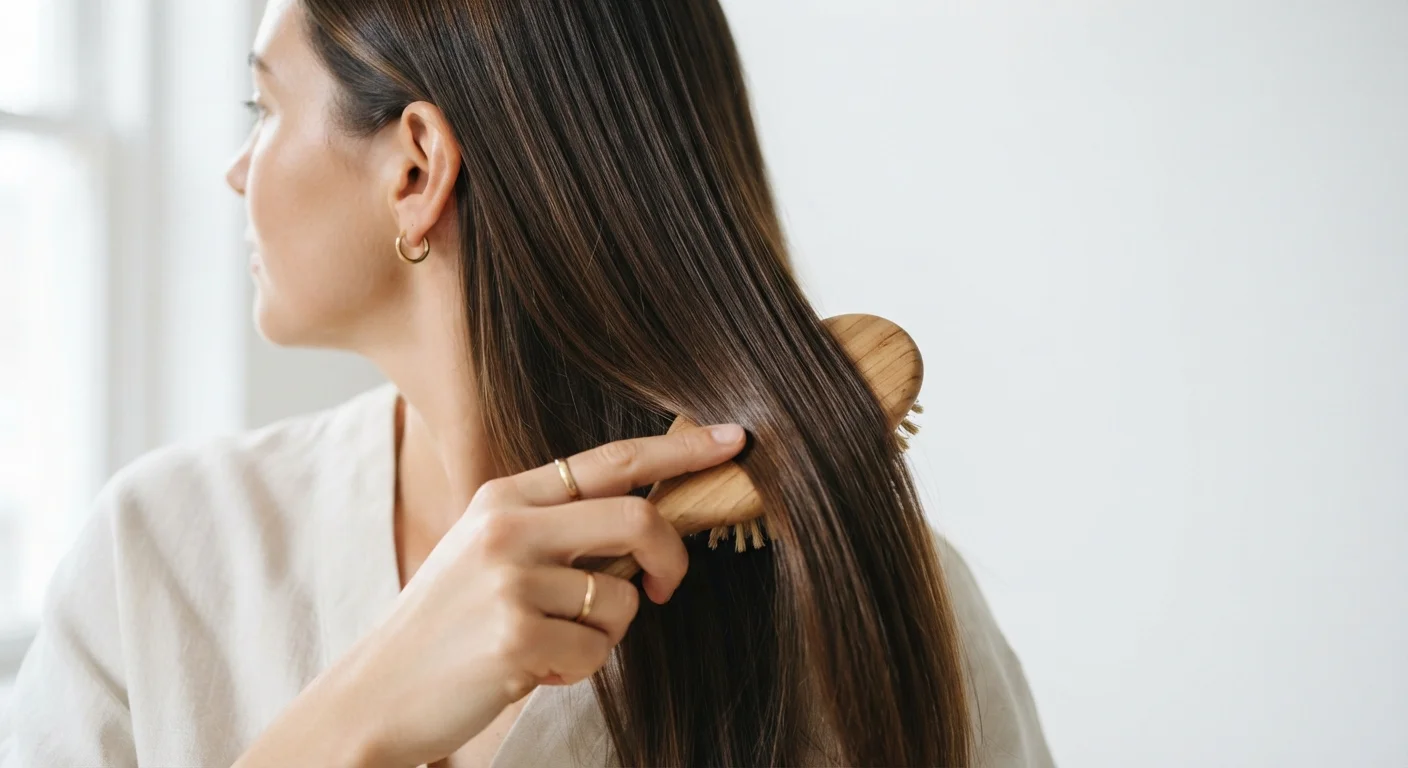
Brushing your hair 100 strokes a day gives it a healthy shine.
Fact
Excessive brushing causes mechanical friction that can lift the cuticle, create frizz, and lead to breakage.
This advice traces back to an era before synthetic bristle brushes, when the modest distribution of scalp oil along the hair shaft from gentle brushing was the main conditioning option available. Today, excessive brushing is recognized as a source of unnecessary mechanical stress. The cuticle - the outermost protective layer of each hair strand - can be roughened by repeated brushing, dulling shine rather than enhancing it. Detangle gently with a wide-tooth comb, especially when hair is wet and most vulnerable to breakage.
Myth
Air-drying is always safer than blow-drying.
Fact
Prolonged exposure to water can swell and weaken the hair shaft, making air-drying potentially more damaging than carefully used heat.
Research has shown that hair in a wet state is in its most fragile condition. The water causes the hair shaft to swell, and extended wetness can stress the internal protein structure over time - a process sometimes called hygral fatigue. A blow-dryer used on a low-to-medium heat setting held several inches from the hair can actually be gentler than leaving hair wet for an hour or more. The key is avoiding excessive heat concentration in one spot, not avoiding heat tools altogether.
Myth
Dandruff means your scalp is too dry.
Fact
Dandruff is most commonly associated with an overgrowth of a scalp yeast called Malassezia, not with dryness.
Applying heavy oils or moisturizing products to treat dandruff can actually worsen symptoms, because Malassezia feeds on certain fatty acids found in natural scalp oils and many hair products. Flaking and itching can feel like dryness, but the underlying cause is typically a combination of the yeast, individual immune response, and sebum production. Antifungal or zinc pyrithione-based shampoos are a commonly recommended approach, but anyone with persistent or severe scalp symptoms should consult a dermatologist for proper diagnosis.
Myth
Pulling out one gray hair causes several more to grow back in its place.
Fact
Each hair follicle operates independently - removing one hair cannot trigger neighboring follicles to produce gray strands.
Graying is caused by the gradual loss of melanin-producing cells called melanocytes within individual follicles. That biological process is driven by genetics and aging, not by plucking. Repeatedly pulling hair from the same follicle can, however, damage it over time and potentially lead to thinner regrowth or scarring of the follicle - so while the myth is false, the habit still isn't advisable.
What the Evidence Actually Says
Once you understand how hair grows and behaves, many popular recommendations start to fall apart. The myths below are among the most widespread - and the corrections are grounded in dermatological research rather than marketing or tradition.
~0.5 in/month
Average human hair growth rate
Dermatological references consistently cite roughly half an inch per month as the average scalp hair growth rate, unaffected by trimming.
50-100
Normal daily hair shed strands
The American Academy of Dermatology notes that losing 50 to 100 hairs per day is within the normal range for most adults.
Heat tools are a related area where myths abound. If you use a flat iron or blow dryer regularly, it's worth knowing how heat actually affects hair structure before reaching for the tool. Similarly, if you've heard that sulfate-free shampoos are universally better, our article on what sulfates do and who benefits from avoiding them offers a clearer picture.
Significant Hair Loss Warrants Professional Evaluation
Sudden increases in shedding, patchy bald spots, or changes in hair texture can signal underlying health conditions including thyroid disorders, nutritional deficiencies, or alopecia. These are not problems that home remedies or shampoo swaps can reliably address. If you notice notable changes in hair density or scalp health, consult a dermatologist rather than experimenting with products.
Healthy hair also starts below the surface. Supporting your scalp with consistent, evidence-informed habits - not just the products you apply to strands - makes a meaningful difference. Explore scalp care habits worth adding to your weekly routine for practical starting points.
This article is for general informational purposes only and is not a substitute for advice from a qualified dermatologist or healthcare professional. If you have concerns about hair loss, scalp conditions, or significant changes in hair health, consult a medical professional.
The content on this site is provided for informational purposes only and should not be considered a substitute for professional advice. While we strive to provide accurate and up-to-date information, we make no guarantees regarding its completeness or accuracy. Always consult a qualified professional for advice specific to your circumstances before making any decisions.