

Why Your Scalp Deserves More Attention
Most hair care conversations focus on strands - but the scalp is where healthy hair actually begins. Like the skin on your face, the scalp has its own oil-producing glands, a protective microbiome, and a moisture barrier that can be easily disrupted by over-washing, product buildup, or environmental stressors. When the scalp environment is out of balance, it often shows up as dryness, flaking, excess oiliness, or sluggish hair growth.
The good news is that maintaining a healthier scalp doesn't require an elaborate routine or expensive products. A few targeted habits, done consistently each week, can make a meaningful difference. These habits fit naturally alongside a broader self-care approach - if you're building out your overall routine, see our body care routine guide for a practical framework that covers head-to-toe habits.
Practice Regular Scalp Massage
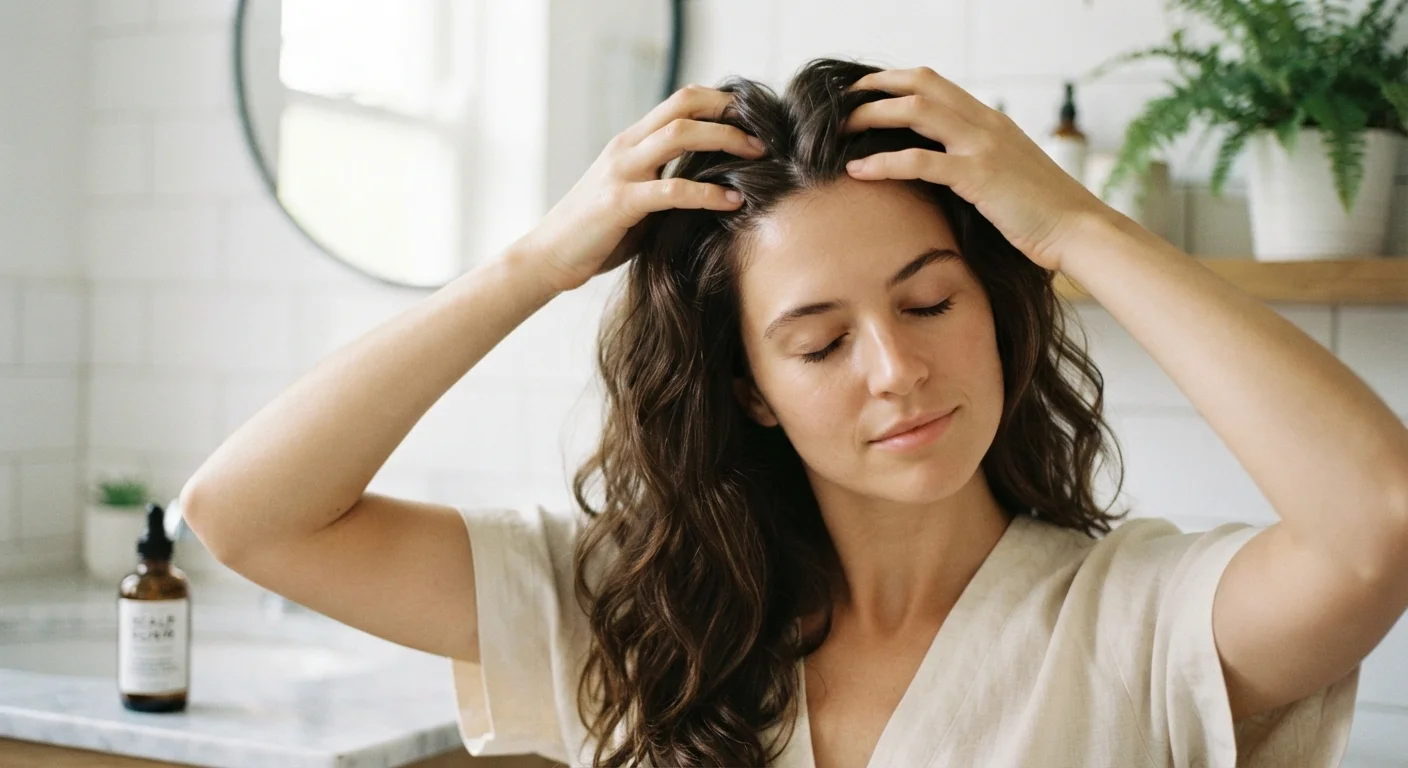
Scalp massage is one of the most accessible habits you can add to your week. Using the pads of your fingers - not your nails - apply gentle circular pressure across the scalp for several minutes. This stimulates blood flow to the hair follicles and can feel genuinely relaxing.
Small studies have explored whether consistent scalp massage may influence hair thickness over time, though researchers note that larger, more rigorous trials are needed before drawing firm conclusions. What is well established is that massage poses minimal risk and supports circulation to the area. You can do this during your shower, while your conditioner sits, or as a dry technique any time of day.
Gentle daily scalp massage is low-risk, accessible, and supports circulation to hair follicles.
Calibrate How Often You Wash
There's no universal wash frequency that works for everyone. Washing too often can strip the scalp's natural oils and trigger a rebound effect where oil glands overcompensate. Washing too infrequently allows sebum, dead skin cells, and product residue to accumulate, potentially clogging follicles and causing irritation.
A helpful approach is to observe your scalp's response and adjust gradually. Most people find a rhythm of washing two to four times per week, but individual factors - hair texture, activity level, and scalp type - all play a role. Our article on common hair washing mistakes covers how wash habits can quietly undermine hair health.
Washing frequency should be calibrated to your scalp type - not a one-size-fits-all schedule.
Address Product Buildup Intentionally
Styling products - dry shampoos, gels, serums, and sprays - can accumulate on the scalp over time even with regular washing. This buildup can interfere with the scalp's natural shedding process and create an environment where bacteria or yeast overgrowth becomes more likely.
Incorporating a clarifying shampoo once or twice a month can help clear this residue without stripping the scalp excessively. Look for formulas designed to deep-cleanse without harsh sulfates if your scalp is on the sensitive side. After a clarifying wash, follow with a moisturizing conditioner focused on the mid-lengths and ends rather than the scalp itself.
Monthly clarifying washes help clear accumulated product residue that regular shampooing misses.
Give Your Scalp Product-Free Days
Designating at least one or two days per week as product-free - meaning no dry shampoo, styling sprays, or heat protectants applied near the root - gives your scalp a chance to breathe and self-regulate. This is especially useful for people who notice sensitivity, itching, or congestion near the hairline.
On product-free days, loose hairstyles that don't require any application work well. Tight styles like high ponytails or buns can place traction on the follicles along the hairline over time, so alternating with low-manipulation styles is a worthwhile habit in its own right.
Product-free days give the scalp space to self-regulate and reduce the risk of irritation.
Stay Hydrated and Support Scalp Health From Within
The scalp, like all skin, is influenced by internal factors. Adequate hydration, a diet with sufficient protein and healthy fats, and managing chronic stress all contribute to how well the scalp functions. Nutritional deficiencies - particularly in iron, zinc, and certain B vitamins - have been associated with hair and scalp changes, though establishing a direct link requires professional evaluation rather than self-diagnosis.
Rather than targeting supplements without guidance, focusing on a varied, balanced diet is a reasonable starting point. If you're concerned about hair loss or scalp changes related to nutrition or health conditions, a visit to your doctor is the appropriate next step. You can find more on how scalp care fits into overall body wellness in our head-to-toe body care guide.
Internal factors like hydration, diet, and stress management all influence the scalp's condition.
Protect Your Scalp From UV Exposure
The scalp is one of the most sun-exposed areas of the body, yet it's frequently overlooked in sun protection routines. UV radiation can damage the skin of the scalp, contribute to dryness, and affect the follicle environment over time - particularly along the part line or for those with thinning hair.
Wearing a hat or protective head covering during prolonged sun exposure is the most practical approach. Scalp-specific SPF sprays and mists also exist, though their application and effectiveness depend on thorough coverage. For everyday incidental sun exposure, protective styling or a light hat provides a simple, reliable barrier.
The scalp is frequently overlooked in sun protection, yet it faces significant UV exposure daily.
Putting It All Together
None of these habits requires a dramatic overhaul - they're designed to layer into the routine you already have. Start with one or two changes, observe how your scalp responds over several weeks, and adjust from there. Because scalp health is individual, what works well for one person may not suit another.
Tracking Your Scalp's Response
When you introduce a new scalp habit, give it at least four to six weeks before evaluating results - scalp skin has its own turnover cycle, and changes don't appear overnight. Keeping a simple note of what you changed and how your scalp looks and feels week to week can help you identify what's actually working versus what's coincidental.
If you're sorting through what's fact and what's folklore in your current hair routine, our hair care myths breakdown is a useful read. And for those new to natural hair care, the natural hair care starting guide offers an accessible entry point without the overwhelm.
This article is for general informational purposes only and is not a substitute for professional medical or dermatological advice. If you experience persistent scalp irritation, significant hair loss, or other concerns, consult a qualified healthcare provider or dermatologist.
The content on this site is provided for informational purposes only and should not be considered a substitute for professional advice. While we strive to provide accurate and up-to-date information, we make no guarantees regarding its completeness or accuracy. Always consult a qualified professional for advice specific to your circumstances before making any decisions.