

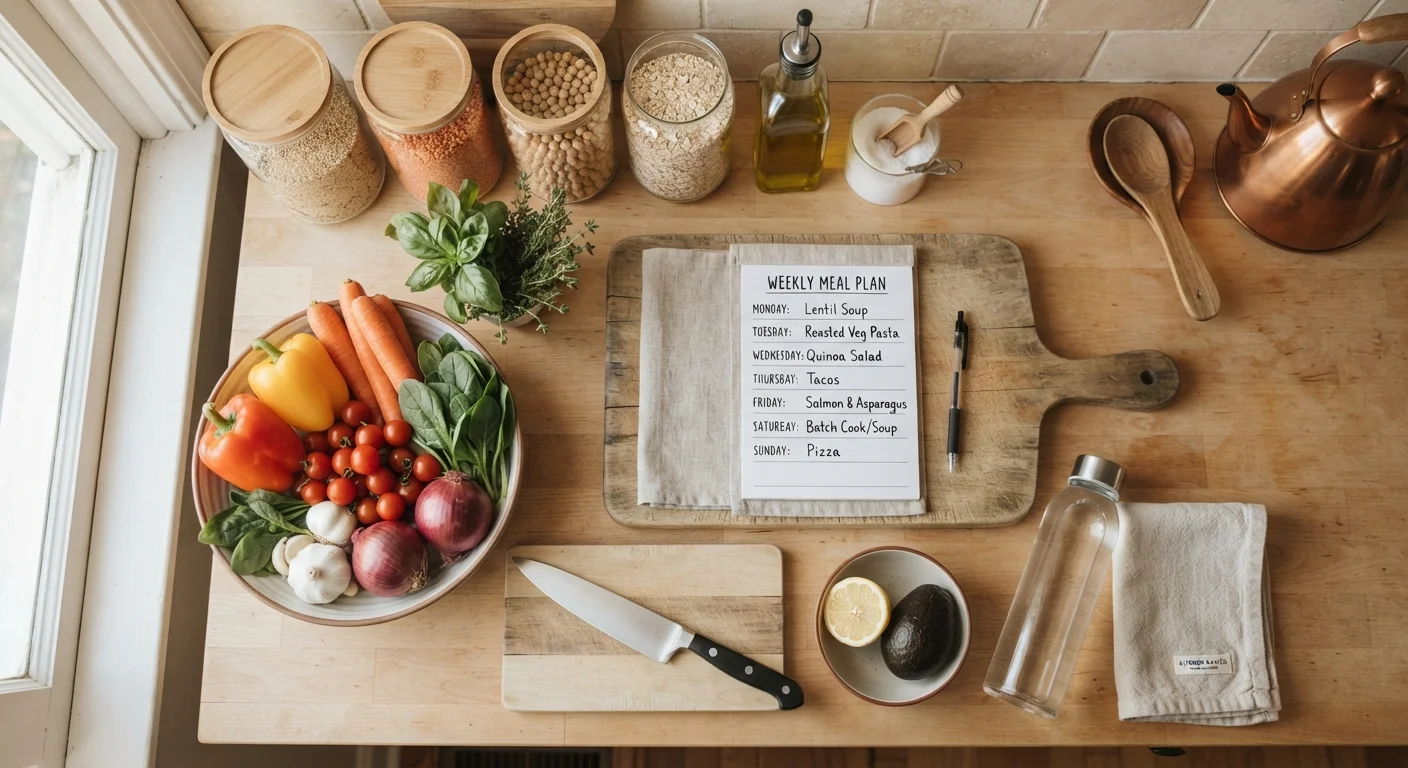
Why Most Flexible Plans Still Fall Apart
Most meal plans fail not because of bad intentions but because they're built for an imaginary week. They assume consistent energy, predictable evenings, and a household that sticks to the script. Real weeks don't work that way - and a plan that can't accommodate disruption is more liability than tool.
The fix isn't a better recipe list. It's a different planning structure. Flexible meal planning means building recovery mechanisms directly into the plan: intentional gaps, versatile ingredients, and a pantry that can bail you out. When plans are designed to bend, they don't break. For context on what commonly derails even well-intentioned plans, this article on why meal plans fall apart by Wednesday is a useful companion read.
Don't Over-Plan - That's the Trap
Assigning a specific meal to every slot in the week is one of the most common reasons plans collapse by Wednesday. Life interrupts rigid schedules. Build your plan to expect gaps, not fill them perfectly. As this breakdown of common meal planning failures explains, over-scheduling is a predictable pitfall - not a personal flaw.
Weekly calendar or planner
Map your actual schedule so meals can be matched to your energy and time available each day.
Grocery list (paper or app)
Track what you need to buy without relying on memory during a hectic week.
Reusable storage containers
Store batch-cooked ingredients in portions that are easy to grab and assemble quickly.
Freezer-safe bags or containers
Preserve batch-cooked meals or proteins for weeks when you cook more than you need.
Step-by-Step: Building a Plan That Holds
The following steps walk you through a planning method designed for households where the schedule shifts constantly. Run through them once each week - ideally on the same day - and the whole process takes under 30 minutes once you're in the habit.
What you will need
Audit your actual week before writing a single meal down
Open your calendar and mark every commitment that affects when and how you'll eat: early starts, late meetings, kids' activities, commute days. Note which nights you realistically have 30 or more minutes to cook and which nights you need something that takes under 15 minutes - or nothing at all. This honest audit is the foundation. The before-you-start checklist for realistic meal plans covers this audit in detail and is worth running through if you're starting fresh.
Choose two or three anchor meals as your week's backbone
Anchor meals are reliable dishes you know by heart - meals that require minimal thought and use ingredients you always have on hand. Think a simple grain bowl, a sheet-pan protein with vegetables, or a sturdy soup that reheats well. Lock these into your highest-pressure nights. Everything else in your plan can stay flexible because these anchors guarantee you'll eat well even when things go sideways. For a fuller explanation of this concept, see the role of anchor meals in weekly planning.
Batch-cook two or three versatile base ingredients
Rather than batch-cooking full recipes, cook flexible building blocks: a pot of whole grains (rice, farro, or quinoa), a batch of roasted vegetables, and a simple protein (eggs, cooked beans, or a roasted chicken). These components combine into different meals across the week without locking you into a specific dish. Grain plus roasted vegetables plus a protein becomes a bowl, a wrap, or a quick stir-fry depending on what you feel like. This approach keeps variety alive even when you're eating from the same prep session.
Leave at least two nights deliberately unplanned
Counterintuitive as it sounds, intentional gaps make your plan more resilient. Designate two nights per week as 'flex nights' - placeholders for leftovers, impromptu takeout, or whatever didn't get used earlier in the week. This prevents the guilt spiral of 'the plan is ruined' when something unexpected comes up, because the plan already expected it. Flex nights also reduce food waste by creating a natural moment to use what's about to turn.
Build a small pantry buffer for pivot moments
Keep a rotation of five to eight pantry staples that can become a meal fast: canned tomatoes, dried pasta, canned beans, eggs, frozen vegetables, broth, and a grain or two. When a planned meal falls apart - someone's late, you're exhausted, the main ingredient went bad - these staples let you cook something real in under 20 minutes without a grocery run. Replenish this buffer when you shop so it's always ready. Think of it as insurance, not hoarding.
Do a five-minute weekly review before planning the next week
At the end of each week, spend five minutes noting what actually happened: which meals you cooked, which you skipped, what went to waste, and which nights were hardest. This quick reflection - not judgment, just observation - gives you real data to improve the following week's plan. Over a few weeks, patterns emerge. Maybe Thursdays always derail you, or you never actually make that ambitious recipe on Sundays. Adjust the plan to match reality rather than reshaping reality to fit the plan. If you're new to this process entirely, the practical primer for busy households offers a solid starting framework.
Use Theme Nights as Loose Guardrails
Instead of assigning specific recipes, try naming a category for certain nights - 'grain bowl night,' 'egg-based dinner,' or 'whatever's in the fridge.' This gives structure without locking you into a dish you may not have energy or ingredients for. For a deeper look at this approach, see how theme nights compare to rigid weekly menus.
Avoid Planning Around Ideal Conditions
Most plan failures happen when people plan for their best-case week - full energy, no surprises, time to cook. Plan for your average week, not your ideal one. If Tuesday evenings are typically chaotic, don't assign a 45-minute recipe to Tuesday.
For readers thinking about how this kind of intentional planning connects to broader nutrition goals, the Nutrition Basics hub offers grounding context on what balanced eating actually looks like week to week. And if your household is just one person, meal planning strategies for solo eaters addresses the unique challenges of portion size and food waste that come with planning for one.
The content on this site is provided for informational purposes only and should not be considered a substitute for professional advice. While we strive to provide accurate and up-to-date information, we make no guarantees regarding its completeness or accuracy. Always consult a qualified professional for advice specific to your circumstances before making any decisions.