

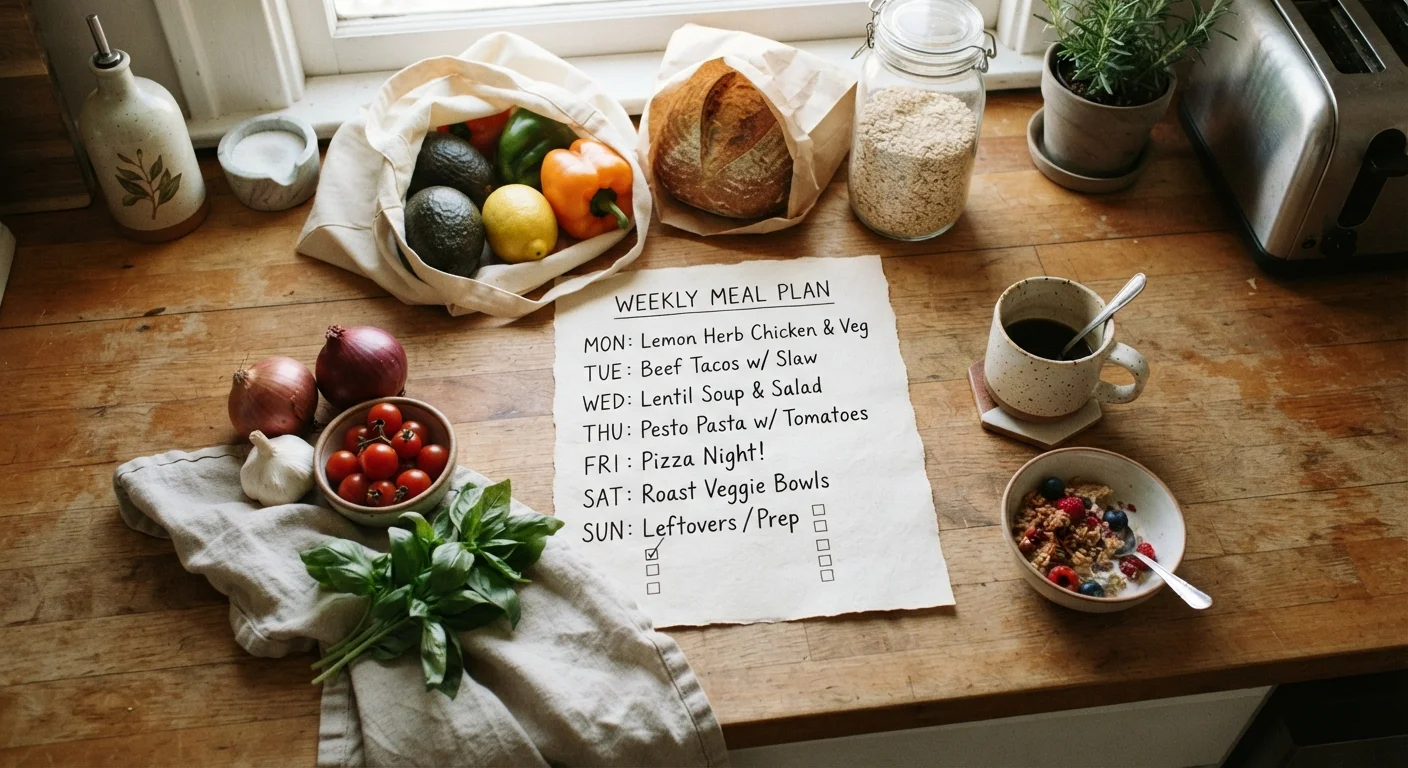
The Problem Isn't You - It's the Plan
If your meal plan consistently falls apart by Wednesday, you're not lacking discipline. You're working with a plan that wasn't designed to survive real life. Most meal planning advice focuses on what to cook but skips the structural habits that determine whether a plan actually holds. The result is a cycle: ambitious Sunday planning, smooth Monday execution, and then a slow unraveling by midweek when energy dips and schedules tighten.
The good news is that these failures are predictable - which means they're fixable. Understanding exactly where and why plans break down is the first step toward building one that doesn't. See our complete meal planning playbook for a thorough walkthrough once you've identified your weak spots.
Planning every single meal from scratch, including lunches and snacks, right from the start.
Why it happens: Enthusiasm at the start of a new routine pushes people toward comprehensive systems, when simpler ones would actually stick better.
Scheduling complex or unfamiliar recipes on your busiest days of the week.
Why it happens: Most people plan meals on the weekend when they feel energized, forgetting how exhausted a Tuesday evening after back-to-back meetings actually feels.
Building a plan without checking what's already in the fridge, freezer, or pantry.
Why it happens: It's easier to plan from a blank slate or a recipe you saw online than to work backward from what you already have on hand.
Treating the meal plan as a rigid contract rather than a flexible guide.
Why it happens: People often conflate "sticking to the plan" with success, so any deviation feels like failure - which leads to abandoning the whole plan entirely.
Skipping any form of advance prep, leaving all work for the day each meal is cooked.
Why it happens: Prep feels optional when you're planning on Sunday and imagining you'll have time each evening - but weeknight reality rarely matches that assumption.
How to Build a Plan That Actually Survives the Week
Fixing a failing meal plan isn't about finding better recipes - it's about rethinking how you structure the plan itself. Start by auditing your week before writing a single meal down. Check your calendar for late nights, commitments, and low-energy days, then assign your most demanding recipes to days when you actually have time to cook. Run through a before-you-start checklist to catch logistical gaps before they become problems.
Build in at least two "flex nights" - evenings where dinner is intentionally simple: leftovers, a grain bowl from pantry staples, or a quick egg dish. This isn't giving up; it's engineering resilience into your week. If you live in a household with a shifting schedule, flexible meal planning strategies can help you stay on track even when plans change.
~35%
Meals planned but not cooked each week
Research on household food behavior consistently finds that roughly one-third of planned home-cooked meals are abandoned in favor of takeout or convenience foods, often due to schedule conflicts and low energy.
3x
More likely to follow through with a flexible plan
Studies on behavior and habit formation suggest that plans built with explicit fallback options see significantly higher completion rates than rigid, all-or-nothing approaches.
Finally, keep your shopping list tightly connected to your plan. A plan without matching groceries is just a wish list. Prep what you can in advance - washed greens, cooked grains, portioned proteins - so that the actual cooking on weeknights requires less decision-making and effort. That reduction in friction is what keeps Wednesday from becoming takeout night by default.
It's also worth separating meal planning challenges from broader nutrition myths that make the whole endeavor feel heavier than it needs to be. Several common beliefs about meal planning simply aren't true, and letting go of them can make it significantly easier to start and stick with a realistic routine.
The content on this site is provided for informational purposes only and should not be considered a substitute for professional advice. While we strive to provide accurate and up-to-date information, we make no guarantees regarding its completeness or accuracy. Always consult a qualified professional for advice specific to your circumstances before making any decisions.