

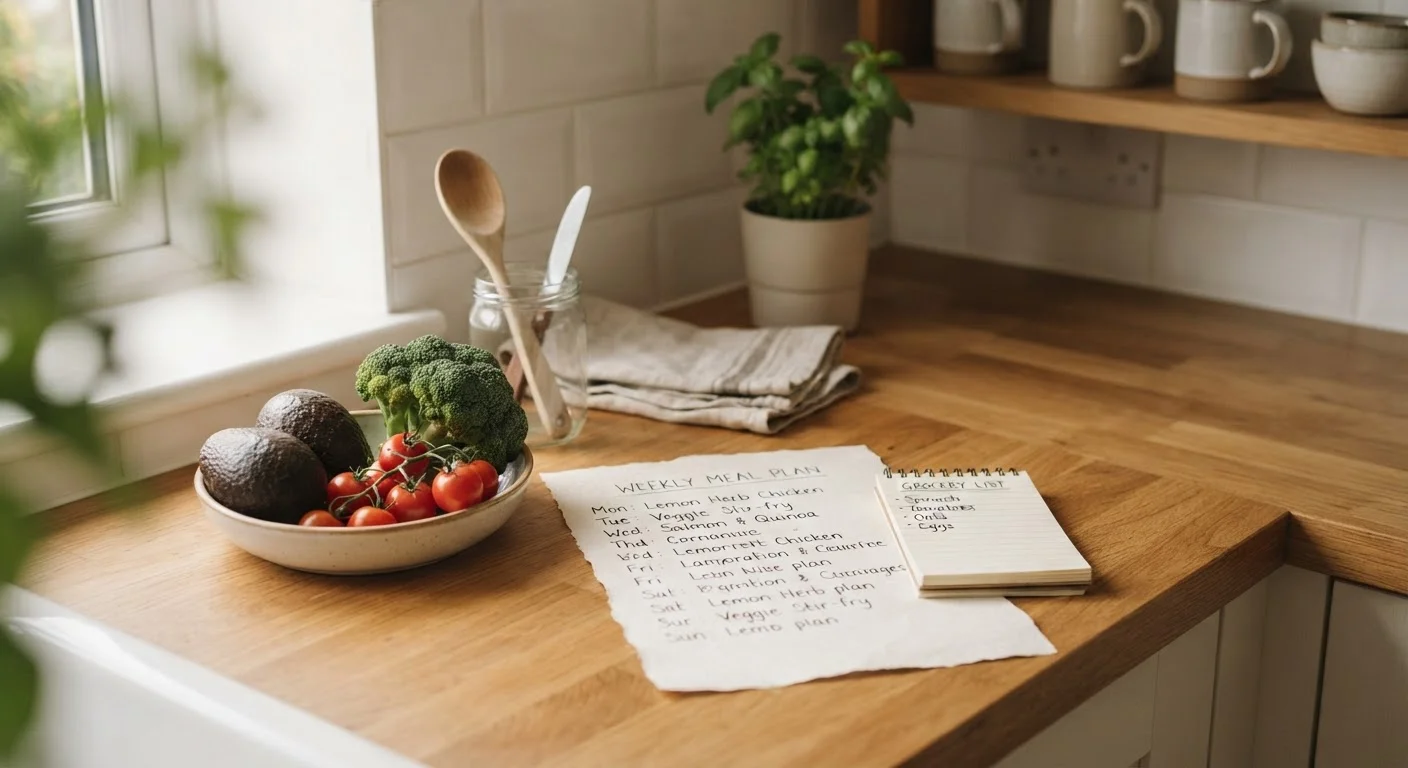
Why Meal Planning Gets a Bad Reputation
Meal planning has an image problem. For many people, it conjures pictures of elaborate Sunday prep sessions, identical container lunches lined up in the fridge, and a rigidity that leaves no room for a spontaneous takeout order or a busy Tuesday. Those images aren't entirely wrong - but they describe one version of meal planning, not the only one.
The myths that surround this habit make it feel like an all-or-nothing undertaking reserved for highly organized people with lots of free time. In practice, the barrier to entry is much lower, and the payoff - fewer last-minute decisions, less food waste, and more confidence at the grocery store - starts showing up quickly. The real-world effects of consistent meal planning often extend well beyond dinner.
Myth
You need to spend all day Sunday cooking to meal plan properly.
Fact
Meal planning is about deciding what you'll eat, not necessarily cooking it all in advance. Even 15 minutes of planning on a weekend can meaningfully reduce weeknight stress.
The Sunday-cooking image is pervasive, but it describes meal prepping, not meal planning. Planning simply means knowing your meals before you're standing hungry in front of the fridge. You might jot down four dinners, write one grocery list, and call it done. For a deeper look at how these two habits differ, see what meal prepping actually means.
Myth
Meal planning means eating the same boring food every day.
Fact
A good meal plan is built around variety and flexibility, not rigid repetition. You choose the meals - there's nothing inherent about planning that requires monotony.
Repetition happens when plans are poorly designed, not because planning itself forces it. Rotating two or three proteins, pairing them with different grains and vegetables, and leaving one or two evenings open for leftovers or flexible meals keeps things interesting. Boredom is a design problem, and it's an easy one to solve at the planning stage.
Myth
You need expensive containers and special equipment to get started.
Fact
Any container that holds food safely works fine. Glass jars, reusable bags, and basic plastic containers all do the job without a significant upfront investment.
Matching container sets and dedicated prep tools are marketed heavily, but they're not prerequisites. The core requirements for meal planning are a pencil, a piece of paper, and whatever storage you already own. Equipment upgrades, if you ever want them, can come later once you've established a habit worth supporting.
Myth
Meal planning only works for families or large households.
Fact
Planning works at any scale, including for a single person. The strategies just look a little different when you're shopping and cooking for one.
Solo eaters face real challenges - portion sizing, avoiding food waste, and not wanting to cook a full recipe for one - but those are solvable problems, not reasons to skip planning altogether. Approaches like cooking half-batches, using versatile ingredients across multiple meals, and leaning on the freezer all make single-person planning very manageable. See meal planning strategies for solo eaters for specifics.
Myth
If you don't follow the plan perfectly, you've failed.
Fact
Meal plans are guides, not contracts. Adjusting mid-week is normal and doesn't undo the value of planning in the first place.
Most plans don't fall apart because of bad intentions - they shift because life does. A plan that gets 60% followed still saved you several decisions, reduced your grocery spending, and cut food waste compared to no plan at all. If your plan consistently falls apart by midweek, there are identifiable reasons and fixes worth reviewing before you give up on the habit entirely.
Getting Started Without Overcomplicating It
The most common reason people don't stick with meal planning is that they start too ambitiously. They plan seven dinners, five lunches, and breakfast for every day - and then feel defeated the first time Wednesday's salmon doesn't happen. A simpler entry point is more durable.
Planning Is Not the Same as Prepping
Many people abandon meal planning because they conflate it with full-scale meal prepping - batch cooking, portioning containers, and spending a Sunday afternoon in the kitchen. These are two distinct habits. Meal planning means deciding in advance what you'll eat; meal prepping means cooking in advance. You can do one without the other. Understanding the difference can remove a significant mental barrier to getting started.
Begin by planning three or four dinners per week. Choose meals where at least one component can pull double duty - a roasted chicken that becomes a salad topping the next day, or a pot of grains that stretches across two meals. These small overlaps are the practical core of efficient planning, and they're covered in detail in our practical primer for busy households.
Over-Planning Can Backfire
Scheduling every meal, snack, and variation for seven days is a common beginner mistake. This level of rigidity leaves no room for leftovers, social plans, or days when a recipe just doesn't sound appealing anymore. Start with three to four planned dinners per week and build from there. A plan that has breathing room is one you'll actually follow.
Before writing down your first recipe, it also helps to run a quick reality check on your week's schedule and what's already in your fridge. That groundwork is exactly what a before-you-start checklist is designed to help you do.
~$1,500
Annual food waste per average U.S. household
According to USDA Economic Research Service estimates, American households waste a significant share of food they purchase, much of which planning can help reduce.
15-20 min
Typical time needed for a basic weekly meal plan
Food planning researchers and registered dietitians commonly cite that a simple weekly dinner plan requires far less time than most people assume before they try it.
If you're newer to the kitchen generally, pairing a meal planning habit with some foundational cooking basics will make your plans more realistic and enjoyable to execute.
The content on this site is provided for informational purposes only and should not be considered a substitute for professional advice. While we strive to provide accurate and up-to-date information, we make no guarantees regarding its completeness or accuracy. Always consult a qualified professional for advice specific to your circumstances before making any decisions.