

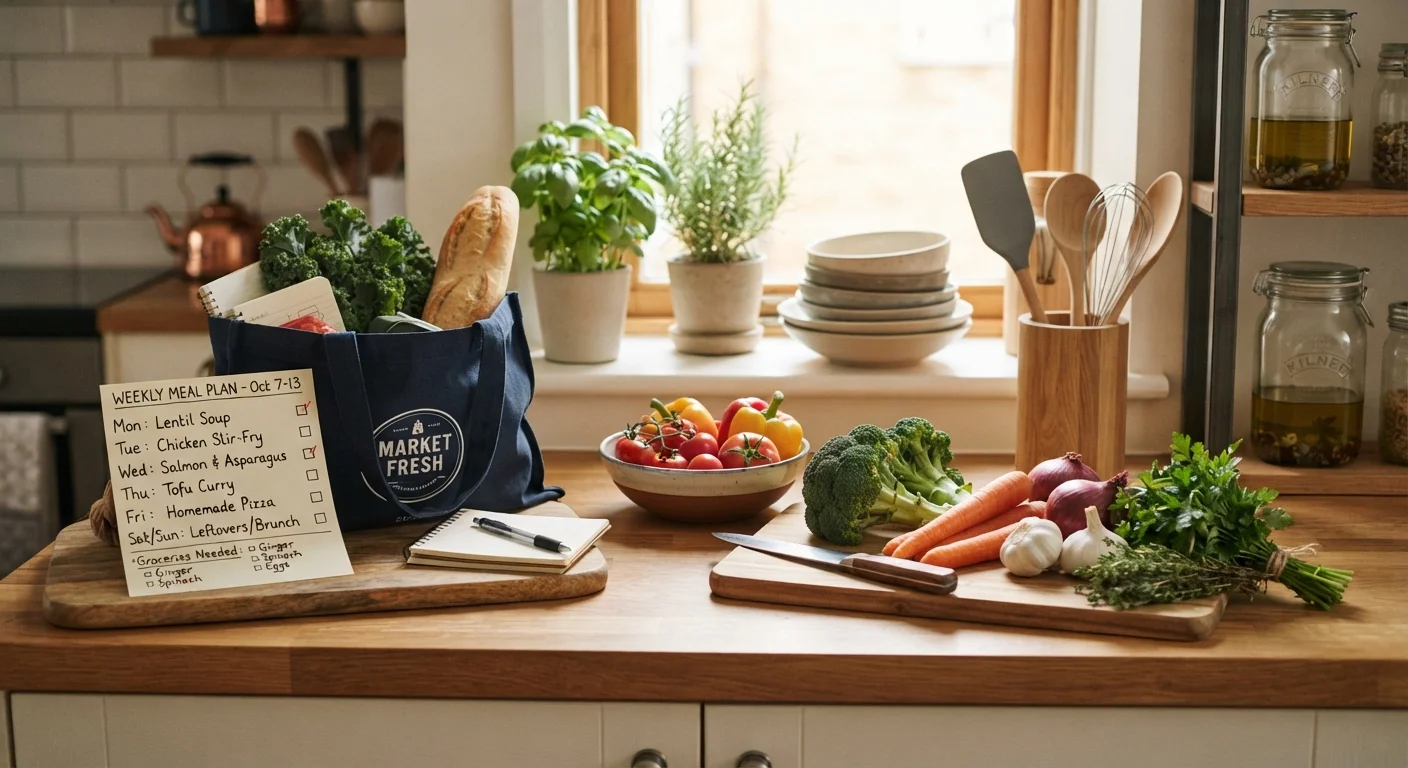
Our Verdict
Meal planning delivers real, measurable benefits - lower grocery costs, less food waste, reduced stress, and more nutritious eating - but only when the approach fits your lifestyle. An overly rigid system can create its own pressures and lead to abandonment. A plan that builds in flexibility tends to stick.
Meal planning is especially valuable for busy households managing tight grocery budgets, unpredictable weeknight schedules, or a desire to eat more intentionally without relying on takeout.
What Meal Planning Actually Changes Day to Day
Most people think of meal planning as a dinnertime fix - a way to avoid the 5 p.m. panic of figuring out what to eat. But its effects reach much further. When you decide meals in advance, you're also making decisions about your grocery list, your budget, your food waste, your nutrition, and even your stress levels throughout the week.
Understanding those downstream effects - both the helpful and the frustrating ones - helps you build a system that's worth keeping. See our practical primer for new meal planners if you're just getting started.
Reduces impulse grocery spending significantly
Shopping from a specific list tied to planned meals removes the conditions that trigger impulse buys. Over a month, this habit can make a noticeable difference in grocery totals.
Cuts household food waste
Buying ingredients with a specific meal in mind means less produce and protein goes unused. This is one of the most tangible environmental and financial wins of consistent planning.
Improves nutritional variety and balance
Planning ahead lets you look at the full week's meals at once, making it easier to spot and fill nutritional gaps - like too little fiber or too few vegetables - before it's too late to adjust.
Dramatically lowers weeknight decision fatigue
Deciding what to cook when you're already hungry and tired is a recipe for takeout or convenience food. A plan made in calmer moments removes that daily friction.
Creates predictable grocery trips
Knowing exactly what you need each week makes shopping faster, more efficient, and less likely to involve multiple mid-week store runs for forgotten items.
Supports household budget awareness
When meals are planned in advance, total food costs become more visible and easier to manage - a practical advantage for households watching their spending closely.
The Real Advantages of Planning Your Meals Ahead
The benefits of meal planning aren't just anecdotal. Research in consumer behavior and nutrition science consistently points to several concrete gains for households that plan meals in advance.
Grocery spending drops. When you shop with a specific list tied to planned meals, you're less likely to buy items you won't use or make impulse purchases at the store. Over weeks, this compounds into meaningful savings. The connection between planning and grocery budgets is one of the most practical reasons families get into the habit.
Food waste decreases. The USDA has estimated that American households waste a significant portion of the food they buy. Meal planning directly addresses this - ingredients are purchased with specific uses in mind, which means fewer forgotten items rotting in the back of the fridge.
Nutritional quality improves. When you plan meals, you make food choices while calm and unhurried rather than when you're hungry and rushed. That mental space makes it easier to include vegetables, whole grains, and varied protein sources. For a broader look at how food choices connect to health, the nutrition basics hub offers useful grounding.
~30-40%
Share of U.S. food supply wasted
The USDA and EPA have both estimated that roughly 30 to 40 percent of the U.S. food supply is wasted, with household-level decisions being a significant contributor.
~$1,500/yr
Estimated annual household food waste cost
The Natural Resources Defense Council has estimated that the average American family of four may lose close to this amount annually through uneaten food.
The Drawbacks Worth Knowing Before You Start
Meal planning isn't universally easy or seamless. Several real obstacles cause well-intentioned planners to give up - often not because the concept failed them, but because their system wasn't designed for how they actually live.
Time investment upfront can feel significant
Setting aside time each week to plan, build a grocery list, and shop requires ongoing effort. For households already stretched thin, this commitment can be a real barrier.
Rigid plans don't handle schedule changes well
A plan built for a predictable week can unravel quickly when life doesn't cooperate. Without flexibility built in, even one disrupted evening can throw off the rest of the week.
Can feel repetitive if variety isn't intentional
Planners who default to the same handful of easy meals week after week may find the approach leads to food boredom, reducing motivation to keep planning.
Doesn't always accommodate changing appetites or moods
Eating what you planned three days ago requires overriding what you feel like eating today. This tension is small but persistent and causes many people to drift away from their plans.
Requires coordination in multi-person households
When preferences, dietary needs, or schedules differ across household members, building a single plan that works for everyone adds meaningful complexity to the process.
A rigid weekly menu can feel punishing when life changes mid-week - a late meeting, an unexpected guest, or simply not being in the mood for what's on the schedule. That's why it's worth reading about flexible planning strategies for unpredictable weeks before you lock yourself into a fixed format.
Solo eaters face a particular version of this challenge - planning for one often means grappling with portion sizes and produce that spoils before it's used. Planning meals for a single person requires a slightly different approach than family-scale planning.
Making the System Work for Your Real Life
The planners who stick with it long-term tend to treat their weekly menu as a guide rather than a contract. Building in one or two "flex nights" - where a simple pantry meal or leftovers can substitute - removes the pressure that causes most people to abandon structured planning altogether.
A well-stocked pantry is the silent partner of any good meal plan. When you have reliable staples on hand, flex nights don't mean a trip to the drive-through - they mean pulling together something quick from what you already have.
It also helps to clarify what you're actually trying to do. Meal prepping and meal planning are distinct habits - knowing which one you're committing to prevents overcommitment. If you've tried before and felt overwhelmed, some of that friction may come from common myths about what meal planning requires rather than the practice itself.
Planning Style Matters as Much as Planning Itself
There's no single correct way to plan meals. Some households thrive with a fully mapped weekly menu; others do better with a loose theme-night structure - think 'pasta night' or 'grain bowl night' - that guides shopping without locking in a specific recipe. Exploring the difference between rigid menus and flexible theme nights can help you identify which model fits your household's rhythm. The best meal plan is the one you'll actually use.
The content on this site is provided for informational purposes only and should not be considered a substitute for professional advice. While we strive to provide accurate and up-to-date information, we make no guarantees regarding its completeness or accuracy. Always consult a qualified professional for advice specific to your circumstances before making any decisions.