

Why Budget and Variety Feel Like They're In Conflict
Many people treat grocery budgets and meal variety as competing goals - cut costs and you eat the same thing repeatedly; eat diversely and spending climbs. In practice, the tension comes from how variety is pursued, not whether it's possible on a budget. Variety built around different cuisines using the same underlying ingredients is fundamentally more affordable than variety built around entirely different proteins, produce, and pantry items every week.
If you're new to structuring your weekly food routine, the practical primer on meal planning from scratch covers the foundational habits that make everything in this guide easier to apply. If you're cooking for one, meal planning strategies for solo eaters addresses the portion and waste challenges unique to single-person households.
Budget Meal Planning Is Not About Eating Less
Cutting grocery costs does not mean restricting what you eat or compromising nutritional balance. The goal is smarter allocation - spending on ingredients that work harder across multiple meals. If you have specific dietary needs or health conditions, a registered dietitian can help you apply these principles appropriately.
The steps below walk through a repeatable weekly system - one that treats your budget as a tool for decision-making, not a constraint on what you get to eat.
What You'll Need Before You Start
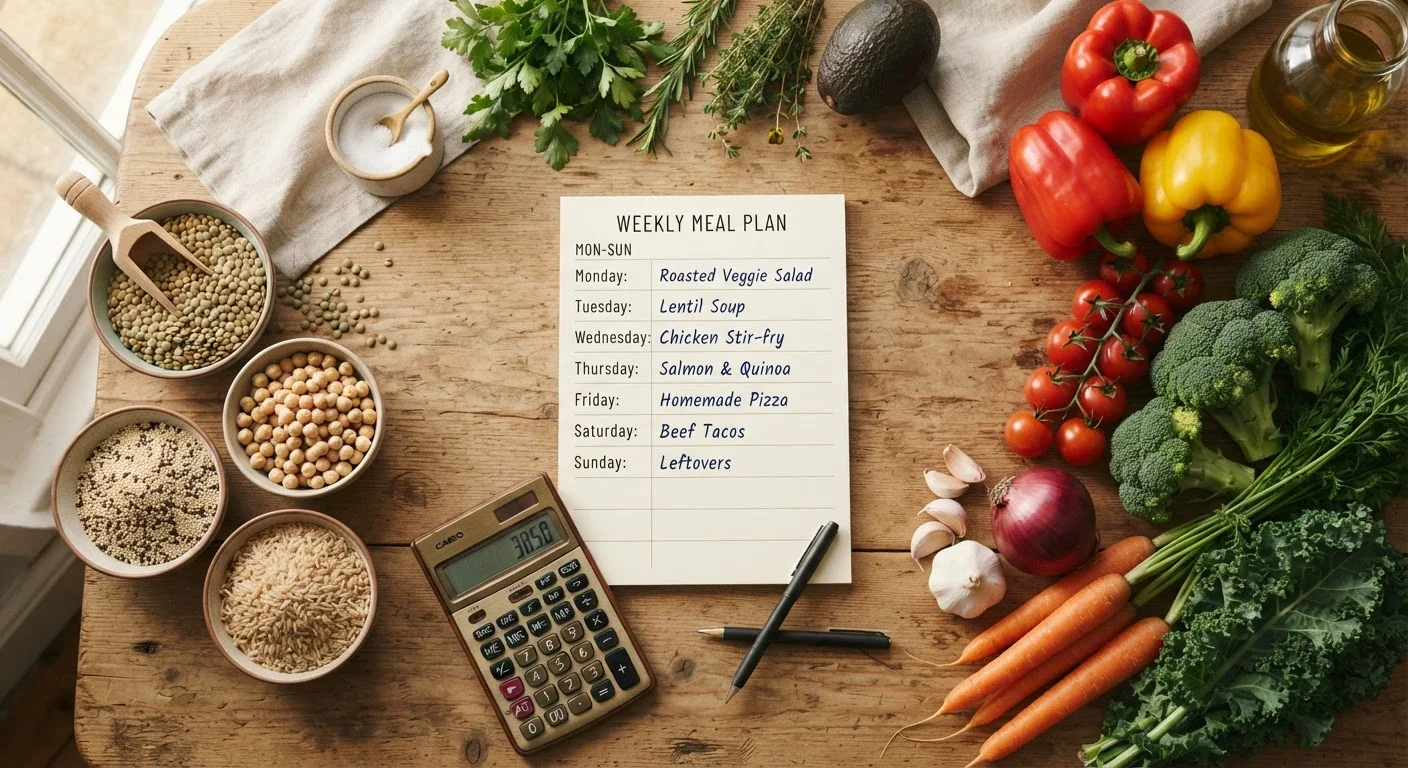
Effective budget meal planning requires a small amount of upfront organization. The tools are simple, but having them in place before you sit down to plan makes the process measurably faster each week.
What you will need
Weekly meal plan template (paper or digital)
Provides a structured grid to map out breakfast, lunch, and dinner across all seven days at a glance.
Running pantry inventory list
Tracks what staple ingredients are already on hand so you avoid duplicate purchases and build meals from existing stock.
Basic calculator or budgeting app
Helps you tally estimated per-meal costs and verify your weekly plan stays within your set spending limit.
Reusable grocery list (organized by store section)
Reduces impulse purchases by keeping your shopping focused and efficient once the plan is set.
Once these are in place, the planning process itself typically takes 20-30 minutes - and gets faster as the habit develops. Understanding the distinction between planning and prepping can also help you decide how much time to invest each week; see what meal prepping actually means for a clear breakdown of both.
Step-by-Step: Building Your Budget Meal Plan
Follow these steps each week to build a plan that keeps spending predictable and meals genuinely varied. The process is designed to be completed in one sitting, then lightly adjusted mid-week as real life unfolds.
Set a firm weekly budget and break it into per-meal targets
Before choosing a single recipe, decide on a total grocery dollar amount for the week. Then divide that number by the total meals you plan to cook at home. This gives you a concrete per-meal cost target that makes every recipe decision easier to evaluate. For example, a household cooking 14 meals a week on a $100 budget has roughly $7 per meal to work with. That number becomes your filter - not a restriction, but a useful reference point when comparing options.
Audit your pantry, fridge, and freezer before writing the plan
Open every cabinet and take a quick mental or written inventory of what you already have. Canned tomatoes, dried pasta, frozen chicken, half a bag of lentils - these are all free meals waiting to happen. Build at least two or three of your weekly meals around existing stock before you add a single new item to your shopping list. This one habit alone can meaningfully reduce weekly spending. See the before-you-start checklist for a thorough walkthrough of this audit process.
Choose anchor ingredients that work across multiple meals
Variety does not require a different protein, starch, and vegetable for every single meal. Instead, select two or three versatile core ingredients - such as dried or canned beans, eggs, brown rice, or bone-in chicken - and plan meals that use them in distinctly different ways. Beans can appear in a Monday soup, Wednesday tacos, and Friday grain bowl without the meals feeling repetitive, because the seasoning, texture, and surrounding ingredients change each time. This method also shortens your grocery list and reduces waste significantly.
Plan meal types rather than fixed recipes for mid-week flexibility
Instead of assigning a specific recipe to Wednesday dinner, assign a meal type: stir-fry, soup, sheet-pan roast, or grain bowl. This approach lets you adapt to what's actually in the fridge by mid-week without abandoning the plan entirely. It also means a slightly different vegetable or protein can slot in without derailing variety. For households with shifting schedules, this flexibility is critical - you can read more about it in the guide on building meal plans that survive unpredictable weeks.
Build your grocery list by ingredient, not by recipe
Once your meal types and anchor ingredients are mapped out, write your shopping list by ingredient category rather than by individual recipe. Group produce together, proteins together, and pantry items together. When you shop by ingredient across your whole plan, you naturally spot overlaps - you realize you need onions for three different dishes, so you buy one bag instead of three separate amounts. Organizing your list this way also speeds up the actual shopping trip and reduces the chance of forgetting something critical.
Review and adjust the plan at mid-week
Check in with your plan on Wednesday or Thursday. Look at what's still in the fridge, what meals actually happened, and what needs to shift. If Tuesday's planned dinner didn't get made, move it rather than discard it. A brief mid-week review keeps the plan functional rather than aspirational and prevents the end-of-week food waste that defeats the budgeting effort. Think of the plan as a living document - not a rigid schedule. For a deeper look at the broader benefits of this kind of consistency, see how meal planning affects more than just dinnertime.
Use the 'Anchor Ingredient' Strategy
Choose one or two lower-cost, flexible proteins - like eggs, canned beans, or chicken thighs - and build multiple meals around them each week. This approach reduces the number of line items on your grocery list while still producing varied dinners, lunches, and sides.
Avoid Over-Planning Too Far Ahead
Planning more than one week out can lead to food waste if produce spoils before you use it. Keep fresh ingredient planning within a 5-7 day window. Shelf-stable staples can be purchased in larger quantities, but perishables need realistic timelines tied to your actual cooking schedule.
Consistency matters more than perfection here. Even a partially followed plan typically reduces impulse spending and food waste compared to shopping without one. For broader cooking basics that pair well with this planning approach, the cooking basics hub covers technique and skill-building for everyday home cooks.
The content on this site is provided for informational purposes only and should not be considered a substitute for professional advice. While we strive to provide accurate and up-to-date information, we make no guarantees regarding its completeness or accuracy. Always consult a qualified professional for advice specific to your circumstances before making any decisions.