

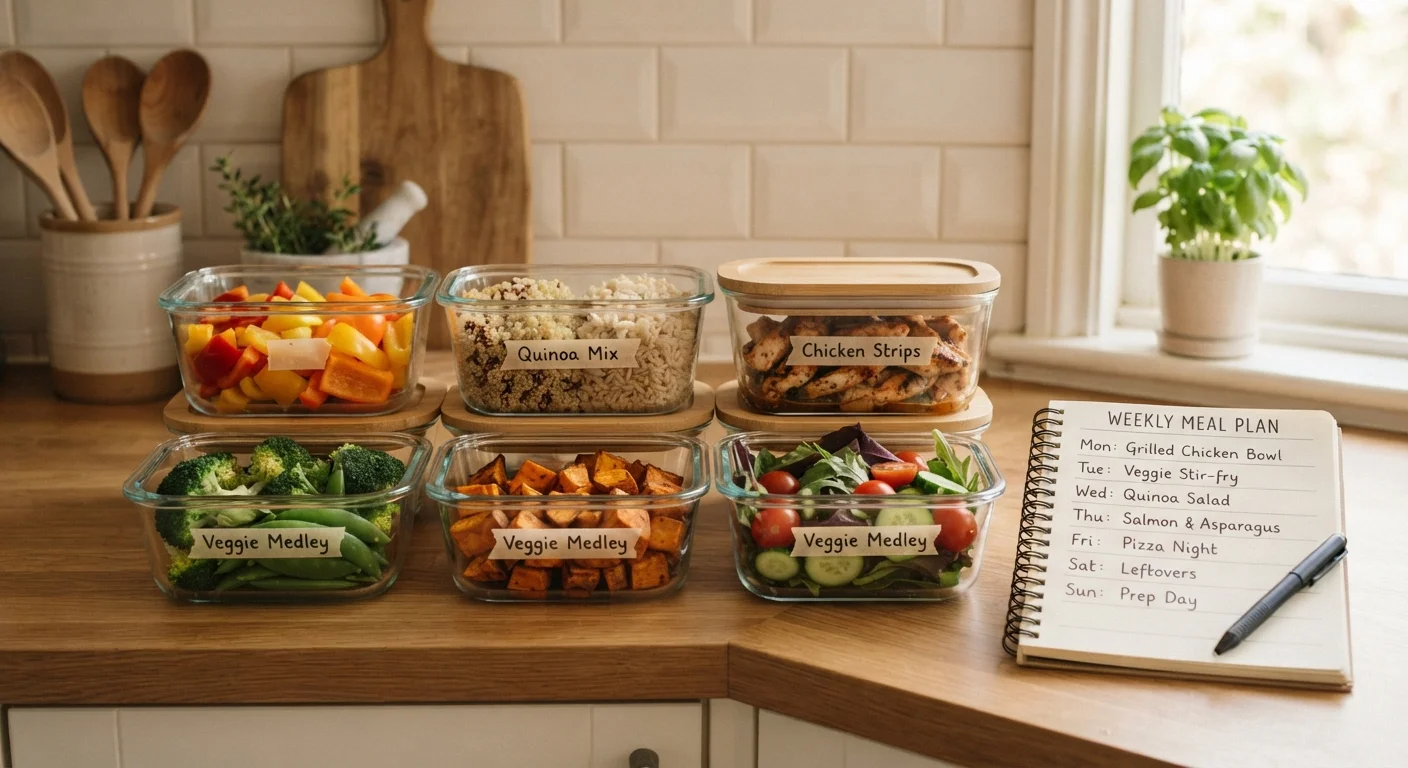
The Difference That Actually Matters
The words "meal planning" and "meal prepping" get swapped constantly - in social media posts, recipe blogs, and even cookbooks. But conflating them causes real confusion when you try to build either habit. They describe two separate activities that happen at different points in your week.
Meal planning is a decision-making process. It happens at a desk, on your phone, or at the kitchen table with a notepad. You're choosing which recipes to make, checking what's already in your pantry, and writing a grocery list. No cutting board required.
Meal prepping is a physical process. It's what you do after the groceries are home - washing produce, slicing vegetables, cooking a big batch of grains, portioning proteins into containers. The goal is to shrink the work required at actual mealtime.
Both reduce stress during the week, but they do it differently. Planning eliminates the daily question of "what's for dinner?" Prepping eliminates the daily labor of cooking from scratch each night. For a deeper look at building the planning side from the ground up, see our practical primer for busy households.
What Meal Prepping Actually Includes
People often picture meal prepping as cooking full meals in bulk - ten containers of identical chicken and rice lined up in the fridge. That's one valid approach, but it's not the only one.
~35%
of U.S. food purchases wasted at home
The USDA estimates that roughly 30-40% of the food supply in the United States is wasted, with household-level waste being a major contributor.
1-2 hrs
Typical weekly meal prep session length
Most home cooks who practice regular meal prepping report spending between one and two hours on a single weekly prep session, depending on complexity.
Meal prepping covers a range of tasks:
- Batch cooking: Making large quantities of a complete dish - soups, casseroles, grain bowls - that can be portioned and reheated across several days.
- Ingredient prepping: Washing, chopping, and storing raw components so cooking during the week is faster. Think sliced bell peppers, pre-measured spices, or peeled garlic.
- Marinating proteins: Getting chicken, fish, or tofu into a marinade days ahead so flavor develops and cook time shortens.
- Portioning snacks: Dividing nuts, fruit, or other grab-and-go items into single servings to reduce impulsive eating decisions.
The approach you choose depends on your schedule and your flexibility preferences. Batch cooking is efficient but repetitive. Ingredient prepping preserves variety but requires more weeknight effort. Our article on batch cooking vs. prepping ingredients breaks down the trade-offs in detail.
Why Meal Planning Is a Separate Skill Worth Developing
Meal planning is often undervalued because it doesn't feel productive - you're not making anything. But the decisions made during planning determine whether your week goes smoothly or not.
A solid meal plan accounts for how many nights you'll actually cook, what ingredients overlap across multiple recipes, and how leftovers will be reused. It also drives smarter grocery shopping: you buy what you need and avoid the drift toward impulse items that go unused.
A parent plans five dinners for the week on Saturday morning, then spends 60 minutes Sunday afternoon washing and chopping vegetables and cooking a pot of quinoa.
A single professional doesn't have a formal plan but spends Sunday roasting a tray of vegetables and cooking a batch of lentils to use however the week demands.
A couple writes out a weekly dinner menu and grocery list but buys everything fresh and cooks each meal the night it's needed.
Planning also has downstream effects that go beyond dinner. Consistent weekly planning tends to reduce food waste, lower grocery spending, and decrease the kind of weeknight stress that leads to takeout decisions. For a balanced view of those broader effects, see how meal planning affects more than just dinnertime.
If you've believed that meal planning requires hours of elaborate prep or specialized tools, it may be worth revisiting those assumptions. Several common meal planning myths make the habit feel harder than it is.
How to Use Both Together Effectively
The most practical approach is to let planning inform prepping. Once you know what you're cooking this week, you know exactly which ingredients to prep on Sunday - and which tasks would actually save you time.
A useful parallel is the culinary concept of mise en place - a French phrase meaning "everything in its place." Professional kitchens run on this principle: all ingredients are measured, chopped, and organized before cooking begins. The same logic applies at home. Learn more about what mise en place actually means and how it translates to everyday cooking.
A simple combined workflow might look like this:
- On Friday or Saturday, review your upcoming week and choose three to four dinners.
- Build a grocery list based only on what those meals require.
- After shopping, spend 45-90 minutes prepping the components that will slow you down most on weeknights - grains, proteins, and any vegetables that take time to chop.
You don't need to prep every meal in advance. Even prepping two or three key components can cut weeknight cooking time significantly. And if budget is part of your planning equation, structuring your menu with cost in mind is a skill of its own - see our guide on planning meals around a grocery budget.
Frequently Asked Questions
No - you can do either one independently. Meal planning alone helps you shop smarter and avoid last-minute decisions. Meal prepping alone, even without a formal plan, speeds up cooking time. That said, combining both gives you the most benefit during a busy week.
For most households, a basic prep session runs one to two hours on a weekend. The time varies depending on how many meals you're prepping and how complex those meals are. Prepping just a few key ingredients - like roasted vegetables and cooked grains - can take as little as 30 minutes.
Batch cooking is one form of meal prepping, but not the only one. Batch cooking means making large quantities of a complete dish to eat throughout the week. Prepping ingredients - chopping vegetables, cooking grains, marinating proteins - is another approach that keeps more flexibility at mealtime.
Yes, in several ways. When you plan and prep with a specific grocery list, you're more likely to use what you buy. Prepped ingredients stored correctly also tend to get used before they spoil, rather than sitting forgotten in the back of the fridge.
Pick one or two components to prep rather than trying to cook everything in advance. For example, cook a pot of rice, wash and chop salad greens, or portion snacks into containers. Building from small, consistent habits is more sustainable than an ambitious all-day cooking session.
The content on this site is provided for informational purposes only and should not be considered a substitute for professional advice. While we strive to provide accurate and up-to-date information, we make no guarantees regarding its completeness or accuracy. Always consult a qualified professional for advice specific to your circumstances before making any decisions.