

Start here
What Meal Planning Actually Is (and Isn't)
Next
The Core Building Blocks of a Weekly Plan
Then
Setting Up Your Planning Routine
Watch out for
Common Beginner Pitfalls to Avoid
Finish with
Making It Stick Over Time
What Meal Planning Actually Is (and Isn't)
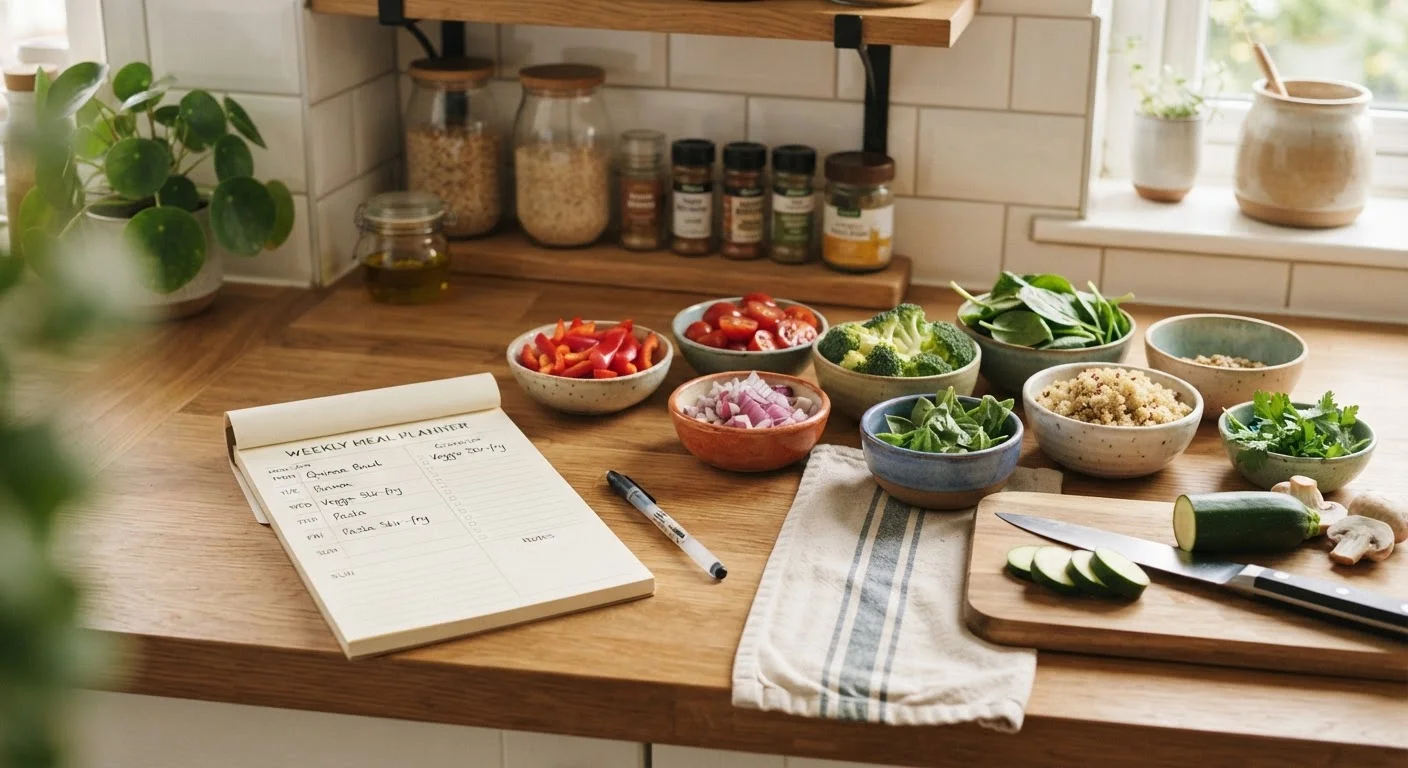
Meal planning is simply the practice of deciding - before the week begins - what your household will eat and when. That's it. It doesn't require elaborate spreadsheets, a spotless kitchen, or hours of Sunday cooking. At its most basic, a meal plan might be a handwritten list of four dinners on a notepad stuck to the fridge.
What meal planning is not is a rigid contract. Life changes, schedules shift, and the plan should flex with them. Many households benefit from understanding what's myth and what's real before they begin - because misplaced expectations are one of the biggest reasons people quit before the habit forms.
The real value of planning is the reduction of daily decision fatigue. When you already know what's for dinner, you stop wasting mental energy on the question at 5:45 p.m. That small shift has a measurable ripple effect on grocery spending, food waste, and weeknight stress. For a broader look at those effects, see how meal planning affects more than just dinnertime.
Meal planning
The practice of deciding in advance what meals you'll prepare during a set period - typically a week - so shopping and cooking become more predictable.
Batch cooking
Cooking large quantities of one or more dishes at a single time, then portioning them out for use across multiple meals throughout the week.
Pantry staples
Non-perishable or long-lasting ingredients - such as canned beans, dried pasta, oils, and spices - kept on hand to form the backbone of many different meals.
Recipe rotation
A personal collection of go-to recipes your household already enjoys and prepares regularly, making weekly planning faster and less mentally taxing.
Buffer night
A deliberately unplanned evening in a weekly meal plan, reserved for leftovers, takeout, or a simple pantry meal when schedules change unexpectedly.
Mise en place
A French culinary term meaning 'everything in its place' - the practice of measuring and organizing all ingredients before cooking begins to make the process smoother.
The Core Building Blocks of a Weekly Plan
A functional meal plan rests on three inputs: what you already have, what your week looks like, and what your household will actually eat. Working with all three simultaneously is what separates a plan that works from one that sits ignored.
1. Audit your fridge and pantry first
Before selecting a single recipe, check what's already on hand. Perishables that need to be used soon should anchor your early-week meals. A well-stocked pantry means you'll rarely start from zero - canned tomatoes, dried lentils, and a decent olive oil can form the base of dozens of meals.
2. Map your week's energy levels
Assign complex or hands-on recipes to evenings when you have time and energy. Save your simplest meals - sheet-pan dinners, stir-fries, pasta with pantry sauce - for your two or three most demanding days. This is where understanding mise en place can help: having ingredients prepped and ready transforms even a busy-night cook session.
3. Build a recipe rotation
Rather than searching for new recipes every week, maintain a short list of 10-15 meals your household already enjoys. Planning from a rotation reduces research time dramatically and makes shopping lists nearly automatic. You can always add one new recipe per week without rebuilding the entire plan from scratch.
Start with your calendar, not recipes
Before choosing a single meal, look at the week ahead. Identify your two or three busiest evenings and assign those nights your simplest, fastest meals. Reserving complex recipes for days when you genuinely have time prevents the plan from collapsing by Wednesday.
Setting Up Your Planning Routine
Consistency in when you plan matters as much as how you plan. Most households find that setting aside 20-30 minutes on the same day each week - often Saturday or Sunday morning - creates a reliable rhythm. Pairing this session with something enjoyable (coffee, a podcast) makes it easier to sustain.
Your weekly session should follow a simple sequence: review the calendar, check the fridge and pantry, select meals, write the shopping list. That's the full loop. Once you're comfortable with the basics, the full meal planning playbook covers every stage in detail - from recipe selection to storage.
Decide early whether you'll prep ingredients in advance or cook full meals ahead. These are meaningfully different approaches with different trade-offs - the batch cooking vs. ingredient prep comparison can help you figure out which method fits your schedule.
Also build in at least one buffer night per week - an unplanned evening for leftovers, a simple eggs-and-toast meal, or the occasional takeout. Buffer nights are not failures; they're structural features of a realistic plan.
Common Beginner Pitfalls to Avoid
Don't over-plan your first week
Mapping out seven dinners, seven lunches, and seven breakfasts in week one is a common reason beginners abandon meal planning entirely. Start with three planned dinners and build from there. Overambition early on creates grocery waste and discouragement - both of which are avoidable.
Beyond over-planning, beginners frequently run into a few other predictable problems:
- Ignoring portion sizes: Planning six servings of a recipe for a two-person household creates storage problems and food fatigue. Scale recipes to your actual needs or plan intentionally for leftovers.
- Skipping the shopping list: A meal plan without a corresponding grocery list is just a wish list. The list is what makes the plan executable.
- Planning meals that require skills you don't have yet: If you're still building core cooking skills, choose recipes that match your current level. Challenging yourself is fine; setting yourself up to fail mid-week is not.
- Not accounting for variable schedules: If your week rarely looks the same twice, build that into the plan from the start. The before-you-start checklist walks through exactly this kind of pre-planning review.
Meal planning and nutrition are separate skills
Getting meals planned consistently is its own accomplishment - you don't need to perfect nutritional balance at the same time. Once the planning habit is stable, you can layer in considerations like protein distribution or vegetable variety. For a foundation in food choices, the Nutrition Basics hub offers straightforward starting guidance.
Making It Stick Over Time
The goal in the first month isn't a perfect plan - it's a repeatable process. Expect to adjust your approach as you learn what works for your household. Some families thrive on detailed daily meal assignments; others do better with a loose list of options for the week and decide the specifics each morning.
Track what worked and what didn't in a simple way: a note on your phone, a brief reflection during your next planning session. Did you skip a meal because the recipe was too involved? Did a new dish become an instant household favorite? That feedback shapes a better plan next week.
If your schedule is consistently unpredictable, flexible planning strategies - like planning by meal type rather than by day - can help the plan survive real life. The guide to planning for unpredictable weeks covers those approaches in depth.
Meal planning is a skill that compounds. The more you do it, the faster and more intuitive it becomes - and the more room you have to bring in new recipes, dietary goals, or seasonal ingredients without it feeling like a project. Start small, stay consistent, and let the habit build itself.
Frequently Asked Questions
Most households find a realistic weekly planning session takes 20 to 30 minutes once the habit is established. Beginners may spend closer to 45 minutes at first while building their recipe rotation. Over time, familiarity with your household's preferences makes the process significantly faster.
No - even planning three or four dinners per week produces noticeable improvements in time, spending, and stress. Many households leave lunches and breakfasts flexible while focusing planning energy on dinners, where the decision fatigue tends to be highest.
Keep a short list of easy fallback meals - simple pantry dishes, eggs, or soups - that require minimal ingredients. A flexible meal plan built with buffer nights accounts for the unexpected. Check out strategies for <a href="/food-eating/meal-planning/how-to-build-meal-plans-that-survive-a-busy-unpredictable-week">planning around unpredictable weeks</a>.
Build meals around a shared base - a grain, a protein, or a vegetable - and customize from there. Taco nights, grain bowls, and stir-fries are natural templates that accommodate multiple preferences without cooking two separate meals.
Batch cooking is one strategy within meal planning, not a synonym for it. Meal planning is the broader process of deciding what you'll eat; batch cooking is a prep method where you cook large quantities at once. Some planners batch cook; others prefer to prep only raw components.
A simple notepad on the fridge, a whiteboard in the kitchen, or a free notes app on your phone all work well. The best system is whichever one you'll actually look at. Avoid over-engineering the storage method before you've established the planning habit itself.
The content on this site is provided for informational purposes only and should not be considered a substitute for professional advice. While we strive to provide accurate and up-to-date information, we make no guarantees regarding its completeness or accuracy. Always consult a qualified professional for advice specific to your circumstances before making any decisions.