

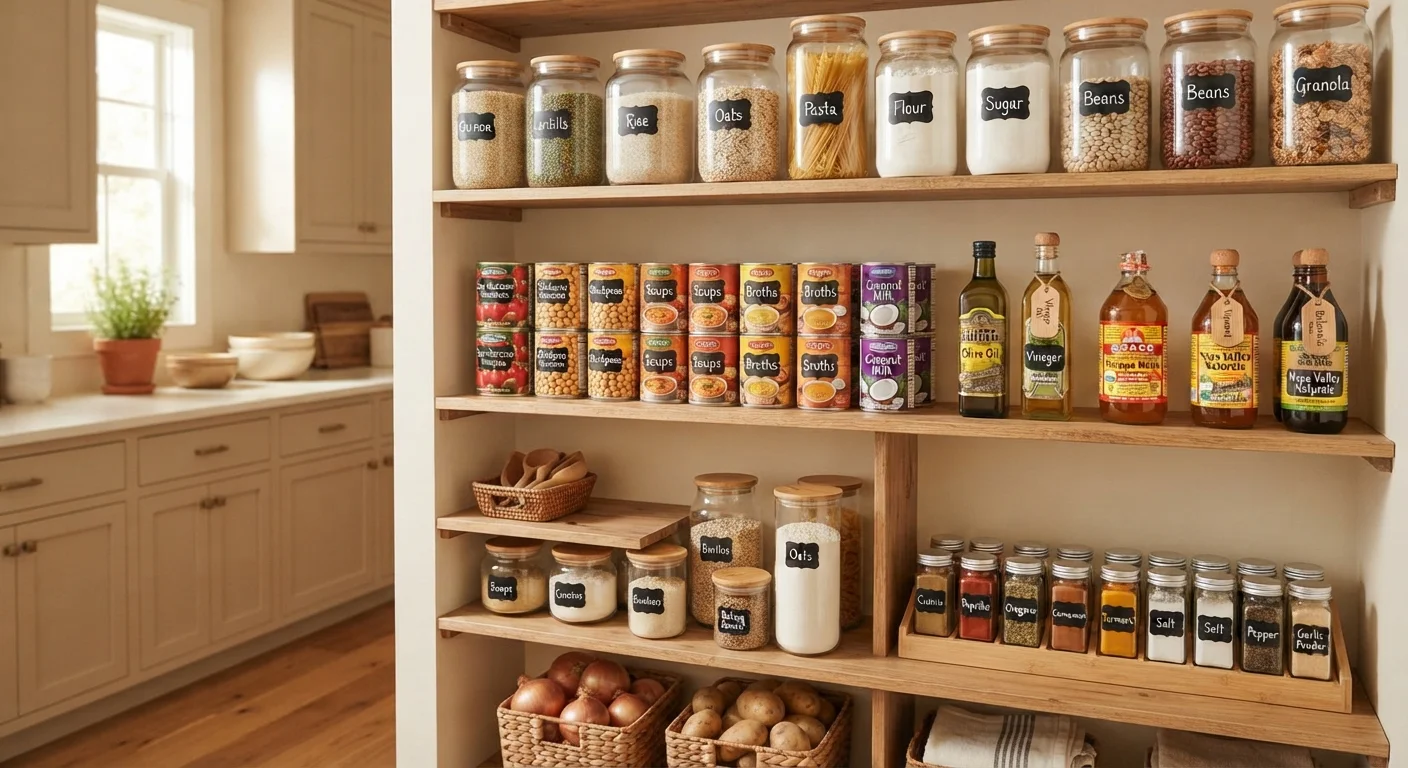
Why Your Pantry Is the Real Meal-Planning Engine
Most meal-planning advice focuses on recipes and calendars - but the actual foundation is what sits on your shelves before you ever open a cookbook. A functional pantry doesn't mean hoarding; it means keeping a deliberate rotation of ingredients that can anchor dozens of different meals. When your pantry is in good shape, a blank weeknight becomes an opportunity rather than a problem.
Research on food decision-making consistently suggests that when convenient, healthy options are already available at home, people are more likely to cook rather than order out. A stocked pantry is essentially friction reduction: you spend less mental energy on "what do we even have?" and more on actually cooking. For a deeper look at how this habit ripples outward, see how meal planning affects more than just dinnertime.
| Average pantry staple shelf life (canned goods) | 2-5 years (USDA Food Safety and Inspection Service) |
| Average pantry staple shelf life (dried pasta, rice) | 1-3 years (USDA Food Safety and Inspection Service) |
| Recommended pantry audit frequency | Every 3-4 months (General food storage guidance) |
| Core pantry categories to maintain | 5 (grains, proteins, flavor builders, canned tomatoes/broths, baking agents) |
| Typical time to build a pantry-based meal | 20-30 minutes (General culinary estimate) |
The Core Pantry Categories
A well-stocked pantry is built around five reliable categories. Think of these as your repertoire, not a rigid shopping list.
1. Grains and Starches
Dried pasta, white and brown rice, rolled oats, and couscous are workhorses. They have long shelf lives, cook quickly (especially couscous), and serve as the base for dozens of meals. Keep at least two or three varieties on hand so you have options when one runs out.
2. Canned and Jarred Proteins
Canned beans (black, chickpea, cannellini), lentils, canned fish (tuna, salmon, sardines), and shelf-stable tofu fill the protein gap on nights when fresh meat isn't available. Beans in particular double as fiber sources, supporting digestive health alongside their protein content - though specific nutritional outcomes vary by individual.
3. Aromatics and Flavor Builders
Olive oil, neutral cooking oil, kosher salt, whole peppercorns, dried herbs, and a cumin-paprika-garlic powder trio can transform even the simplest grain-and-bean combination into something worth eating. Soy sauce, hot sauce, and vinegar add quick acidity and depth. These items rarely expire quickly and are used in nearly every cuisine.
4. Canned Tomatoes and Broths
Crushed tomatoes, diced tomatoes, and low-sodium vegetable or chicken broth are the scaffolding for soups, stews, sauces, and braises. With a can of tomatoes and some aromatics, you can build a pasta sauce, shakshuka base, or chili starter in under 20 minutes.
5. Baking and Thickening Agents
All-purpose flour, baking powder, baking soda, and cornstarch serve both cooking and occasional baking needs. Cornstarch alone can thicken a pan sauce or stir-fry in seconds - a useful cooking basics technique worth mastering early.
FIFO
First In, First Out - a stock rotation method where older items are placed at the front and used before newer purchases. It prevents waste and keeps pantry staples from expiring unnoticed.
Shelf-stable
Foods that can be safely stored at room temperature for an extended period without refrigeration. Examples include canned beans, dried pasta, rice, and bottled oils.
Pantry audit
A periodic review of everything stored in your pantry to check expiration dates, identify gaps, and assess what's being used versus ignored.
Aromatics
Ingredients used primarily to build flavor at the start of cooking. Common aromatics include garlic, onion, and spices like cumin and paprika, often cooked in oil before other ingredients are added.
Rotating and Auditing Your Stock
Stocking a pantry is not a one-time project - it's a practice. The goal is a living inventory that you use down and replenish, rather than a graveyard of forgotten cans. A few simple habits keep things functional:
- First in, first out (FIFO): When you bring home new cans or boxes, move older ones to the front. This prevents items from silently expiring behind newer stock.
- Quarterly audits: Every few months, pull everything out, check dates, and note what you have too much of versus what ran out faster than expected. This process is explored in detail in our pantry audit guide.
- Keep a running list: A small whiteboard, sticky note, or phone note near the pantry lets you record items as they run low - before they're completely gone.
- Cook from the pantry weekly: Designate one night per week as a "pantry meal" night, where you build dinner entirely from what's already on hand. This keeps rotation active and reduces food waste.
Once your pantry is in order, the next logical step is deciding whether to batch cook full meals or simply prep ingredients in advance. That trade-off is covered in batch cooking vs. prepping ingredients, which pairs well with any pantry-first approach. If you're starting your meal-planning journey from the beginning, this practical primer for busy households is an ideal next read.
The content on this site is provided for informational purposes only and should not be considered a substitute for professional advice. While we strive to provide accurate and up-to-date information, we make no guarantees regarding its completeness or accuracy. Always consult a qualified professional for advice specific to your circumstances before making any decisions.