

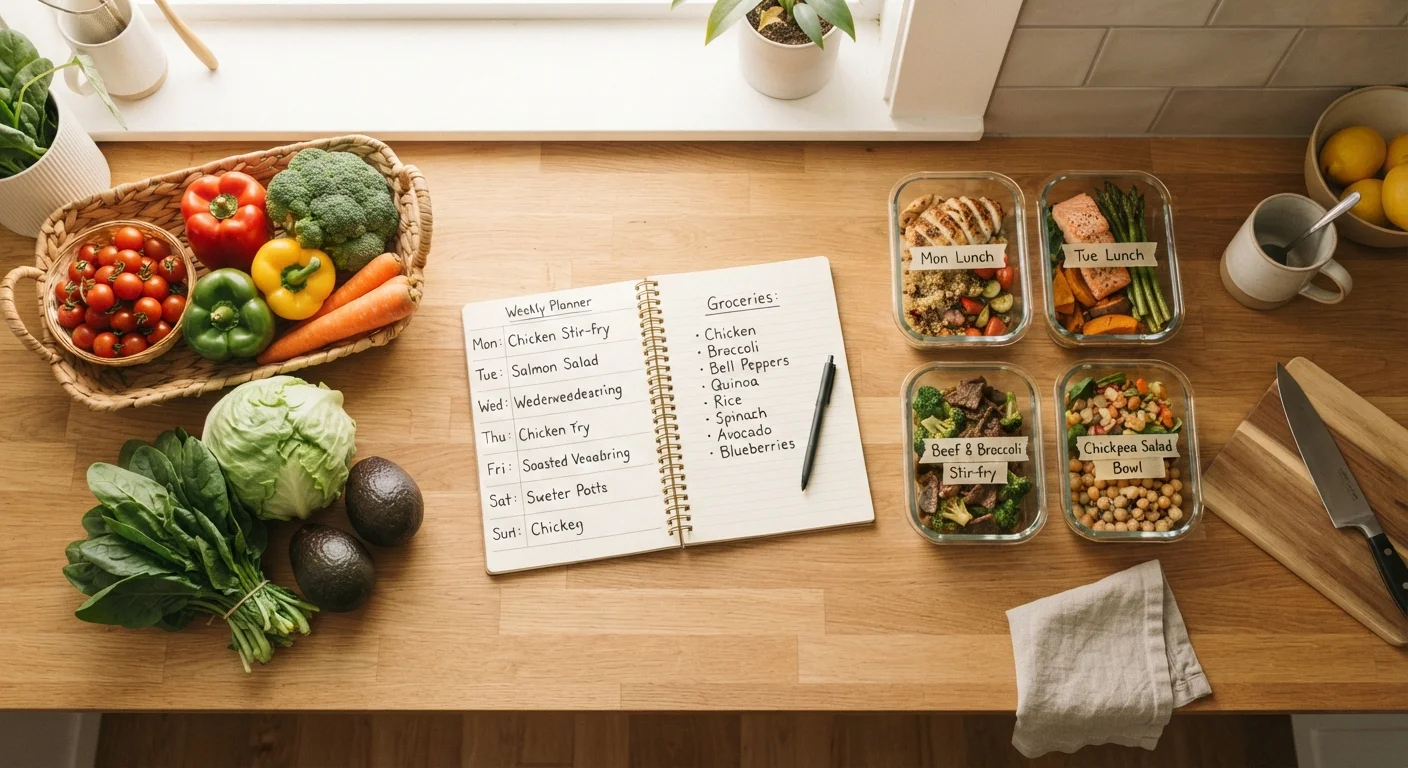
Why Meal Planning Actually Works
Meal planning isn't about following a rigid schedule - it's about making fewer decisions when you're tired and hungry. When you know what's for dinner before 5 p.m., you sidestep the mental drain of last-minute choices and the expense of impulse takeout orders.
Research in behavioral science consistently shows that decision fatigue is real: the more choices we face throughout the day, the worse we get at making them. A weekly meal plan front-loads that decision-making to a calm, intentional moment - typically a weekend - so weeknights run on autopilot.
The payoff extends beyond convenience. Consistent meal planning can affect grocery spending, food waste, and weeknight stress in measurable ways. This guide walks you through every step of building that system from scratch.
68%
Americans who say meal planning reduces food waste
According to a survey by the International Food Information Council (IFIC), a majority of U.S. adults who plan meals report less food waste at home.
$1,500+
Estimated annual food waste per U.S. household
The USDA estimates that American households discard roughly 30-40% of the food supply, translating to significant annual costs per family.
2-3 hrs
Average weekly time saved by consistent meal planners
Self-reported time savings from meal planning studies suggest planners spend noticeably less time on weeknight cooking and last-minute grocery trips.
Step 1: Audit Your Week Before Choosing Recipes
The most common meal planning mistake is picking recipes first and then trying to fit them into your schedule. Reverse that order. Open your calendar before you open a cookbook.
- Flag high-demand evenings - sports practices, late meetings, school events - and assign these nights a 15-minute meal or planned leftovers.
- Identify your one open evening where you can cook something that takes 45-60 minutes and generates leftovers for the next day.
- Note any meals eaten away from home so you don't over-buy perishables.
This honest audit prevents the classic Sunday-planned-Monday-failed cycle. Flexible meal planning strategies for unpredictable households can make the difference between a plan that lasts the week and one that collapses by Tuesday.
Step 2: Build a Balanced Recipe Roster
Aim for variety in effort level, not just ingredients. A sustainable weekly roster typically looks like this:
- Two fast meals (under 20 minutes): stir-fries, sheet-pan proteins, grain bowls using pantry staples.
- Two moderate meals (30-40 minutes): pasta dishes, tacos, soups.
- One batch meal (60+ minutes, generates leftovers): roasted chicken, a large pot of chili, or a baked casserole.
- One or two flex nights: designated for leftovers, takeout, or a simple snack plate.
When selecting recipes, look for ingredient overlap - if you buy a bunch of cilantro for Tuesday's tacos, plan a Thursday dish that uses the rest. This overlap strategy is the backbone of a well-stocked, functional pantry that reduces both waste and shopping frequency.
For nutritional balance across your week, it helps to understand core nutrition principles - aiming for varied protein sources, plenty of vegetables, and whole grains across your meals rather than trying to perfectly balance every single dish.
Anchor each week's plan around one protein that appears in two or three different forms - roasted chicken becomes chicken tacos becomes chicken soup. This ingredient doubling cuts shopping variety while keeping meals feeling fresh.
Culinary professionals use this 'hero ingredient' approach routinely in professional kitchens to control food costs and reduce prep time without sacrificing menu variety.
Write your meal plan on a whiteboard or sticky note visible in the kitchen - not buried in an app. The more visible your plan, the more likely it gets followed.
Behavioral research on habit formation consistently shows that environmental cues (visibility, placement) are stronger drivers of follow-through than intent alone.
Step 3: Write a Strategic Grocery List
A grocery list organized by store section is meaningfully faster to shop from than one written in recipe order. Group items into: produce, proteins, dairy, pantry/dry goods, and frozen.
Before writing anything down, do a fridge and pantry inventory. Buying duplicates of items you already have is one of the top drivers of food waste in American households. Check what you have, cross off what you don't need, then build the list from what's missing.
Shop Your Pantry First
Before building your grocery list, spend five minutes scanning your pantry shelves and fridge. You'll often find enough staples to build one or two meals without buying anything new. This habit alone can meaningfully reduce weekly grocery spending over time.
Also note quantities deliberately. "Chicken" is not a useful list item - "1.5 lbs boneless chicken thighs" is. Vague lists lead to wrong purchases and mid-week grocery runs that eat into the time you were trying to save.
If you want to deepen your pantry game, explore fundamental cooking skills and pantry techniques that make these weekly decisions even easier over time.
Step 4: Prep Smart, Not Long
You don't need a four-hour Sunday session to benefit from meal prep. A focused 45-minute block - washing and chopping vegetables, cooking a base grain, marinating proteins - can shave 10-15 minutes off every weeknight dinner.
The most impactful prep tasks to prioritize:
- Wash and dry salad greens (they stay crisp for 4-5 days stored with a paper towel).
- Cook a pot of grains (rice, farro, quinoa) that can serve as a base for multiple meals.
- Chop onions, peppers, and garlic - the aromatics that start nearly every savory dish.
- Portion and marinate proteins so they're ready to cook directly from the fridge.
Understanding the trade-offs between batch cooking full meals versus prepping raw components can help you decide which method fits your schedule and storage space best.
Step 5: Store and Use Leftovers Intentionally
Leftovers only save time if you can find them and trust them. The two rules that matter most: label everything with the date, and store items in clear containers so nothing hides at the back of the fridge.
General food safety guidelines from the USDA suggest that most cooked leftovers are safe in the refrigerator for three to four days. After that, move them to the freezer or discard them.
Plan for leftovers deliberately in your weekly roster - a big pot of soup on Sunday becomes Monday's lunch. Roasted vegetables from Wednesday get folded into Friday's grain bowl. This kind of intentional repurposing is what transforms a meal plan from a simple list into a system that compounds value across the week.
Leftover Safety: Date Everything
Unlabeled containers are the number-one reason usable food gets thrown out - and the reason unsafe food sometimes gets eaten. The USDA recommends consuming refrigerated leftovers within three to four days. When in doubt, freeze it or discard it. Food safety is non-negotiable.
Building Flexibility Into Your Plan
The goal of a meal plan is to reduce stress, not create a new source of it. Plans that demand perfection collapse quickly. Build yours with forgiveness built in.
Practically, this means: always keep two or three pantry-based emergency meals in reserve (pasta with canned tomatoes, eggs and toast, bean quesadillas). If a planned meal doesn't happen, it shifts to the next available night rather than getting abandoned. One skipped dinner doesn't derail the week.
Review your plan at the end of each week - a two-minute habit of noting what worked and what didn't is worth more than any app or template. Over four to six weeks, your personalized system will emerge naturally from that feedback, making each subsequent week easier to plan than the last.
The content on this site is provided for informational purposes only and should not be considered a substitute for professional advice. While we strive to provide accurate and up-to-date information, we make no guarantees regarding its completeness or accuracy. Always consult a qualified professional for advice specific to your circumstances before making any decisions.