

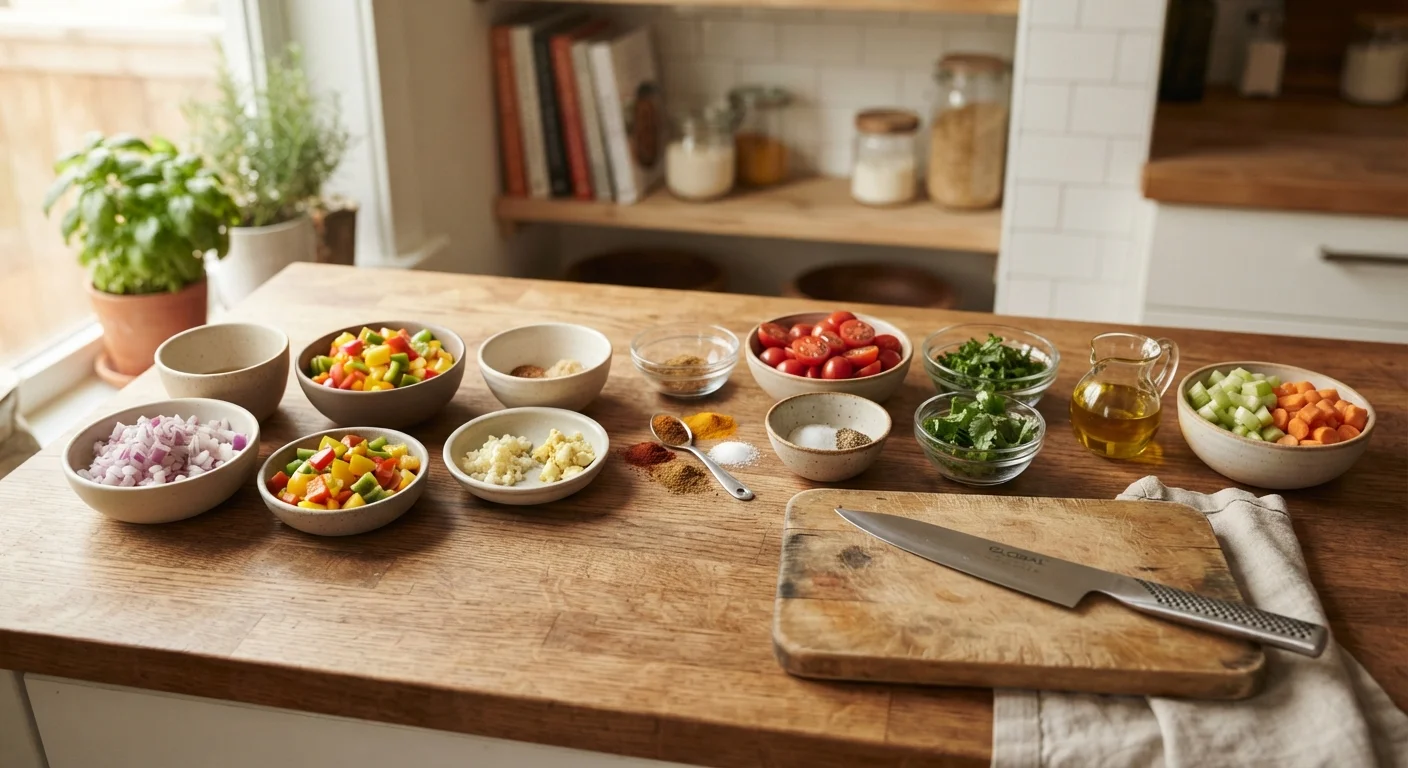
The Concept Behind the Phrase
Walk into any professional kitchen and you'll find cooks surrounded by small containers of measured ingredients, tools within arm's reach, and a clear workspace - all before a single burner is lit. That's mise en place in practice.
For home cooks, the phrase might sound intimidating, but the concept is simple: do your preparation before you cook, not during. Read your recipe, gather your ingredients, wash and chop what needs chopping, measure what needs measuring, and set everything out where you can see it. Then turn on the stove.
The shift this creates is significant. Cooking stops being a frantic scramble and becomes a more deliberate, controlled process. When the garlic starts to sizzle, you're not still searching for the red pepper flakes - they're already on the counter, measured and ready.
“Mise en place is the religion of all good line cooks. The universe is in order when your station is set up the way you like it.”
— Anthony Bourdain, Chef and author of 'Kitchen Confidential'
Why Home Cooks Benefit Most
Professional chefs practice mise en place because their margin for error is tiny - timing, ticket flow, and teamwork all depend on it. But home cooks arguably have even more to gain, because most kitchen frustrations trace directly back to skipping this step.
Common cooking mistakes - overcooking onions while hunting for the broth, forgetting the lemon zest until it's too late, adding too much salt because you're pouring from the container instead of a measured spoon - nearly all disappear when ingredients are prepped in advance. The mental load drops substantially, which means you can actually pay attention to technique and flavor rather than logistics.
70%
Of cooking errors linked to poor preparation
Culinary educators frequently cite lack of advance preparation - not technique failures - as the primary source of home cooking mistakes.
15-20 min
Typical mise en place time for a weeknight meal
For most home recipes, a focused prep session of 15-20 minutes before cooking begins is enough to set up a smooth, stress-reduced cook.
This is also where related fundamentals click into place. Knowing when and how to salt your food matters more when your salt is already measured out and you're not adding it in a panic. Good habits reinforce each other.
How to Apply It in Your Kitchen
You don't need to overhaul how you cook overnight. Start by adding one step to your routine: before you turn on any heat, read your entire recipe once, then set out every ingredient you'll need.
- Read first. Skim the full recipe before touching a single ingredient. Identify what needs prep and in what order.
- Group your prep. Chop vegetables, measure liquids, open cans, mince aromatics. Keep each item in its own small bowl or container.
- Arrange by order of use. Place ingredients you'll need first nearest to the stove, and those added later farther back.
- Clear your workspace. Put packaging and peels away before cooking starts. A clear counter is part of the practice.
If you're building a broader kitchen habit, the kitchen setup checklist for beginning cooks is a helpful complement - it covers the tools and pantry staples that make this kind of prep flow easily.
Mise en place also scales naturally into larger planning habits. Readers interested in reducing weeknight stress may find that batch cooking versus prepping ingredients in advance extends the same logic across a full week of meals.
Start Small: One Bowl at a Time
If full mise en place feels like too much overhead, start with just your aromatics - garlic, onions, and spices measured into a single bowl. Even this partial prep dramatically smooths out the first critical minutes of most recipes, when heat is highest and timing matters most.
A Mindset Shift, Not Just a Technique
What makes mise en place more than a prep tip is that it changes how you relate to cooking. Instead of reacting to a recipe as you go, you're planning ahead of it. That shift - from reactive to intentional - is what experienced cooks mean when they say mise en place "changes everything."
Once it becomes habit, you'll notice it spilling into other areas: checking that you have all the ingredients before starting a dish, thinking through the steps of a meal before beginning, or even approaching weekly meal planning with the same structured mindset.
The goal isn't perfection - it's readiness. And readiness, more than any technique, is what makes cooking feel manageable.
Frequently Asked Questions
No special equipment is required. Small bowls, ramekins, or even repurposed jar lids work perfectly for holding prepped ingredients. The goal is organization, not expensive gear.
For most home meals, doing your mise en place 10-20 minutes before cooking is sufficient. Some ingredients, like cut avocado or delicate herbs, are best prepped closer to cooking time to avoid browning or wilting.
Not at all. Even simple dishes benefit from having ingredients ready before the pan heats up. The practice is especially helpful for beginners who are still learning timing and technique.
Yes - measuring spices and seasonings ahead of time is a core part of mise en place. It prevents over-salting or under-seasoning when you're focused on heat management and timing.
Mise en place is recipe-level prep done immediately before cooking, while meal prepping typically means preparing components for multiple meals in advance. They complement each other well - understanding both can significantly streamline your week in the kitchen.
The content on this site is provided for informational purposes only and should not be considered a substitute for professional advice. While we strive to provide accurate and up-to-date information, we make no guarantees regarding its completeness or accuracy. Always consult a qualified professional for advice specific to your circumstances before making any decisions.