

Why Timing Salt Is a Real Skill
Most beginner cooks treat salt as a single, final step - shake some on at the table and call it done. But experienced cooks know that when you salt is nearly as important as how much you use. Salt doesn't just add flavor. Depending on timing, it reshapes texture, controls moisture, and determines whether seasoning lands on the surface or penetrates all the way through.
Understanding a few basic principles can help you get more out of every pinch. And if you want to build out your broader kitchen instincts, learning how aromatics, fat, and heat create flavor is a strong next step.
When to Salt Before Cooking
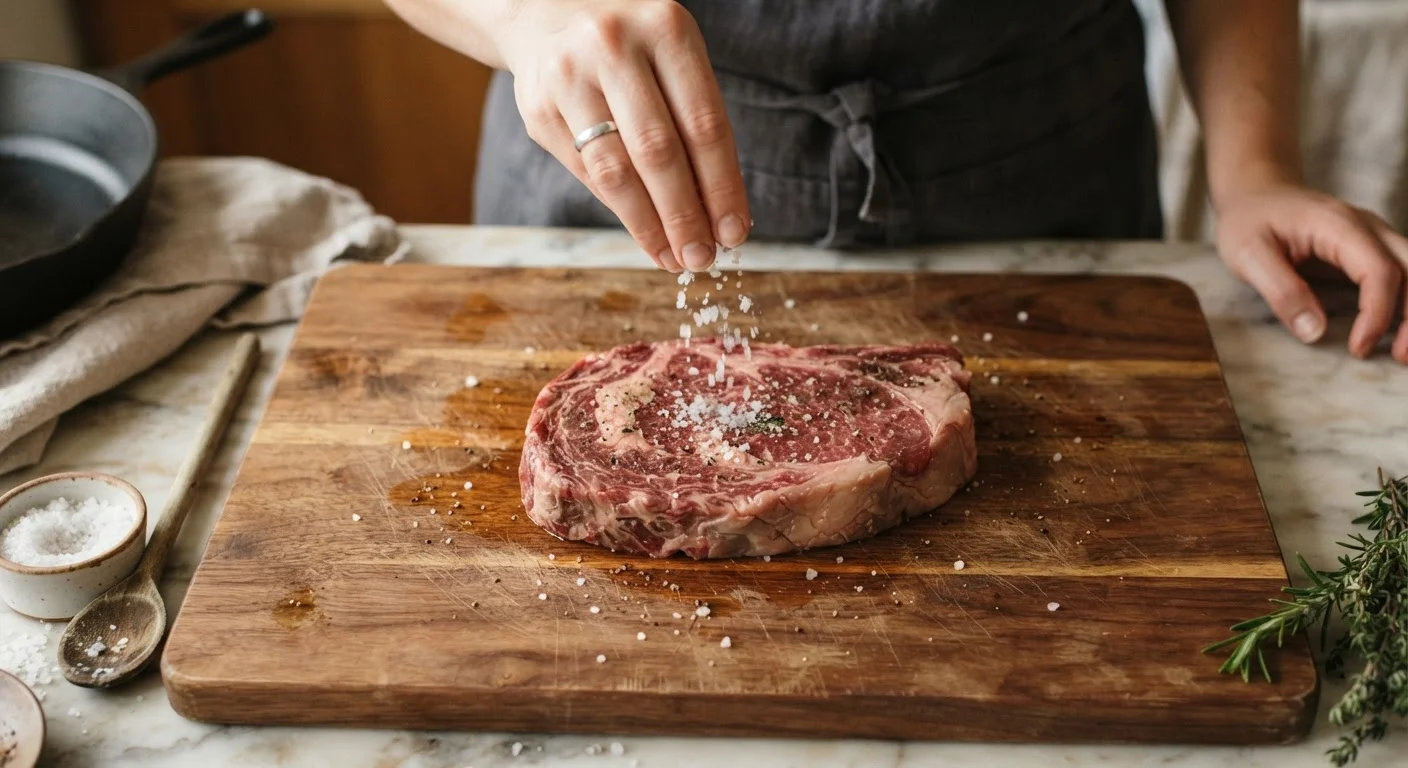
Salting proteins - chicken, steak, fish, pork - well before cooking gives time for a process called osmosis. Salt draws moisture to the surface initially, but given enough time (anywhere from 30 minutes to overnight), that moisture reabsorbs, carrying dissolved salt deeper into the flesh. The result is seasoning that's distributed throughout, not just sitting on top.
Vegetables behave similarly. Salting cucumber or zucchini slices before using them pulls out excess water that would otherwise make a dish watery. Letting eggplant sit with salt removes bitterness-contributing compounds along with moisture.
The key is giving enough time. A quick pre-salt right before the pan isn't the same as a proper resting period. If timing your prep carefully sounds intimidating, understanding mise en place can help you build a smarter workflow.
Dry-Brining Is Just Early Salting
The term "dry brine" sounds technical, but it simply means salting meat in advance and letting it rest uncovered in the refrigerator. No liquid, no special equipment. The salt dissolves in surface moisture, gets reabsorbed, and seasons the meat throughout while also improving surface texture for better browning. It works especially well for whole chickens and thick-cut steaks.
Salting During Cooking - And the Special Case of Water
Pasta water is one of the most under-salted things in home kitchens. It should taste noticeably salty - often described as "like the sea" - because pasta absorbs that water as it cooks. Under-salted water means under-seasoned pasta, and no amount of sauce will fully compensate.
The same logic applies to blanching vegetables or cooking grains. Salted cooking liquid seasons food from the inside out, something surface seasoning simply cannot do. This is also why soups and braises benefit from seasoning in stages: add some salt early to build depth, then adjust near the end as the liquid reduces and concentrates.
For more on how temperature and technique interact during cooking, understanding the difference between simmering and boiling is worth reading.
Finishing Salt: A Different Tool Entirely
Finishing salt - flaky sea salt, for instance - is not a substitute for cooking salt. It serves a completely different purpose. Added right before serving, it provides a pop of brightness on the palate and a delicate crunch that dissolves in seconds. That texture and immediacy disappear the moment it hits heat or liquid.
Use finishing salt on roasted vegetables, avocado toast, soft-boiled eggs, salads, or a piece of grilled fish. A small pinch goes a long way. Think of it as the final layer that makes flavors snap into focus.
Skipping this step is one of the quieter reasons dishes fall flat. Habits that lead to bland food covers more of these overlooked gaps.
The content on this site is provided for informational purposes only and should not be considered a substitute for professional advice. While we strive to provide accurate and up-to-date information, we make no guarantees regarding its completeness or accuracy. Always consult a qualified professional for advice specific to your circumstances before making any decisions.