

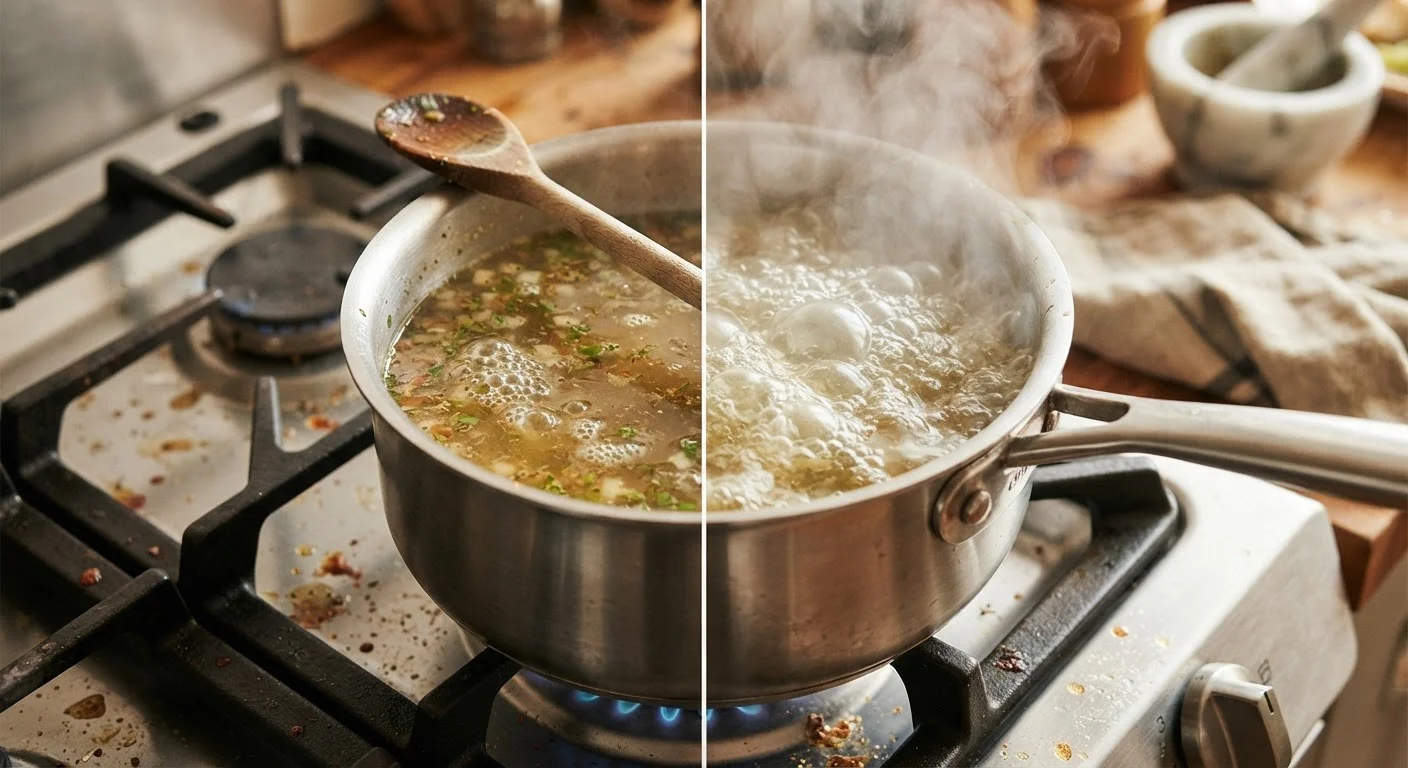
Option A
Simmering
The gentle, patient method for building deep flavor.
Best for: Best for soups, braises, stocks, sauces, and anything that needs gradual, even cooking without falling apart.
Option B
Boiling
The fast, aggressive method for quick, high-heat cooking.
Best for: Best for pasta, blanching vegetables, hard-boiling eggs, and reducing liquids rapidly.
What Actually Separates a Simmer from a Boil
At their core, simmering and boiling are just different temperature ranges of hot liquid - but that gap in degrees has enormous consequences for the food you're cooking. For a deeper look at how heat stages are categorized across cooking methods, see our guide to common cooking temperatures.
A simmer sits roughly between 185°F and 205°F. You'll see small, lazy bubbles rising occasionally from the bottom of the pan. The surface of the liquid may shimmer or show gentle movement, but it never breaks into a full churn.
A boil begins at 212°F (at sea level - lower at altitude). At a rolling boil, large, vigorous bubbles break the surface constantly and the liquid churns visibly. The temperature cannot rise above 212°F in an open pot regardless of how high you turn the burner - excess heat only creates more steam.
| Criterion | Simmering | Boiling |
|---|---|---|
| Temperature range | 185°F - 205°F | 212°F (sea level) |
| Bubble activity | Small, occasional bubbles | Large, constant churning |
| Effect on proteins | Keeps them tender | Can toughen or seize them |
| Best for | Soups, stocks, braises, sauces | Pasta, eggs, blanching, rapid reduction |
| Flavor development | Deep and gradual | Fast but less complex |
| Risk of overcooking | Lower - more forgiving | Higher for delicate ingredients |
Many beginner cooks make the mistake of boiling everything because it looks like more is happening. In reality, simmering is often doing far more sophisticated work.
How Each Method Affects Your Food
The temperature difference between simmering and boiling isn't just technical - it directly shapes texture, flavor, and moisture in your finished dish.
What simmering does
Simmering coaxes flavors out of ingredients slowly. Collagen in meat gradually converts to gelatin, creating rich, silky body in braising liquids. Aromatics like onion, garlic, and herbs have time to meld into the background without turning acrid. Proteins cook without seizing and toughening. This is why a chicken stock or beef stew that simmers for two hours tastes dramatically more complex than one that boils aggressively for 30 minutes.
What boiling does
Boiling applies rapid, intense heat. That's ideal when speed matters more than gentleness - pasta needs a full boil to cook through evenly without becoming gummy on the outside. Blanching green beans in boiling water for 90 seconds sets their color and creates a crisp-tender bite. Rapid boiling can also reduce liquids fast when you need to concentrate a sauce quickly.
The catch: boiling is hard on delicate ingredients. Proteins like fish or egg whites can turn rubbery or grainy. Vegetable cells rupture under sustained boiling, turning your soup mushy. This is why most recipes instruct you to bring liquid to a boil, then reduce to a simmer - the boil gets you there fast, but the simmer does the actual cooking.
212°F
Boiling point of water at sea level
At higher altitudes, water boils at lower temperatures - around 202°F at 5,000 feet - which can extend cooking times for pasta and grains.
185-205°F
Typical simmering temperature range
This range is wide enough that different ingredients have their own ideal simmer points - stocks often benefit from the lower end to stay clear.
Reading the Pot and Adjusting Your Heat
Knowing the theory is half the job. The other half is recognizing what you're looking at when you peer into a pot.
- Bare simmer: A bubble or two per second, minimal surface movement. Good for the most delicate tasks - poaching fish or holding a finished sauce warm.
- Steady simmer: Consistent small bubbles rising from the bottom with occasional larger ones. This is the sweet spot for stocks, soups, and braises.
- Vigorous simmer (sometimes called a low boil): Frequent, larger bubbles, the liquid is clearly moving. Appropriate for reducing sauces faster or cooking heartier vegetables.
- Full rolling boil: Aggressive churning that can't be stirred down. Use this for pasta, blanching, or hard-cooked eggs.
A reliable tip: after bringing a pot to a boil, reduce the burner to medium-low or low and wait 60 seconds before deciding if the heat is right. Pots hold heat and take time to settle. Fussing with the dial every few minutes leads to overcorrection.
For a broader look at how these liquid-heat techniques fit into the wider picture, our stovetop cooking methods overview covers sautéing, braising, and more in one place. And if you're seasoning as you cook, timing your salt correctly works hand-in-hand with controlling your heat - both shape the final flavor of a dish.
The content on this site is provided for informational purposes only and should not be considered a substitute for professional advice. While we strive to provide accurate and up-to-date information, we make no guarantees regarding its completeness or accuracy. Always consult a qualified professional for advice specific to your circumstances before making any decisions.