

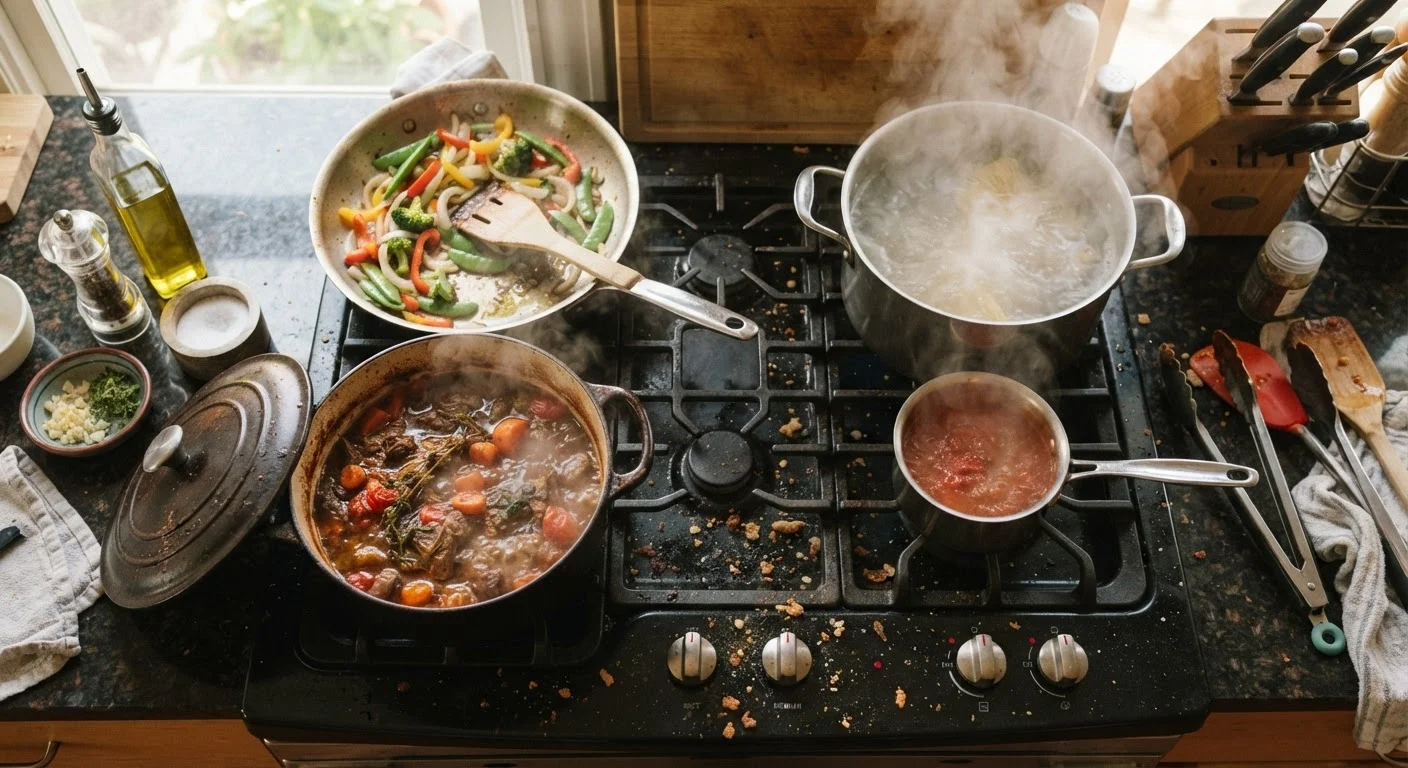
Why Stovetop Technique Matters
A stovetop is the most-used piece of kitchen equipment in most American homes, yet the mechanics behind what happens in the pan are rarely explained. Understanding why a technique works - not just how to follow recipe steps - is what builds real cooking confidence.
Every stovetop method transfers heat to food through one of three paths: conduction (direct contact with a hot surface), convection (hot liquid or steam surrounding the food), or a combination of both. The method you choose determines the final texture, flavor, and moisture level of your dish. Get it right and food browns, tenderizes, or stays juicy exactly as intended. Get it wrong and you end up with something soggy, scorched, or undercooked at the center.
Pan temperature sits at the heart of nearly all of it - see our guide to how pan temperature affects your cooking for a deeper look at what's happening at the surface level.
Sautéing and Stir-Frying
Sautéing means cooking small or thin pieces of food quickly in a small amount of fat over medium-high to high heat. The word comes from the French sauter (to jump), which describes how food moves in the pan. The goal is browning on the outside while keeping the interior tender - a result of the Maillard reaction, the chemical process that creates browned, savory flavors when proteins and sugars are exposed to high heat.
Stir-frying is essentially the same principle executed at very high heat with constant motion, traditionally in a wok. It's faster, requires more attention, and produces a characteristic smoky depth known in Chinese cooking as wok hei.
Both methods require a pan that's properly preheated before adding fat or food. Crowding the pan is the most common mistake - too much food drops the surface temperature and traps steam, turning a sauté into an unintentional braise.
Let your pan preheat for 1-2 minutes before adding oil, and add food only after the oil begins to shimmer. This single habit eliminates most sticking and uneven browning problems.
A cold pan allows food to absorb oil before the surface heat is high enough to create a sear, leading to both sticking and greasy results.
When sautéing, resist the urge to stir constantly. Let the food sit undisturbed for 30-60 seconds at a time to allow a proper crust to form before moving it.
Browning requires sustained contact with a hot surface; frequent stirring interrupts the Maillard reaction and prevents color from developing.
Pan-Frying and Shallow-Frying
Pan-frying uses more fat than sautéing - enough to come partway up the side of the food - and typically lower heat to allow thicker cuts to cook through without burning the exterior. Breaded chicken cutlets, fish fillets, and pork chops are classic pan-fry candidates. The fat conducts heat efficiently and helps form a crust.
Shallow-frying sits between pan-frying and deep-frying: the food is submerged to about halfway in oil, then flipped once. Crab cakes and pan-fried dumplings use this approach.
Oil selection matters significantly here. Different oils have different smoke points - the temperature at which they begin to break down and produce off-flavors. Our overview of cooking oils, smoke points, and best uses explains which oils hold up under the heat demands of frying.
Hot Oil Requires Careful Handling
Oil for pan-frying can reach temperatures well above the boiling point of water. Never add wet or frozen food directly to hot oil - the rapid steam explosion can cause dangerous spattering. Pat food dry with a paper towel before it goes into the pan, and lower it away from you using tongs or a spider strainer.
Simmering, Boiling, and Braising
These three moist-heat methods are often confused because they all involve liquid - but they behave very differently.
- Boiling means water or liquid is at a full, rolling 212°F (100°C) at sea level. It's ideal for pasta and blanching vegetables but too aggressive for proteins, which can tighten and toughen.
- Simmering is a gentler state, typically between 185-205°F, where small bubbles rise and break the surface intermittently. It's the right environment for cooking dried beans, reducing sauces, and poaching delicate items.
- Braising combines dry and moist heat: food (usually a tougher cut of meat or firm vegetables) is first seared in fat for color and flavor, then partially submerged in liquid and cooked low and slow at a simmer. Over time, collagen in the meat converts to gelatin, producing fork-tender results.
For a practical breakdown of how simmering and boiling differ in outcome, see the real difference between simmering and boiling.
Steaming and Poaching
Steaming cooks food entirely by surrounding it with hot vapor rather than submerging it in liquid. A basket or rack holds the food above boiling water in a covered pot. It's one of the gentlest cooking methods available, making it well suited to delicate fish, dumplings, and vegetables where you want to preserve color, texture, and water-soluble nutrients.
Poaching submerges food fully in liquid held just below a simmer - roughly 160-180°F. Eggs, chicken breasts, and fish poach well because the gentle heat sets proteins gradually without drying them out. The poaching liquid can be plain water, broth, wine, or a seasoned court-bouillon, and it contributes subtle flavor to the finished food.
Both methods are naturally lower in added fat, which makes them practical for everyday cooking - though neither produces browning or crust.
Choosing the Right Method for What You're Cooking
Matching technique to ingredient is more useful than memorizing any single recipe. A few practical rules of thumb:
- Tender, thin, or quick-cooking - sauté, stir-fry, or pan-fry. Think shrimp, sliced vegetables, boneless chicken breasts.
- Tough or collagen-rich cuts - braise low and slow. Chuck roast, short ribs, chicken thighs all improve significantly with time in liquid.
- Delicate proteins - steam or poach. Fish, eggs, and shellfish respond well to gentle, even heat.
- Pasta, grains, or blanching - boil, then reduce to a simmer as needed.
Refer to our reference on common cooking temperatures when you need to confirm the heat range for a specific method or food. And if you're planning meals in advance, consider how stovetop techniques fit into your weekly workflow - batch cooking versus ingredient prepping can inform how you use these methods efficiently across the week.
Learning stovetop cooking is ultimately about building pattern recognition. Once you understand what each method is doing to your food, you'll spend less time following recipes step-by-step and more time cooking with genuine confidence.
The content on this site is provided for informational purposes only and should not be considered a substitute for professional advice. While we strive to provide accurate and up-to-date information, we make no guarantees regarding its completeness or accuracy. Always consult a qualified professional for advice specific to your circumstances before making any decisions.