

Our Verdict
No single oil does everything well. For most everyday stovetop cooking, a neutral high-heat oil like canola or vegetable oil handles the heavy lifting, while extra-virgin olive oil is a reliable all-rounder for medium-heat sautéing and dressings. Reserve flavorful finishing oils - toasted sesame, walnut, or chili oil - for drizzling after the heat is off.
| Best for | Recommended |
|---|---|
| High-heat searing, stir-frying, or deep-frying | Refined Avocado or Refined Canola Oil |
| Everyday sautéing and roasting | Extra-Virgin Olive Oil |
| Baking with a neutral flavor | Refined Coconut or Vegetable Oil |
| Finishing and flavor drizzles | Toasted Sesame Oil |
Why Smoke Point Is the Starting Point
Every cooking oil has a smoke point - the temperature at which it stops shimmering and starts producing visible smoke. When an oil passes its smoke point, its fats break down, releasing acrolein and other compounds that create a harsh, acrid flavor and degrade the oil's quality. Understanding smoke points is the first step to choosing the right oil for any cooking task.
As a general guide, common cooking temperatures map onto oil choices: low-heat techniques stay well below most oils' limits, while high-heat methods like searing demand oils with real heat tolerance. Always match the oil to the method - not the other way around.
A Quick Test for Pan Readiness
Add your oil to the pan before turning on the heat, then watch for shimmering - a gentle, rippling movement across the surface. Shimmering means the oil is hot enough for most sautéing tasks. If it begins to smoke immediately, your pan is too hot; remove it from the heat briefly and reduce the burner. This habit protects both your oil and your food.
The Main Oils Compared
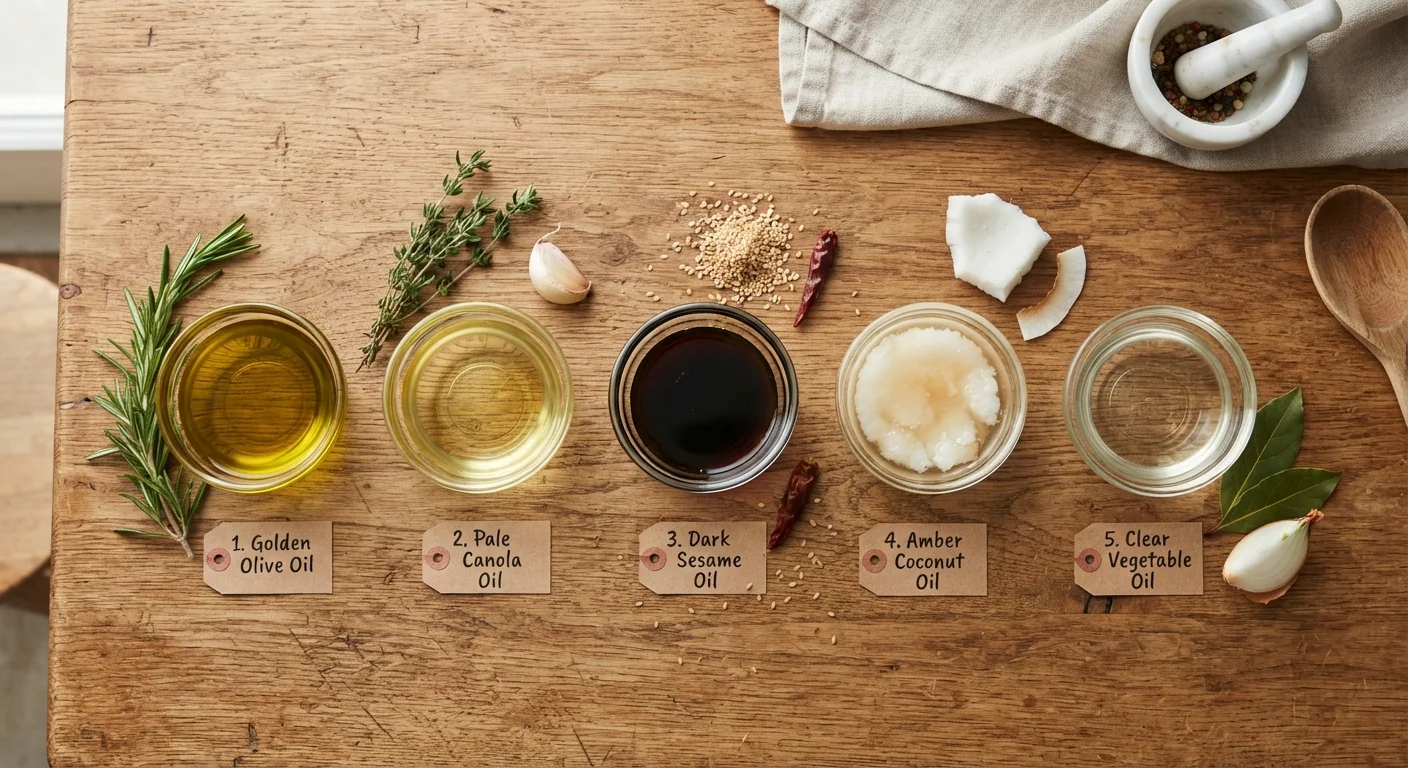
Here is a side-by-side look at five oils found in most American kitchens, covering smoke point ranges, flavor character, and ideal uses. Note that smoke points can vary depending on refinement level and freshness.
| Extra-Virgin Olive Oil | Canola Oil | Refined Avocado Oil | Coconut Oil (Refined) | Toasted Sesame Oil | |
|---|---|---|---|---|---|
| Smoke Point (approx.) | 375°F | 400°F | 500°F | 450°F | 350°F |
| Flavor Profile | Grassy, peppery, fruity | Neutral, mild | Neutral, buttery | Mildly coconut-like | Rich, deep, nutty |
| Best Heat Level | Low to medium | Medium to high | High | Medium to high | Low / no heat |
| Best Uses | Dressings, sautéing, drizzling | Searing, frying, baking | Stir-frying, searing | Baking, roasting | Finishing, dipping sauces |
| Flavor Impact on Dish | Noticeable | Minimal | Minimal | Slight | Strong |
| Refined / Unrefined | Unrefined | Refined | Refined | Refined | Unrefined |
Refined oils - those processed to remove impurities - generally have higher smoke points than unrefined or cold-pressed versions of the same oil. That's why refined avocado oil can handle a sear, while extra-virgin olive oil (less processed) suits gentler cooking.
Flavor Profiles: When Oil Is an Ingredient
Oil isn't just a cooking medium - in some preparations, it is a primary flavor contributor. Extra-virgin olive oil brings grassy, peppery notes that define vinaigrettes, hummus, and bruschetta. Toasted sesame oil carries a deep, nutty richness that anchors many Asian-inspired dishes. These oils are best added after cooking or used raw, because heat quickly drives off their volatile aromatic compounds.
Neutral oils - canola, standard vegetable oil, refined avocado - contribute almost no flavor of their own, which is exactly the point when you want your protein, spices, or aromatics to lead. Learn more about how fat interacts with those other flavor-builders in our guide to building a flavor foundation with aromatics, fat, and heat.
Matching Oils to Cooking Methods
Getting the pairing right is straightforward once you know the heat range of your method. Stovetop cooking methods like braising and steaming run at lower temperatures, making them compatible with a wider range of oils. High-heat searing or stir-frying in a very hot pan, however, narrows your options considerably.
- Searing / stir-frying (425°F+): Refined avocado, refined canola, or refined vegetable oil.
- Roasting and oven-baking (350-425°F): Olive oil, refined coconut oil, or canola.
- Sautéing over medium heat (300-375°F): Extra-virgin olive oil, canola, or light olive oil.
- Salad dressings and cold preparations: Extra-virgin olive oil, walnut oil, or sesame oil.
- Finishing drizzle after cooking: Toasted sesame, chili oil, or high-quality extra-virgin olive oil.
Pan temperature also plays a role - knowing what's happening in your skillet helps you avoid accidentally burning even a high-smoke-point oil. See why your pan temperature matters more than you think for a deeper look.
Storage and Freshness Tips
Oils degrade through exposure to heat, light, and oxygen - a process called oxidation - which produces stale, rancid flavors and reduces nutritional quality. Store all oils in a cool, dark cabinet away from the stovetop. Dark glass or opaque containers are preferable to clear plastic. Most culinary oils are best used within 6-12 months of opening, though refined oils with lower unsaturated fat content (such as coconut oil) tend to keep longer.
A simple smell test works: fresh oil smells neutral or pleasantly characteristic of its source. A waxy, crayon-like, or sour smell signals oxidation - that oil should be replaced rather than cooked with.
The content on this site is provided for informational purposes only and should not be considered a substitute for professional advice. While we strive to provide accurate and up-to-date information, we make no guarantees regarding its completeness or accuracy. Always consult a qualified professional for advice specific to your circumstances before making any decisions.