

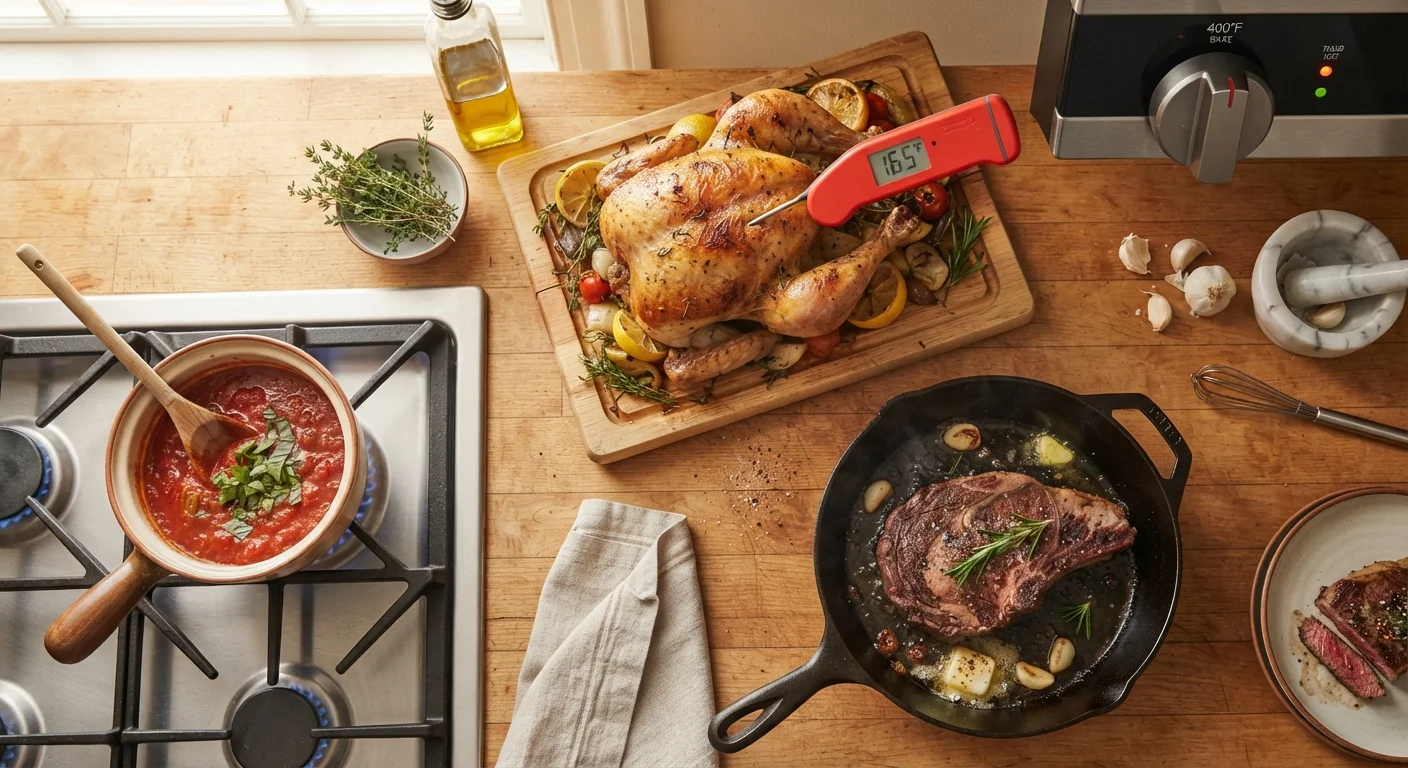
Why Temperature Is the Real Recipe Ingredient
Heat does the actual work of cooking - it denatures proteins, caramelizes sugars, kills pathogens, and builds texture. But recipes often assume readers already know what "medium heat" or "roast at 400°F" looks like in practice. If you've ever pulled a chicken breast that looked done but wasn't, or watched garlic burn in 30 seconds flat, temperature knowledge is what was missing.
This reference covers the three main temperature zones every cook needs: internal food temperatures for food safety, oven settings and what they do, and stovetop heat stages. Keep it handy while you cook.
If you want to understand how these temperatures interact with cooking fat, see our guide to oil smoke points - where your oil falls on the heat scale affects everything from flavor to whether your food sticks.
| Safe temp for poultry | 165°F (74°C) (USDA Food Safety and Inspection Service) |
| Safe temp for whole beef/pork cuts | 145°F (63°C) + 3-min rest (USDA Food Safety and Inspection Service) |
| Standard baking range | 325-375°F |
| Carryover cooking rise | 5-10°F after resting (General culinary reference) |
| Simmering point (water) | 185-205°F (85-96°C) |
| Boiling point (water, sea level) | 212°F (100°C) |
Safe Internal Temperatures for Common Foods
Internal temperature - measured at the thickest part of the food, away from bone - is the only reliable way to confirm food safety. Visual cues like color and juice clarity are not dependable indicators on their own. The USDA publishes minimum safe internal temperatures based on pathogen destruction research:
- Poultry (whole birds, ground, and pieces): 165°F (74°C)
- Ground beef, pork, veal, and lamb: 160°F (71°C)
- Whole cuts of beef, pork, veal, and lamb: 145°F (63°C), followed by a 3-minute rest
- Fish and shellfish: 145°F (63°C)
- Egg dishes: 160°F (71°C)
- Leftovers and casseroles: 165°F (74°C)
A digital instant-read thermometer takes the guesswork out of these calls. Resting time matters too - heat continues to distribute through meat after it leaves the pan or oven, a process called carryover cooking. Letting a roast rest 5-10 minutes before slicing allows juices to redistribute and the final temperature to stabilize.
Internal temperature
The temperature measured at the center or thickest part of a food item. It's the most accurate indicator of whether food has been cooked safely and thoroughly.
Carryover cooking
The continued rise in internal temperature that occurs after food is removed from a heat source. It can add 5-10°F to a resting piece of meat.
Maillard reaction
A chemical reaction between amino acids and sugars that produces browning and complex flavor. It typically begins at surface temperatures above 280°F (138°C).
Simmer
A cooking state where liquid is heated to just below boiling - small bubbles rise intermittently. It's gentler than a full boil and used for soups, stocks, and sauces.
Denaturation
The process by which heat (or acid) causes proteins to unfold and change structure - this is what makes raw egg white go opaque or raw meat firm up.
Oven Temperature Ranges and What They Accomplish
Most home ovens span from 250°F to 500°F, and different ranges produce very different results. Here's how to read those numbers:
- Low (250-325°F)
- Gentle heat ideal for slow roasting tough cuts, keeping food warm, or drying out items like bread crumbs. Collagen in meat converts to gelatin slowly at these temperatures, producing tender braises.
- Moderate (325-375°F)
- The everyday baking zone for cakes, muffins, cookies, and casseroles. Heat penetrates food evenly without over-browning the exterior before the interior cooks through.
- Moderately high (375-425°F)
- Standard roasting range for vegetables and bone-in chicken. Hot enough to trigger browning and crisping, while still cooking the interior thoroughly.
- High (425-475°F)
- Used for quick-roasting, oven fries, thin fish fillets, and pizza. Browning happens fast - check food more frequently at this range.
- Very high (475-500°F)
- Mostly for high-heat pizza, flatbreads, or finishing a sear. At this range, oven hot spots become more pronounced - rotate pans halfway through.
For a deeper look at how heat, fat, and aromatics combine at the start of a dish, our flavor foundation guide explains the mechanics behind the first steps of most recipes.
Stovetop Heat Stages Explained
Burner settings vary by stove, so describing heat by what it does - rather than dial position - is more useful. Here are the five practical stages:
- Low heat: Gentle bubbling or steaming. Used for melting butter, holding sauces warm, and slow-simmering soups. Food should move slightly but not actively bubble.
- Medium-low: A steady, modest simmer. Good for scrambled eggs, sweating onions, and delicate sauces where high heat would break or scorch.
- Medium: The most common cooking level. Sautéing vegetables, cooking pancakes, and reducing sauces all happen here. A drop of water should evaporate within a few seconds.
- Medium-high: Rapid sautéing, stir-frying, and searing proteins. Food browns quickly - have ingredients prepped before the pan reaches this temp.
- High: Boiling water, flash-searing, and wok cooking. Extended high heat without enough food in the pan will burn oil and degrade the pan's surface.
Understanding pan temperature is its own skill set. Our article on pan temperature covers what's actually happening at the surface level. And if you want the full picture on stovetop methods, see our stovetop cooking overview.
The content on this site is provided for informational purposes only and should not be considered a substitute for professional advice. While we strive to provide accurate and up-to-date information, we make no guarantees regarding its completeness or accuracy. Always consult a qualified professional for advice specific to your circumstances before making any decisions.