

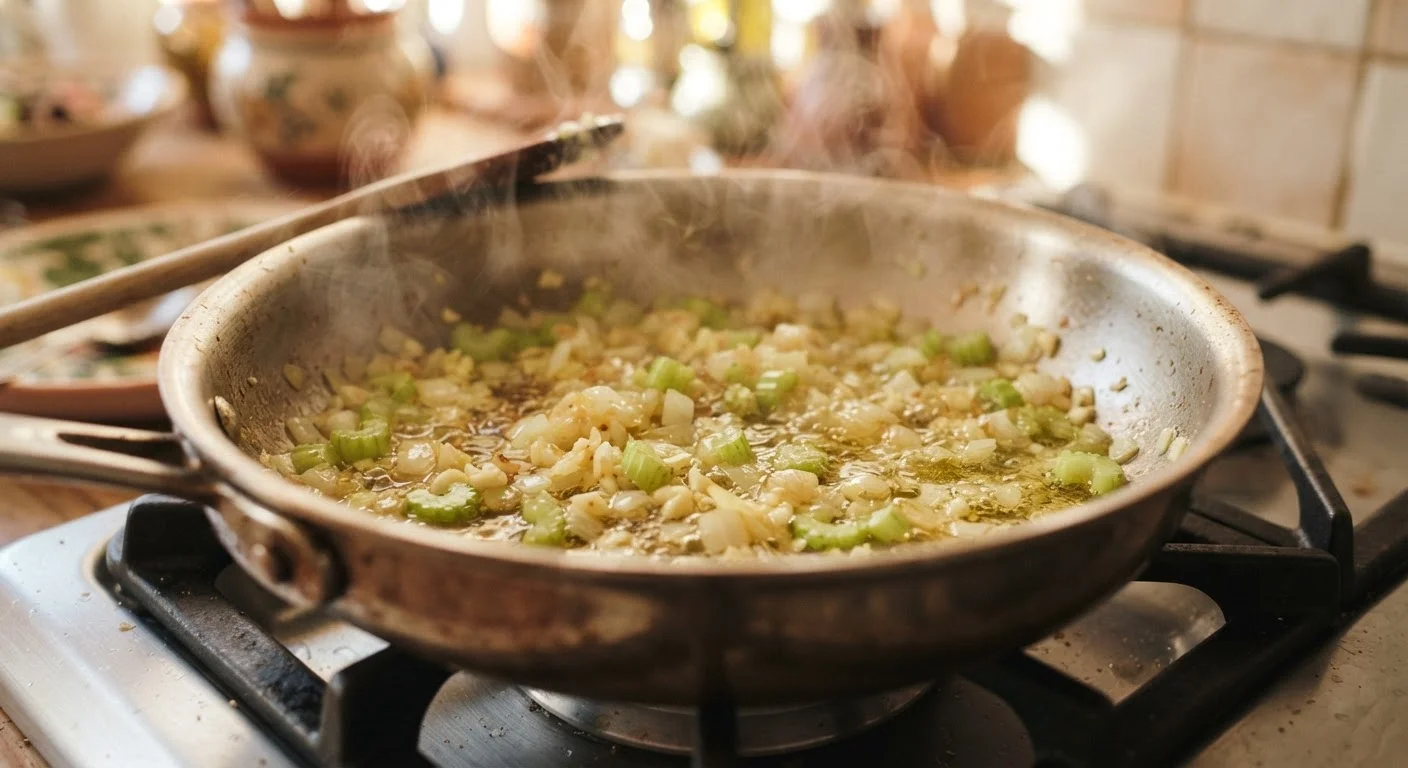
Why Most Great Dishes Start the Same Way
Whether it's an Italian tomato sauce, a West African stew, or a simple weeknight soup, most satisfying savory dishes share a common first step: building a flavor base. Before the main ingredient ever hits the pan, experienced cooks take a few minutes to layer taste into the cooking surface itself. This isn't a fancy technique - it's a foundational habit that any home cook can adopt right away.
The three elements at work are simple: aromatics (flavor-rich vegetables and herbs), cooking fat (oil, butter, or another medium), and heat (applied with intention, not just turned to high). Understanding how these three interact will change how you approach nearly every savory recipe you make.
If your dishes have ever tasted flat despite following the recipe closely, the fix often starts here. See also our guide on habits that quietly rob dishes of flavor for a broader look at common pitfalls.
Aromatics: The First Layer of Flavor
Aromatics are ingredients that release fragrant, complex compounds when exposed to heat. In most American and European kitchens, the classic trio is onion, celery, and carrot - known in French cooking as mirepoix. Spanish cuisine uses onion, pepper, and tomato (sofrito). Many Asian dishes start with garlic, ginger, and scallions. The ingredients change, but the logic is the same: build flavor before anything else goes in.
Cutting aromatics into a consistent size matters more than many beginners realize. Uneven pieces cook at different rates, leaving some raw and sharp while others scorch. A rough dice is usually fine - perfection isn't the goal, consistency is.
3-5 min
Time to soften garlic properly over medium heat
Culinary education guidelines consistently recommend low-to-medium heat for aromatics to develop sweetness without burning.
~200
Flavor compounds released when onions are cooked
Food science research has identified roughly 200 volatile compounds produced when onions are heated, contributing to their characteristic savory aroma.
Garlic deserves special mention because it's both powerful and easy to overcook. Add it after onions have softened, and give it just one to two minutes. It should turn pale gold and smell nutty - not brown and acrid.
Fat: The Flavor Carrier
Fat does two essential jobs: it transfers heat evenly to the aromatics, and it dissolves and carries fat-soluble flavor compounds that water simply can't hold. This is why a dish built in olive oil tastes richer than one where aromatics were boiled.
Choosing the right fat depends on what you're making and how hot you're cooking. Butter adds depth and a gentle sweetness but burns at relatively low temperatures. Olive oil holds up better to medium heat and brings its own flavor. For high-heat cooking, a neutral oil with a higher smoke point is usually the better call. Our guide to cooking oils, smoke points, and best uses breaks this down in detail.
Deglaze to Capture Stuck Flavor
After your aromatics cook, you may notice browned bits sticking to the pan. Don't discard them - deglaze the pan by adding a splash of stock, wine, or water and scraping the bottom with a wooden spoon. Those stuck bits, called fond, are concentrated flavor that dissolves right back into your dish.
A common beginner mistake is adding aromatics to cold fat, then cranking the heat. The result is uneven cooking. Instead, heat the fat first until it shimmers slightly, then add your aromatics and adjust from there.
Heat: The Variable That Changes Everything
Heat is the activating force - but the level you choose shapes the final flavor dramatically. Medium to medium-low heat is the sweet spot for most aromatic bases. At this temperature, onions slowly release their sugars and turn sweet and translucent rather than burning and turning bitter.
Resist the urge to rush by turning up the flame. A flavor base built in five to eight minutes over moderate heat will taste noticeably more complex than one blasted through in two minutes on high. Patience here is a skill, not a personality trait - it just takes practice to trust the process.
Once your aromatics are cooked, you've created a base ready to absorb whatever comes next: stock, tomatoes, wine, beans, or proteins. Everything layered on top inherits that foundation. This is also the moment to think about seasoning - when and how you salt your food at each stage compounds the flavor even further.
Building this habit consistently - aromatics, fat, heat, in that order - is one of the fastest ways to elevate your everyday cooking without changing a single other thing about how you work in the kitchen.
Frequently Asked Questions
Onions, garlic, celery, and carrots are among the most widely used aromatics in Western cooking. Shallots, leeks, ginger, and scallions are also common across various cuisines. These ingredients release volatile compounds when heated that give dishes their savory, layered character.
Yes, noticeably. Butter adds richness and a mild sweetness, while olive oil contributes a grassy, slightly peppery note. Neutral oils like canola step back and let the aromatics lead. Each fat also has a different smoke point, which affects how hot you can cook before the oil degrades.
The dish will likely taste flat or one-dimensional. Raw aromatics added late in cooking don't have enough time to mellow and develop, so their harsh or pungent edges can remain. A short investment of time at the start pays dividends throughout the entire dish.
Onions are generally ready when they turn translucent and soften, which takes around five to eight minutes over medium heat. Garlic usually needs only one to two minutes - watch for a golden color and a fragrant smell. Burnt garlic turns bitter quickly, so don't walk away.
You can use a small amount of water or broth to sauté aromatics in a non-stick pan - a technique sometimes called water sautéing. The flavor won't be quite as rich because fat is a flavor carrier, but you'll still coax out the aromatic compounds and soften the vegetables effectively.
The content on this site is provided for informational purposes only and should not be considered a substitute for professional advice. While we strive to provide accurate and up-to-date information, we make no guarantees regarding its completeness or accuracy. Always consult a qualified professional for advice specific to your circumstances before making any decisions.