

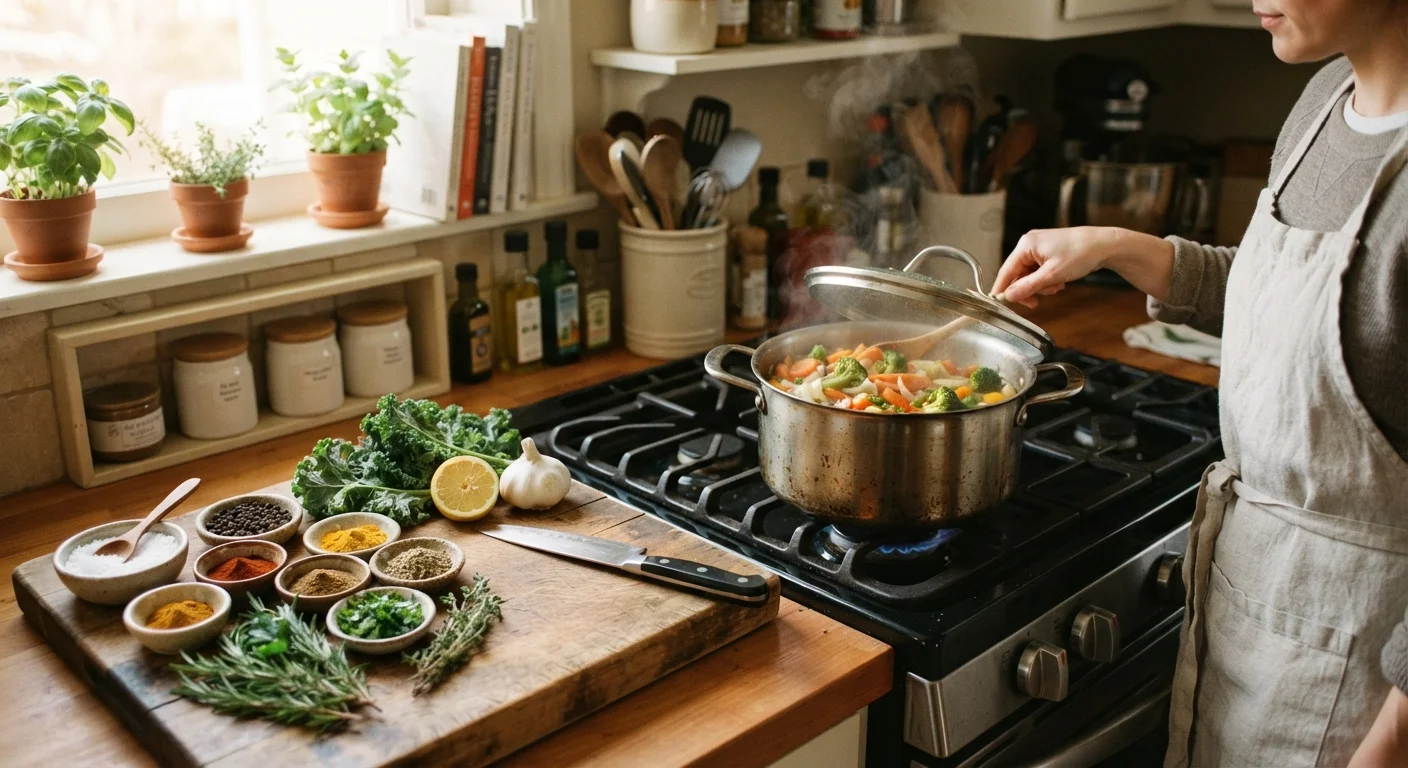
Why Cooking Bland Happens to Good Cooks
Bland food rarely comes from a lack of effort. More often, it's the result of small, reasonable-seeming habits that quietly work against flavor at every stage of cooking. Fear of oversalting, skipping steps that seem optional, or simply not knowing when to add what - these are the culprits behind meals that taste like they're missing something.
The good news: each of these habits is fixable, and fixing them doesn't require professional training or expensive ingredients. Understanding why flavor goes missing is the first step toward getting it back.
For a deeper look at how the building blocks of a flavorful dish fit together, see our guide on aromatics, fat, and heat.
Seasoning only at the end of cooking.
Why it happens: Many cooks are taught to taste before serving and adjust then, which creates the impression that seasoning is a finishing step rather than an ongoing process.
Adding spices to the dish rather than blooming them in fat first.
Why it happens: Recipes don't always explain the reasoning behind steps, so sprinkling spices directly onto food seems equivalent to toasting them first.
Skipping acid entirely.
Why it happens: Acid - lemon juice, vinegar, wine - is associated with sour dishes, so cooks avoid it to prevent overpowering the main flavors.
Using too little fat, or the wrong kind.
Why it happens: Fat often gets cut for health reasons, or home cooks use neutral oils when a more flavorful option would serve the dish better.
Not tasting during cooking - only at the plate.
Why it happens: Tasting mid-process feels disruptive or unnecessary, especially when following a recipe step by step.
Cooking aromatics without giving them enough time or heat.
Why it happens: Translucent onions or softened garlic can look done before they've had enough time to develop sweetness and depth through caramelization.
The Habits Worth Breaking - and What to Do Instead
Recognizing a pattern is only half the work. The section below pairs each common mistake with a concrete correction you can apply the next time you cook.
~75%
Of flavor perception involves smell
Research in sensory science consistently shows that aroma compounds - many released through heat and fat - account for the majority of what we experience as 'taste.'
30-60 sec
Time to bloom ground spices in oil
Most culinary guides recommend this brief window to activate fat-soluble flavor compounds in dried spices before other ingredients are added.
One habit worth highlighting above all others: tasting as you cook. Most bland meals are finalized before the cook has taken a single bite during the process. Tasting at multiple stages - after building your base, mid-cook, and just before serving - gives you multiple opportunities to course-correct rather than one last-ditch attempt at the table.
Timing your seasoning matters just as much as quantity. Our article on salting at the right moment breaks down how early versus late salting changes the texture and flavor of your finished dish.
Don't Overcorrect with Salt All at Once
When a dish tastes bland, the instinct is to add a large amount of salt immediately. This often leads to oversalting, which is much harder to fix than underseasoning. Add small amounts incrementally, stir thoroughly, and taste after each addition. If you're cooking for anyone managing blood pressure or a sodium-sensitive condition, consult a healthcare provider or registered dietitian about appropriate sodium levels in their diet.
It also helps to understand that flavor isn't just about salt and spices. Fat carries flavor, acid lifts it, and texture gives you something to notice. A dish that lacks any one of these can taste flat even when seasoning is technically adequate. A squeeze of lemon, a drizzle of good olive oil, or a sprinkle of fresh herbs before serving often makes more difference than adding more salt.
The content on this site is provided for informational purposes only and should not be considered a substitute for professional advice. While we strive to provide accurate and up-to-date information, we make no guarantees regarding its completeness or accuracy. Always consult a qualified professional for advice specific to your circumstances before making any decisions.